We offer FREE SHIPPPING on all orders!
We offer FREE SHIPPPING on all orders!
| THIS PRODUCT IS INTENDED AS A RESEARCH CHEMICAL ONLY. This designation allows the use of research chemicals strictly for invitro testing and laboratory experimentation only. All product information available on this website is for educational purposes only. Bodily introduction of any kind into humans or animals is strictly prohibited by law. This product should only be handled by licensed, qualified professionals. This product is not a drug, food, or cosmetic and may not be misbranded, misused or mislabeled as a drug, food, or cosmetic. |
MOTS-C is an experimental mitochondria-derived peptide that has attracted significant research interest for its potential role in cellular metabolism, glucose regulation, insulin sensitivity, exercise adaptation, mitochondrial signaling, and healthy aging.
MOTS-C is unusual because it is encoded within mitochondrial DNA rather than the nuclear DNA responsible for most human proteins and peptides.
The name MOTS-C comes from:
Mitochondrial Open Reading Frame of the 12S rRNA-c
MOTS-C is a naturally occurring 16-amino-acid peptide.
Its sequence is:
MRWQEMGYIFYPRKLR
Its major research interests include:
Mitochondrial signaling
Glucose metabolism
Insulin sensitivity
Metabolic flexibility
Exercise physiology
Skeletal-muscle metabolism
Cellular stress responses
AMPK signaling
Healthy aging
Age-related metabolic decline
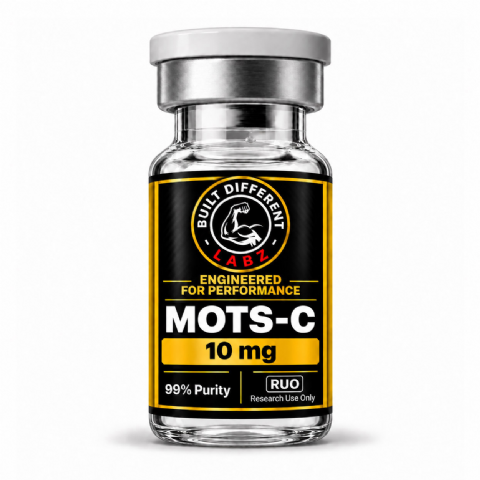
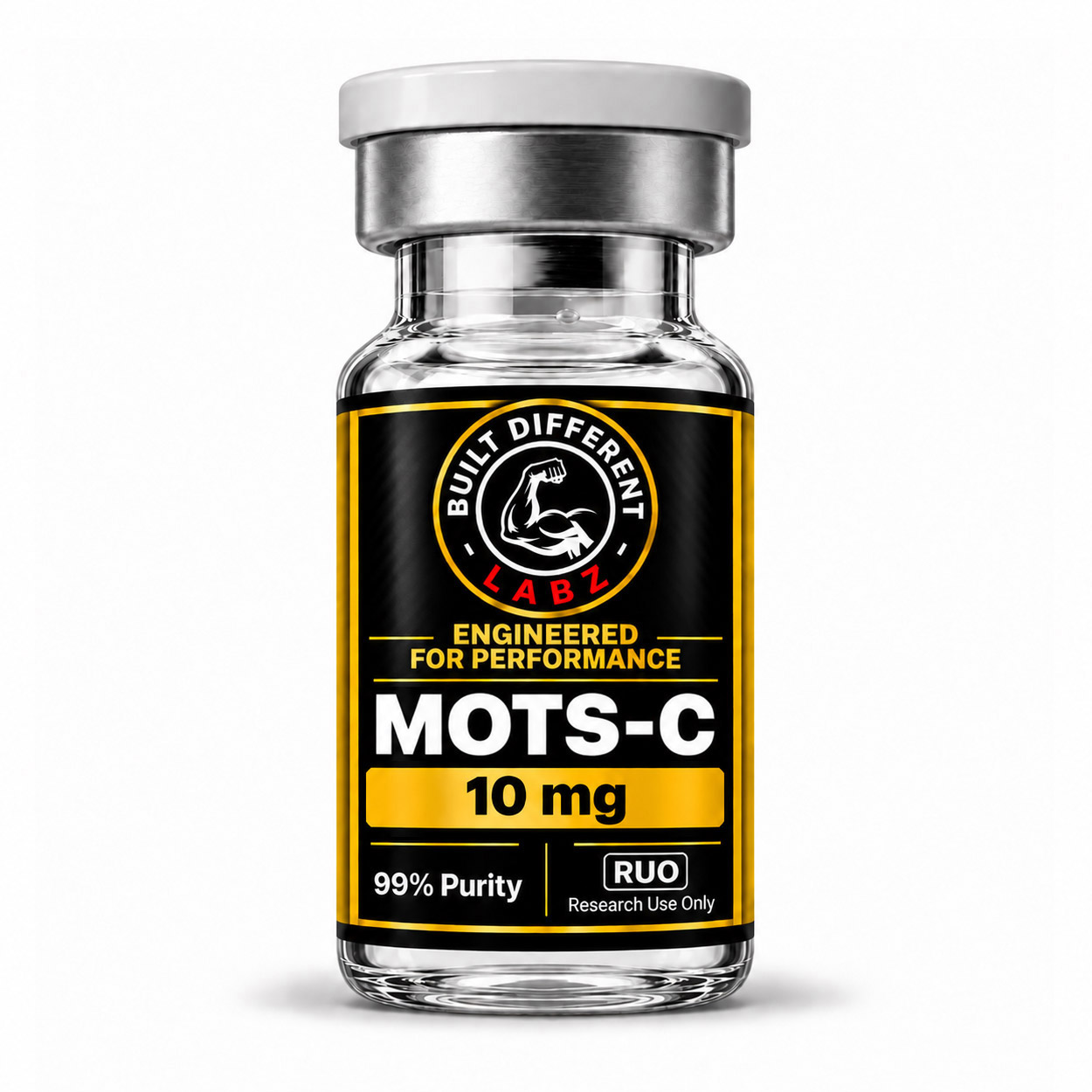
A vial labeled "MOTS-C 10mg" represents a total of 10 milligrams of represented MOTS-C in the vial. It does not mean that 10mg is an established or appropriate single human dose.
MOTS-C belongs to a relatively new category of signaling molecules known as:
Mitochondrial-derived peptides
or:
MDPs.
For many years, mitochondria were viewed primarily as cellular structures responsible for producing energy.
Research has increasingly demonstrated that mitochondria also function as signaling centers.
Mitochondria can communicate information concerning:
Energy availability
Cellular stress
Nutrient status
Metabolism
Inflammation
Exercise
Aging
MOTS-C appears to participate in this mitochondrial communication system.
Most peptide hormones are encoded by nuclear DNA.
MOTS-C is different.
Its genetic origin lies within mitochondrial DNA, specifically a region associated with the mitochondrial 12S ribosomal RNA gene.
This makes MOTS-C especially interesting from an evolutionary and cellular-signaling perspective.
Mitochondria are cellular structures responsible for producing much of the body's ATP.
ATP stands for:
Adenosine Triphosphate.
ATP provides usable energy for:
Muscle contraction
Cellular repair
Nerve signaling
Protein synthesis
Active transport
Metabolism
However, mitochondria do considerably more than produce ATP.
They also participate in:
Cellular stress responses
Calcium regulation
Apoptosis
Reactive oxygen species signaling
Metabolic regulation
Immune signaling
MOTS-C research focuses heavily on these signaling functions.
MOTS-C does not have one fully established receptor-based mechanism comparable to insulin or testosterone.
Instead, research suggests that it influences intracellular metabolic pathways.
One of the most important pathways associated with MOTS-C is:
AMPK.
AMPK stands for:
AMP-Activated Protein Kinase.
AMPK is one of the body's major cellular energy sensors.
It becomes particularly important when cells experience an energy challenge.
The simplified concept is:
Low cellular energy
AMPK activation
Increased energy-producing processes
Reduced energy-consuming processes
Improved metabolic adaptation
AMPK can influence:
Glucose uptake
Fatty-acid oxidation
Mitochondrial metabolism
Autophagy
Insulin sensitivity
Cellular energy balance
Experimental evidence suggests MOTS-C can activate or influence AMPK-related signaling.
A simplified research model is:
MOTS-C
Cellular metabolic signaling
AMPK activation
Increased glucose utilization
Improved metabolic flexibility
Enhanced cellular stress adaptation
This pathway is central to many of the claims surrounding MOTS-C.
Glucose metabolism is one of the strongest areas of MOTS-C research.
Experimental studies suggest MOTS-C can influence:
Cellular glucose uptake
Glucose utilization
Insulin sensitivity
Metabolic homeostasis
Much of the strongest evidence comes from animal and cellular research rather than large human therapeutic trials.
Insulin allows cells to respond appropriately to circulating glucose.
Insulin resistance occurs when tissues become less responsive to insulin.
This can contribute to:
Elevated blood glucose
Elevated insulin
Metabolic syndrome
Type 2 diabetes
MOTS-C has attracted attention because experimental research suggests it may improve insulin sensitivity under certain metabolic conditions.
No.
MOTS-C is not insulin.
It does not simply replace insulin or directly duplicate insulin receptor signaling.
Instead, it appears to influence broader cellular metabolic pathways that can affect how tissues respond to glucose and energy availability.
Metabolic flexibility refers to the body's ability to switch between energy sources according to circumstances.
For example:
After eating:
Greater glucose utilization.
During fasting or prolonged activity:
Greater fatty-acid utilization.
Poor metabolic health can reduce this flexibility.
MOTS-C is being investigated partly because mitochondrial signaling is central to this ability to adapt fuel utilization.
MOTS-C has been investigated in relation to:
Fatty-acid metabolism
Energy expenditure
Metabolic flexibility
Obesity-related dysfunction
However, MOTS-C should not be described as a direct fat-burning drug.
Its potential effects appear to involve metabolic regulation rather than simply forcing stored body fat to disappear.
Animal studies have generated interest in MOTS-C for obesity and metabolic dysfunction.
However, meaningful human weight-loss effectiveness has not been established to the standard expected of approved obesity medications.
MOTS-C should not be compared directly with medications that have demonstrated substantial weight reduction in large clinical trials.
Cagrilintide primarily affects:
Appetite
Satiety
Food intake
Gastric emptying
MOTS-C primarily involves:
Cellular metabolism
Mitochondrial signaling
AMPK
Glucose utilization
Therefore:
Cagrilintide primarily reduces energy intake.
MOTS-C is being investigated primarily for modifying energy metabolism.
Both compounds are associated with mitochondrial metabolism, but their roles are very different.
L-Carnitine:
Transports long-chain fatty acids into mitochondria
Essential component of the carnitine shuttle
Well-established normal human metabolite
MOTS-C:
Mitochondria-derived signaling peptide
Influences cellular metabolic pathways
Associated with AMPK and glucose regulation
Experimental therapeutic concept
L-Carnitine is primarily a metabolic transport molecule.
MOTS-C is primarily a signaling molecule.
These are two very different mitochondrial peptides.
SS-31:
Targets mitochondrial membranes
Interacts with cardiolipin
Influences mitochondrial structure and electron transport
Primarily associated with mitochondrial membrane protection
MOTS-C:
Mitochondria-derived signaling peptide
Influences metabolic pathways
Strongly associated with AMPK
Investigated for glucose metabolism and exercise adaptation
A simplified comparison is:
SS-31 = mitochondrial membrane and bioenergetic protection.
MOTS-C = mitochondrial metabolic signaling.
Exercise is one of the most interesting areas of MOTS-C research.
Physical activity creates a metabolic challenge.
Muscles must rapidly adjust:
ATP production
Glucose uptake
Fat utilization
Mitochondrial activity
Cellular stress responses
MOTS-C appears to interact with some of these adaptation pathways.
Research has suggested that exercise can influence circulating MOTS-C.
This has contributed to the concept of MOTS-C as an:
Exercise-associated mitochondrial signal.
Researchers are interested in whether MOTS-C helps coordinate cellular responses to metabolic stress.
Animal research has reported improvements in physical performance or exercise capacity under certain experimental conditions.
This has generated significant performance-related interest.
However, animal exercise studies should not automatically be translated into claims of increased human:
Strength
Speed
Endurance
VO2 max
Athletic performance
Robust human performance data remain limited.
Skeletal muscle is metabolically active and contains enormous numbers of mitochondria.
MOTS-C research involving muscle includes:
Glucose uptake
Energy metabolism
Exercise adaptation
Insulin sensitivity
Mitochondrial function
This makes skeletal muscle one of the most relevant tissues for MOTS-C research.
MOTS-C is not a direct anabolic growth factor.
It does not primarily activate:
Androgen receptors
IGF-1 receptors
Growth hormone receptors
It should therefore not be described as a direct muscle-building peptide.
Potential improvements in metabolism or exercise capacity do not automatically produce hypertrophy.
IGF-1 LR3:
Direct growth-factor analogue
Activates IGF-1 receptors
Strongly associated with anabolic cellular signaling
PI3K/Akt/mTOR activity
MOTS-C:
Mitochondrial-derived peptide
Primarily associated with metabolic regulation
AMPK-related signaling
Glucose utilization
Cellular stress adaptation
They are fundamentally different.
AMPK and mTOR are two major metabolic signaling systems.
AMPK is generally associated with:
Energy stress
Energy conservation
Fatty-acid oxidation
Glucose uptake
Metabolic adaptation
mTOR is generally associated with:
Growth
Protein synthesis
Nutrient abundance
Anabolism
The two pathways interact extensively.
This is one reason MOTS-C should not simply be marketed as another muscle-growth peptide.
AMPK-related signaling can influence:
Fatty-acid oxidation
Glucose metabolism
Mitochondrial activity
This provides a legitimate biological basis for studying MOTS-C in metabolic disease.
However:
Improved metabolic signaling
does not automatically equal
large amounts of human fat loss.
Animal models have investigated MOTS-C in obesity and metabolic dysfunction.
However, there is not equivalent clinical evidence showing that MOTS-C selectively eliminates human visceral fat.
This distinguishes it from compounds with specific clinical evidence involving visceral adipose tissue.
Metabolic syndrome generally involves combinations of:
Insulin resistance
Abdominal obesity
High blood pressure
Elevated triglycerides
Abnormal glucose regulation
Because MOTS-C influences metabolic signaling in experimental systems, it has attracted interest in this area.
It is not an established treatment for metabolic syndrome.
MOTS-C research involving insulin sensitivity and glucose utilization naturally creates interest in type 2 diabetes.
However, MOTS-C is not an FDA-approved diabetes medication.
It should not replace established glucose-lowering treatment.
Mitochondrial dysfunction is strongly associated with biological aging.
Age-related changes can involve:
Reduced mitochondrial efficiency
Altered glucose metabolism
Reduced metabolic flexibility
Increased oxidative stress
Reduced exercise capacity
Changes in mitochondrial signaling
MOTS-C has therefore become an important experimental peptide in aging research.
Research has investigated relationships between age and circulating MOTS-C concentrations.
Some findings suggest age-related changes in MOTS-C biology.
However, circulating measurements can vary between populations and experimental methods.
The broader concept of declining mitochondrial resilience with age is much better established than any simple statement that everyone becomes MOTS-C deficient.
The theoretical model is:
Aging
Mitochondrial and metabolic decline
Reduced cellular stress resilience
MOTS-C signaling
Improved metabolic adaptation
Potential improvement in cellular resilience
This is scientifically interesting.
It is not proof that MOTS-C reverses aging.
There is no convincing evidence that MOTS-C extends human lifespan.
Research involving metabolic health and aging should not be marketed as proof of human longevity.
Cells regularly experience:
Nutrient deprivation
Oxidative stress
Exercise stress
Heat
Metabolic stress
MOTS-C appears to participate in cellular stress-response pathways.
This may be one of its most important biological functions.
One particularly interesting aspect of MOTS-C biology is evidence that under metabolic stress, MOTS-C can translocate to the nucleus.
Inside the nucleus, it may interact with transcription-related processes and influence expression of stress-response genes.
This creates a communication pathway between:
Mitochondria
and
Nucleus.
This process is sometimes described as:
Retrograde signaling.
The simplified concept is:
Mitochondrial stress
MOTS-C signaling
Nuclear response
Altered gene expression
Cellular adaptation
This represents a major shift from the older view that mitochondria simply generate energy.
No.
Influencing gene expression does not mean changing a person's DNA sequence.
MOTS-C is not:
CRISPR
Gene therapy
Genetic engineering
It appears to influence how certain genes are expressed under particular cellular conditions.
Early mechanistic research suggested MOTS-C can influence folate and purine-related metabolic pathways.
Changes in these pathways can affect:
AMP concentrations
AMPK activation
Cellular energy sensing
This provides one proposed biochemical connection between MOTS-C and AMPK.
MOTS-C and NAD-related pathways are both associated with:
Mitochondrial function
Cellular metabolism
Aging research
Energy regulation
However, they are not the same pathway.
NAD+ functions primarily as a metabolic cofactor involved in:
Redox reactions
Sirtuins
Cellular energy metabolism
MOTS-C is a signaling peptide.
AMPK, NAD+, and sirtuin pathways interact in cellular metabolism.
This creates theoretical overlap between MOTS-C and sirtuin-related biology.
However, claims that MOTS-C strongly activates specific sirtuins in humans should be treated cautiously unless directly demonstrated.
AMPK-related signaling can influence pathways associated with mitochondrial biogenesis, including PGC-1alpha.
Mitochondrial biogenesis means:
Increasing cellular capacity to produce and maintain mitochondria.
Exercise is one of the strongest natural stimulators of these pathways.
MOTS-C's potential involvement is an important research interest but not proof that administration creates large numbers of new mitochondria in humans.
Metabolic dysfunction contributes substantially to cardiovascular disease.
MOTS-C has therefore been investigated in relation to:
Vascular biology
Endothelial function
Metabolic cardiovascular stress
Cardiac metabolism
These findings remain experimental and do not establish MOTS-C as cardiovascular therapy.
Mitochondrial metabolism is critical for neurons because the brain has extremely high energy demands.
MOTS-C has therefore generated interest in neurological and cognitive aging research.
However, it is not an established treatment for:
Alzheimer's disease
Parkinson's disease
Dementia
Cognitive decline
Metabolic dysfunction, mitochondrial stress, and inflammation are closely connected.
Experimental MOTS-C research suggests possible effects on inflammatory signaling.
It is more accurate to describe this as metabolic and immunological modulation rather than calling MOTS-C a conventional anti-inflammatory drug.
Exercise creates temporary:
Metabolic stress
Oxidative stress
Energy depletion
Muscle damage
Because MOTS-C participates in metabolic stress responses, it has attracted recovery-related interest.
However, it has not been established as a treatment for muscle injuries, tendon injuries, or ligament injuries.
BPC-157:
Primarily associated with experimental tissue-repair, GI, angiogenesis, tendon, and wound-healing research.
MOTS-C:
Primarily associated with mitochondrial signaling, glucose metabolism, insulin sensitivity, and exercise metabolism.
Their proposed mechanisms are fundamentally different.
L-Carnitine physically participates in transporting fatty acids into mitochondria.
MOTS-C influences cellular metabolic signaling.
Therefore:
L-Carnitine = mitochondrial fuel transport.
MOTS-C = mitochondrial metabolic communication.
MOTS-C does not primarily stimulate:
GnRH
LH
FSH
Testosterone
It is not an androgen.
MOTS-C is not known to cause the classic hypothalamic-pituitary-gonadal suppression associated with anabolic steroids.
No traditional steroid-style post-cycle therapy is inherently associated with MOTS-C.
It is not an anabolic steroid or SARM.
MOTS-C is not a growth hormone secretagogue.
It does not primarily activate:
GHRH receptors
GHS-R1a receptors
Growth hormone receptors
Therefore, it is fundamentally different from:
CJC-1295
GHRP-2
GHRP-6
Ipamorelin
Sermorelin
Tesamorelin
Metabolic signaling is closely connected with cancer biology.
AMPK can have complicated and context-dependent roles in tumors.
In some situations, energy-stress signaling may suppress growth.
In others, metabolic adaptation can potentially help abnormal cells survive stressful conditions.
There is insufficient evidence to conclude that MOTS-C either causes or prevents cancer.
Long-term pharmacological exposure has not been adequately characterized.
A vial labeled:
"MOTS-C 10mg"
means the supplier represents the vial as containing a total of:
10 milligrams
of MOTS-C.
This describes total represented vial content.
It should not be interpreted as an established single administration amount.
There is no FDA-approved MOTS-C dosing regimen for:
Fat loss
Diabetes
Insulin resistance
Exercise performance
Bodybuilding
Anti-aging
Longevity
General wellness
Research-market MOTS-C is commonly supplied as lyophilized material.
An injectable-style vial does not establish that the product is an approved injectable medication.
Important quality considerations include:
Correct peptide sequence
Molecular identity
Chemical purity
Exact vial quantity
Sterility
Endotoxin levels
Stability
Manufacturing quality
Human pharmacokinetic information for experimental MOTS-C administration remains limited.
Claims assigning an exact universal human half-life should therefore be treated cautiously.
The duration of biological signaling also does not necessarily equal the time the intact peptide remains in circulation.
Because MOTS-C does not have a large established therapeutic-use database, its complete adverse-effect profile is unknown.
Potentially reported or plausible effects can include:
Injection-site irritation
Headache
Fatigue
Dizziness
Nausea
Flushing
Changes in appetite or energy
Metabolic changes
The true frequency of these effects has not been adequately established.
Because MOTS-C is being investigated specifically for glucose utilization and insulin sensitivity, changes in glucose regulation are biologically relevant.
Anyone using glucose-lowering medications would have additional reasons for caution with an experimental metabolic compound.
MOTS-C should not be treated as an established substitute for diabetes medication.
Long-term human safety remains insufficiently characterized.
Important unanswered questions include:
Chronic metabolic effects
Glucose regulation
Cardiovascular effects
Cancer-related implications
Immune effects
Reproductive effects
Neurological effects
Mitochondrial adaptation
Chronic AMPK-related signaling
This is particularly important when discussing repeated exposure for anti-aging or performance purposes.
Research-market MOTS-C quality can vary.
Potential concerns include:
Incorrect peptide
Incorrect sequence
Incorrect vial quantity
Degradation
Chemical impurities
Endotoxins
Microbial contamination
Poor sterility
HPLC can help evaluate chemical purity.
Mass spectrometry can help verify molecular identity.
A claim of 99 percent purity does not automatically establish:
Sterility
Endotoxin levels
Exact vial quantity
Correct biological activity
Pharmaceutical manufacturing quality
Human safety
Clinical effectiveness
These are separate characteristics.
Research Use Only, or RUO, means a particular product is marketed for laboratory or analytical research rather than as an approved medication for human treatment.
An RUO MOTS-C vial should not be treated as an approved metabolic or anti-aging therapy.
MOTS-C is not FDA approved as a therapeutic drug for:
Weight loss
Obesity
Insulin resistance
Type 2 diabetes
Metabolic syndrome
Exercise enhancement
Bodybuilding
Athletic performance
Anti-aging
Longevity
General wellness
There is no FDA-approved human MOTS-C dosing regimen for these purposes.
MOTS-C as a mitochondrial-derived peptide:
Strong.
Its mitochondrial genetic origin:
Strong.
Role in cellular metabolic signaling:
Strong experimental evidence.
AMPK-related activity:
Strong preclinical evidence.
Glucose metabolism:
Promising preclinical evidence.
Insulin sensitivity:
Promising preclinical evidence.
Exercise-related metabolic signaling:
Promising.
Animal exercise-capacity effects:
Promising.
Mitochondrial-to-nuclear signaling:
Strong mechanistic research interest.
Human metabolic treatment:
Not established.
Human weight loss:
Not established.
Human bodybuilding benefits:
Not established.
Human athletic-performance enhancement:
Not established.
Human anti-aging:
Not established.
Human lifespan extension:
Not established.
Long-term systemic human safety:
Insufficiently characterized.
MOTS-C is particularly interesting because it represents direct communication from mitochondria to the rest of the cell.
The basic concept is:
Mitochondrial and metabolic stress
MOTS-C signaling
AMPK and related pathways
Altered cellular metabolism
Improved adaptation to energetic stress
This creates a potentially important connection between:
Mitochondria
Exercise
Glucose
Insulin sensitivity
Cellular stress
Aging
Rather than simply supplying energy, mitochondria appear capable of producing signals that tell the rest of the cell how to adapt.
MOTS-C is one of the most interesting examples of this emerging biology.
The biggest limitation is the enormous gap between exciting mitochondrial biology and established human therapeutic effects.
There is good reason to say:
MOTS-C is an important experimental mitochondrial signaling peptide involved in metabolic regulation.
There is not currently equivalent evidence to say:
MOTS-C reliably produces major human fat loss, dramatically increases endurance, reverses insulin resistance, prevents metabolic disease, or reverses aging.
Many of the most impressive findings remain based on:
Cellular studies
Animal models
Mechanistic research
rather than large controlled human clinical trials.
MOTS-C is a naturally occurring 16-amino-acid mitochondrial-derived peptide encoded within mitochondrial DNA and involved in cellular metabolic and stress-response signaling.
Its major research areas include:
Mitochondrial signaling
AMPK
Glucose metabolism
Insulin sensitivity
Metabolic flexibility
Skeletal-muscle metabolism
Exercise adaptation
Cellular stress resistance
Healthy aging
Age-related metabolic decline
"MOTS-C 10mg" describes a represented total vial content of 10 milligrams. It should not be interpreted as a recommended 10mg dose.
The most accurate description is:
MOTS-C is an experimental mitochondria-derived signaling peptide with particularly interesting research involving AMPK, glucose utilization, insulin sensitivity, skeletal-muscle metabolism, exercise adaptation and cellular responses to metabolic stress. Unlike L-Carnitine, which physically participates in transporting fatty acids into mitochondria, MOTS-C functions primarily as a metabolic signaling molecule. Unlike IGF-1 LR3 or GH secretagogues, it is not primarily a growth-factor or anabolic pathway compound. Its mitochondrial origin and ability to participate in communication between mitochondria and the nucleus make it especially interesting for metabolic and aging research. However, major human fat-loss, bodybuilding, athletic-performance, diabetes-treatment, anti-aging and longevity claims remain unproven, and long-term systemic human safety is insufficiently characterized.
We do not accept returns or issue refunds for any reason, beside manufacturing defects.
Feel free to contact us if you have any questions or concerns about our Return Policy.