We offer FREE SHIPPPING on all orders!
We offer FREE SHIPPPING on all orders!
| THIS PRODUCT IS INTENDED AS A RESEARCH CHEMICAL ONLY. This designation allows the use of research chemicals strictly for invitro testing and laboratory experimentation only. All product information available on this website is for educational purposes only. Bodily introduction of any kind into humans or animals is strictly prohibited by law. This product should only be handled by licensed, qualified professionals. This product is not a drug, food, or cosmetic and may not be misbranded, misused or mislabeled as a drug, food, or cosmetic. |
Ipamorelin is a synthetic peptide primarily researched for its ability to stimulate the body's release of growth hormone. It belongs to a category generally known as growth hormone secretagogues.
This makes Ipamorelin substantially different from BPC-157, TB-500, GHK-Cu, and PT-141. Its primary target is the growth hormone system rather than tissue-repair pathways, copper signaling, or melanocortin receptors.
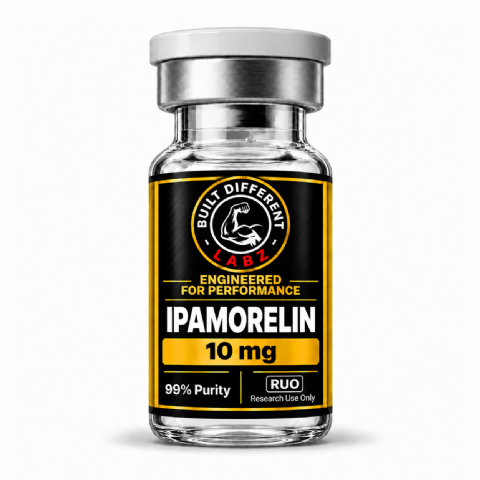
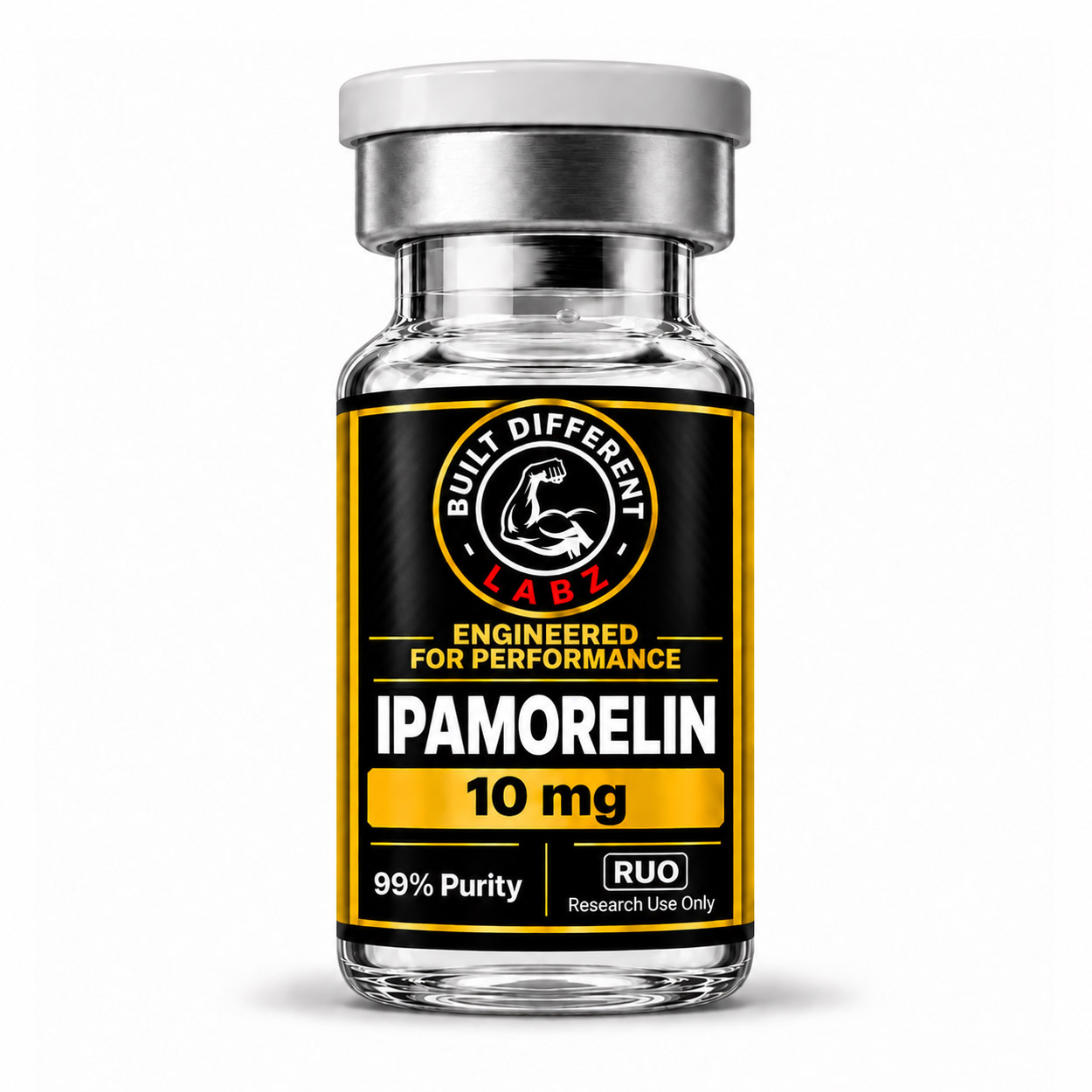
A vial labeled "Ipamorelin 10mg" represents a total of 10 milligrams of Ipamorelin in the vial. It does not mean that 10mg is an established or appropriate single human dose.
Ipamorelin is a synthetic pentapeptide, meaning it consists of five amino acids.
It was developed as a selective growth hormone secretagogue.
Its main action is stimulation of the growth hormone secretagogue receptor, commonly called GHS-R1a.
This is the same receptor activated by the naturally occurring hormone ghrelin.
Because of this, Ipamorelin is often described as a ghrelin receptor agonist.
Ipamorelin primarily stimulates the pituitary gland to release growth hormone.
The simplified pathway is:
Ipamorelin
Ghrelin receptor activation
Pituitary stimulation
Growth hormone release
Increased growth hormone signaling
Potential increase in IGF-1 signaling
These hormonal pathways are involved in:
Tissue repair
Protein metabolism
Fat metabolism
Bone metabolism
Muscle maintenance
Recovery
Sleep
Connective-tissue health
However, increasing growth hormone secretion does not automatically mean dramatic muscle growth or fat loss.
Ipamorelin primarily activates GHS-R1a.
This receptor is found in several tissues but is particularly important in the hypothalamic-pituitary system.
Activation of this receptor can stimulate pulses of growth hormone release.
This is different from injecting recombinant human growth hormone.
With HGH, growth hormone itself is administered.
With Ipamorelin, the goal is to stimulate the person's own pituitary gland to release growth hormone.
This is one of the most important distinctions.
HGH provides growth hormone directly.
Ipamorelin stimulates endogenous growth hormone secretion.
| Characteristic | Ipamorelin | HGH |
|---|---|---|
| Compound | Peptide secretagogue | Growth hormone |
| Main target | Ghrelin receptor | GH receptors |
| GH source | Your pituitary | Exogenous injection |
| GH pattern | Stimulates pulses | Adds GH directly |
| IGF-1 effect | Potential increase | Usually increases |
| FDA-approved for GH deficiency | No | Certain HGH products are |
| Muscle effects | Indirect | More direct GH exposure |
| Fat metabolism | Potential effect | Established GH effect |
| Human research | Limited | Extensive |
The pulsatile aspect is one reason Ipamorelin has attracted interest.
Natural growth hormone isn't normally released continuously. It is secreted in pulses, particularly during sleep.
The principal biological effect of Ipamorelin is stimulation of growth hormone release.
Growth hormone subsequently influences many tissues.
Some effects occur directly through GH receptors.
Others occur indirectly through IGF-1.
This means Ipamorelin can potentially influence several systems downstream from growth hormone.
IGF-1 stands for insulin-like growth factor 1.
Growth hormone stimulates the liver and other tissues to produce IGF-1.
IGF-1 participates in:
Cellular growth
Protein synthesis
Bone growth
Muscle biology
Tissue repair
Therefore, repeated stimulation of growth hormone could potentially influence IGF-1 levels.
However, the magnitude varies considerably between individuals.
Ipamorelin became interesting because early research suggested it could stimulate growth hormone with less stimulation of some other pituitary hormones than older growth hormone secretagogues.
Older compounds can potentially influence hormones such as:
Cortisol
Prolactin
ACTH
Ipamorelin was developed with greater selectivity for growth hormone release.
This is one reason it became popular in peptide discussions.
"More selective" should not be interpreted as "free of side effects."
Ipamorelin is frequently marketed for muscle growth.
The theory is straightforward:
Increased GH
Potentially increased IGF-1
Improved recovery and protein metabolism
Potentially improved environment for maintaining or gaining lean tissue
However, Ipamorelin should not be compared directly with powerful anabolic steroids.
Growth hormone signaling and androgen signaling are very different.
Ipamorelin isn't a replacement for testosterone.
Not in the conventional steroid sense.
Anabolic steroids bind androgen receptors.
Ipamorelin activates ghrelin receptors and stimulates growth hormone secretion.
Any anabolic effect would therefore be indirect and mediated through growth hormone and potentially IGF-1.
Bodybuilders are generally interested in Ipamorelin for potential effects involving:
Recovery
Sleep
Growth hormone secretion
IGF-1
Lean tissue
Fat metabolism
Connective tissue
Training recovery
The magnitude of these effects in healthy trained adults isn't nearly as well established as marketing material often suggests.
Growth hormone participates in lipolysis.
Lipolysis is the process of releasing stored fatty acids from fat cells.
Because Ipamorelin stimulates growth hormone, there is a theoretical mechanism through which it could influence fat metabolism.
However, Ipamorelin isn't an FDA-approved obesity treatment and shouldn't be considered comparable to established weight-management medications.
Changes in body composition still depend heavily on:
Calorie intake
Diet
Training
Sleep
Hormonal status
Genetics
Recovery is one of the most commonly promoted uses.
Growth hormone participates in tissue maintenance and repair.
Potential areas of interest include:
Muscle recovery
Connective tissue
Collagen
Bone
General exercise recovery
However, evidence supporting specific claims such as "Ipamorelin heals injuries" is much weaker than simply demonstrating that it can stimulate growth hormone.
Growth hormone and IGF-1 participate in collagen and connective-tissue metabolism.
This has generated interest in Ipamorelin for tendon recovery.
But there is a major distinction between:
"Growth hormone signaling affects connective tissue."
and:
"Ipamorelin has been clinically proven to repair injured human tendons."
The second claim has not been established.
Growth hormone and IGF-1 are important regulators of bone metabolism.
They participate in:
Bone formation
Bone remodeling
Osteoblast activity
Skeletal maintenance
Consequently, growth hormone secretagogues have been investigated for potential effects on bone.
That does not make Ipamorelin an approved osteoporosis medication.
Many people using growth hormone secretagogues report improved sleep.
There is biological reasoning behind the relationship because natural growth hormone secretion is closely associated with sleep.
One of the body's largest daily GH pulses normally occurs during deep sleep.
Anecdotal reports involving Ipamorelin include:
Deeper sleep
Better sleep quality
Improved recovery
More vivid dreams
These effects aren't guaranteed.
This is an interesting difference between Ipamorelin and some other ghrelin receptor agonists.
Ghrelin is strongly associated with hunger.
Some older growth hormone secretagogues, particularly GHRP-6, can produce substantial hunger.
Ipamorelin is often described as causing less dramatic appetite stimulation.
However, increased hunger can still occur because it acts on the ghrelin receptor.
GHRP-6 is another growth hormone secretagogue.
GHRP-6 is particularly known for producing significant hunger.
Ipamorelin is generally considered more selective.
A simplified comparison:
| Characteristic | Ipamorelin | GHRP-6 |
|---|---|---|
| GH stimulation | Yes | Yes |
| Ghrelin receptor | Yes | Yes |
| Hunger | Usually less pronounced | Often substantial |
| Cortisol effects | Generally lower | Potentially greater |
| Prolactin effects | Generally lower | Potentially greater |
| Selectivity | Higher | Lower |
This selectivity is one of Ipamorelin's primary selling points.
GHRP-2 is another potent growth hormone secretagogue.
GHRP-2 may produce stronger GH stimulation in some circumstances but can also have greater effects on other hormones.
Ipamorelin is generally valued for trying to produce a cleaner GH-secretory response.
Whether that theoretical advantage produces superior long-term outcomes hasn't been established.
These two peptides are frequently discussed together because they affect growth hormone through different receptors.
Ipamorelin stimulates the ghrelin receptor.
CJC-related peptides act on the growth hormone-releasing hormone receptor.
Simplified:
Ipamorelin -> GHS-R1a receptor
CJC-related peptide -> GHRH receptor
Both pathways converge on growth hormone secretion.
This is why the compounds are frequently combined experimentally.
The theory is that activating two different signaling pathways can produce a greater growth hormone pulse than activating either pathway alone.
One pathway provides GHRH-receptor stimulation.
The other provides ghrelin-receptor stimulation.
This is sometimes described as synergistic growth hormone release.
However, popular peptide-clinic protocols shouldn't automatically be interpreted as FDA-established treatment regimens.
These peptides have very different primary mechanisms.
| Characteristic | Ipamorelin | BPC-157 |
|---|---|---|
| Main purpose of research | GH stimulation | Tissue repair |
| Ghrelin receptor | Yes | No |
| Growth hormone | Directly stimulates release | Not primary mechanism |
| IGF-1 | May increase indirectly | Not primary mechanism |
| Tendon interest | Indirect through GH | Major preclinical interest |
| Gut research | Not primary | Major area |
| Muscle growth | Potential indirect effect | Not established |
| FDA-approved | No | No |
TB-500 is primarily associated with:
Cell migration
Actin regulation
Angiogenesis
Tissue repair
Wound healing
Ipamorelin is primarily associated with:
Growth hormone secretion
Ghrelin receptor activation
IGF-1 signaling
Recovery
Metabolism
They work through fundamentally different pathways.
GHK-Cu is primarily associated with:
Collagen
Skin
Hair
Fibroblasts
Wound healing
Tissue remodeling
Ipamorelin primarily affects the growth hormone system.
Although both may be discussed in "anti-aging" or recovery settings, their mechanisms are very different.
PT-141 primarily acts through melanocortin receptors and affects sexual desire and arousal.
Ipamorelin primarily activates ghrelin receptors and stimulates growth hormone.
They have little pharmacological similarity beyond both being synthetic peptides.
Research suppliers commonly offer Ipamorelin in lyophilized vials containing amounts such as:
5mg
10mg
A vial labeled:
"Ipamorelin 10mg"
means the supplier represents the vial as containing 10 milligrams total.
It does not mean that 10mg is intended as one administration.
There is no FDA-approved Ipamorelin dosing protocol for bodybuilding, anti-aging, fat loss, or athletic recovery.
Ipamorelin is frequently sold as a lyophilized research peptide.
Experimental use commonly involves subcutaneous administration.
However, there is no FDA-established injectable regimen specifying:
Dose
Frequency
Treatment duration
Maximum exposure
Cycling schedule
Long-term safety
Research-vial protocols found online should not be treated as established medical dosing instructions.
Ipamorelin is generally considered a relatively short-acting peptide.
Its pharmacological importance is not simply how long the peptide remains circulating.
The important event is the growth hormone pulse produced following receptor activation.
Growth hormone and downstream IGF-1 signaling can continue to have biological effects after Ipamorelin itself has largely disappeared from circulation.
There are several different meanings of "work."
Growth hormone secretion can respond relatively quickly following exposure.
Changes in things such as:
Body composition
Recovery
Connective tissue
Muscle mass
would theoretically require considerably longer.
Claims that dramatic body-composition changes should occur within a few days aren't realistic.
Potential adverse effects associated with Ipamorelin and increased GH signaling can include:
Headache
Flushing
Dizziness
Increased appetite
Fatigue
Water retention
Injection-site irritation
Tingling or numbness
Changes in blood glucose
Insulin resistance
The actual frequency and long-term significance of these effects are not adequately characterized for widespread experimental use.
Growth hormone signaling can affect fluid and sodium balance.
Consequently, increased GH activity can potentially cause:
Water retention
Puffiness
Swelling
Increased scale weight
This does not necessarily represent muscle gain.
This is an important consideration.
Growth hormone can oppose some of insulin's actions.
Higher growth hormone exposure can potentially contribute to:
Higher blood glucose
Reduced insulin sensitivity
Increased insulin resistance
This becomes particularly relevant with prolonged or excessive GH-related exposure.
People with diabetes or impaired glucose regulation should be especially cautious about experimenting with growth hormone secretagogues.
Higher growth hormone and IGF-1 exposure can sometimes contribute to fluid retention and nerve compression.
With GH-related compounds, symptoms can potentially include:
Tingling fingers
Numbness
Hand discomfort
Carpal tunnel-like symptoms
These effects are more classically associated with substantial HGH exposure, but they're relevant to the biological pathway Ipamorelin attempts to stimulate.
One of Ipamorelin's proposed advantages is relatively low prolactin stimulation compared with some older GHRPs.
This doesn't establish that prolactin can never change.
It means Ipamorelin demonstrated greater GH selectivity in experimental research.
Similarly, Ipamorelin has generally demonstrated less cortisol stimulation than some older growth hormone secretagogues.
That is part of the reason it became characterized as a more selective GHS.
Ipamorelin isn't primarily a testosterone-boosting peptide.
It doesn't directly stimulate the androgen receptor or primarily target the LH/testosterone pathway.
Any claims that Ipamorelin dramatically increases testosterone aren't well supported.
Ipamorelin isn't an anabolic steroid and isn't generally associated with direct suppression of natural testosterone production in the same manner as exogenous testosterone or anabolic steroids.
Its primary endocrine effect involves the GH axis rather than the reproductive axis.
Traditional steroid-style post-cycle therapy isn't generally associated with Ipamorelin.
PCT is primarily intended to address suppression of the hypothalamic-pituitary-gonadal axis following androgen use.
Ipamorelin doesn't primarily operate through that system.
Growth hormone and IGF-1 are involved in cellular growth.
That creates legitimate questions about chronically increasing GH/IGF-1 signaling in people who have existing tumors or abnormal cell growth.
This does not mean Ipamorelin has been demonstrated to cause cancer.
The concern is that growth-promoting signaling pathways can theoretically influence already abnormal cells.
Long-term human safety research is insufficient to fully characterize this risk.
Excessive long-term growth hormone exposure can affect tissues throughout the body.
Extremely high chronic GH exposure, as occurs in conditions such as acromegaly, can cause significant tissue and organ changes.
That doesn't mean normal experimental Ipamorelin exposure produces acromegaly.
It demonstrates why continually increasing growth hormone shouldn't automatically be assumed to be harmless.
Research-peptide quality is an important practical concern.
Potential issues include:
Incorrect peptide
Incorrect amount
Chemical impurities
Degradation
Bacterial contamination
Endotoxins
Poor sterility
Improper storage
A label stating:
"Ipamorelin 10mg - 99 percent purity"
doesn't independently establish that the vial actually contains exactly 10mg of correctly synthesized Ipamorelin.
When properly tested, peptide purity is commonly evaluated using analytical methods such as HPLC.
Mass spectrometry can help confirm molecular identity.
However, high analytical purity does not automatically demonstrate:
Sterility
Low endotoxin levels
Correct vial quantity
Safety for human injection
Those require separate testing.
Research Use Only, or RUO, means the product is marketed for laboratory research rather than as an approved medication for human treatment.
RUO labeling doesn't indicate FDA approval for human injection.
Ipamorelin is not an FDA-approved medication for:
Bodybuilding
Muscle growth
Fat loss
Anti-aging
Athletic recovery
Growth hormone optimization
Injury healing
There is no FDA-approved Ipamorelin dosing regimen for these purposes.
Growth hormone secretagogues are prohibited in drug-tested competition under major anti-doping rules.
Athletes subject to anti-doping testing should not assume Ipamorelin is permissible simply because it isn't an anabolic steroid.
Growth hormone release:
Well supported as Ipamorelin's primary pharmacological effect.
Ghrelin receptor activation:
Well established as its primary mechanism.
IGF-1 elevation:
Biologically plausible downstream effect, dependent on exposure and individual response.
Muscle growth:
Potential indirect effect, but strong bodybuilding claims are not established.
Fat loss:
Biologically plausible through GH signaling but not an established obesity treatment.
Recovery:
Potential benefit but insufficient evidence for many specific athletic claims.
Tendon healing:
Not established as a clinical treatment.
Sleep improvement:
Commonly discussed, but evidence for major clinical benefit is limited.
Anti-aging:
Not established.
Long-term safety in healthy users:
Insufficiently characterized.
FDA-approved treatment:
No.
Ipamorelin's most interesting characteristic is its relative selectivity.
It was designed to stimulate growth hormone secretion through the ghrelin receptor while producing less stimulation of cortisol and prolactin than some earlier growth hormone-releasing peptides.
That makes its basic concept:
Stimulate the body's own pulsatile growth hormone system rather than directly administering growth hormone.
Whether that translates into meaningful long-term advantages for healthy adults remains much less certain.
The biggest limitation is the difference between demonstrating that Ipamorelin releases growth hormone and demonstrating that it produces meaningful clinical outcomes.
We can reasonably say:
"Ipamorelin stimulates growth hormone secretion."
We cannot automatically convert that into:
"Ipamorelin dramatically builds muscle, burns fat, reverses aging, improves sleep, and heals injuries."
Those are separate claims requiring separate clinical evidence.
Ipamorelin is a synthetic five-amino-acid growth hormone secretagogue primarily associated with:
Ghrelin receptor activation
Growth hormone release
Potential downstream IGF-1 signaling
Recovery
Body-composition research
Fat metabolism
Connective-tissue interest
Bone metabolism
Its distinguishing characteristic is relatively selective stimulation of growth hormone compared with several older growth hormone secretagogues.
However, Ipamorelin is not FDA approved for bodybuilding, fat loss, anti-aging, or athletic recovery. Long-term safety in healthy people using research-grade Ipamorelin isn't adequately established.
"Ipamorelin 10mg" describes the represented total amount of peptide contained in a vial. It should not be interpreted as a recommended 10mg dose.
The most accurate description is:
Ipamorelin is an experimental growth hormone secretagogue that activates the ghrelin receptor and stimulates endogenous growth hormone release, but its benefits for muscle growth, fat loss, recovery, and anti-aging remain considerably less established than its basic ability to stimulate GH.
We do not accept returns or issue refunds for any reason, beside manufacturing defects.
Feel free to contact us if you have any questions or concerns about our Return Policy.