We offer FREE SHIPPPING on all orders!
We offer FREE SHIPPPING on all orders!
| THIS PRODUCT IS INTENDED AS A RESEARCH CHEMICAL ONLY. This designation allows the use of research chemicals strictly for invitro testing and laboratory experimentation only. All product information available on this website is for educational purposes only. Bodily introduction of any kind into humans or animals is strictly prohibited by law. This product should only be handled by licensed, qualified professionals. This product is not a drug, food, or cosmetic and may not be misbranded, misused or mislabeled as a drug, food, or cosmetic. |
Glutathione is a naturally occurring antioxidant produced throughout the human body and is one of the most important components of the cellular antioxidant and detoxification systems.
Unlike many of the compounds commonly sold alongside research peptides, glutathione is not technically a peptide hormone. It is a small tripeptide composed of three amino acids:
Glutamate
Cysteine
Glycine
Its abbreviated structure is commonly written as:
GSH
Glutathione participates in antioxidant defense, redox regulation, detoxification, immune function, mitochondrial protection, protein function, and cellular defense against oxidative stress.
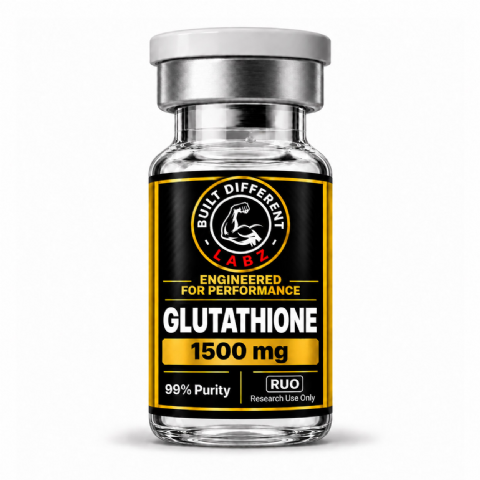
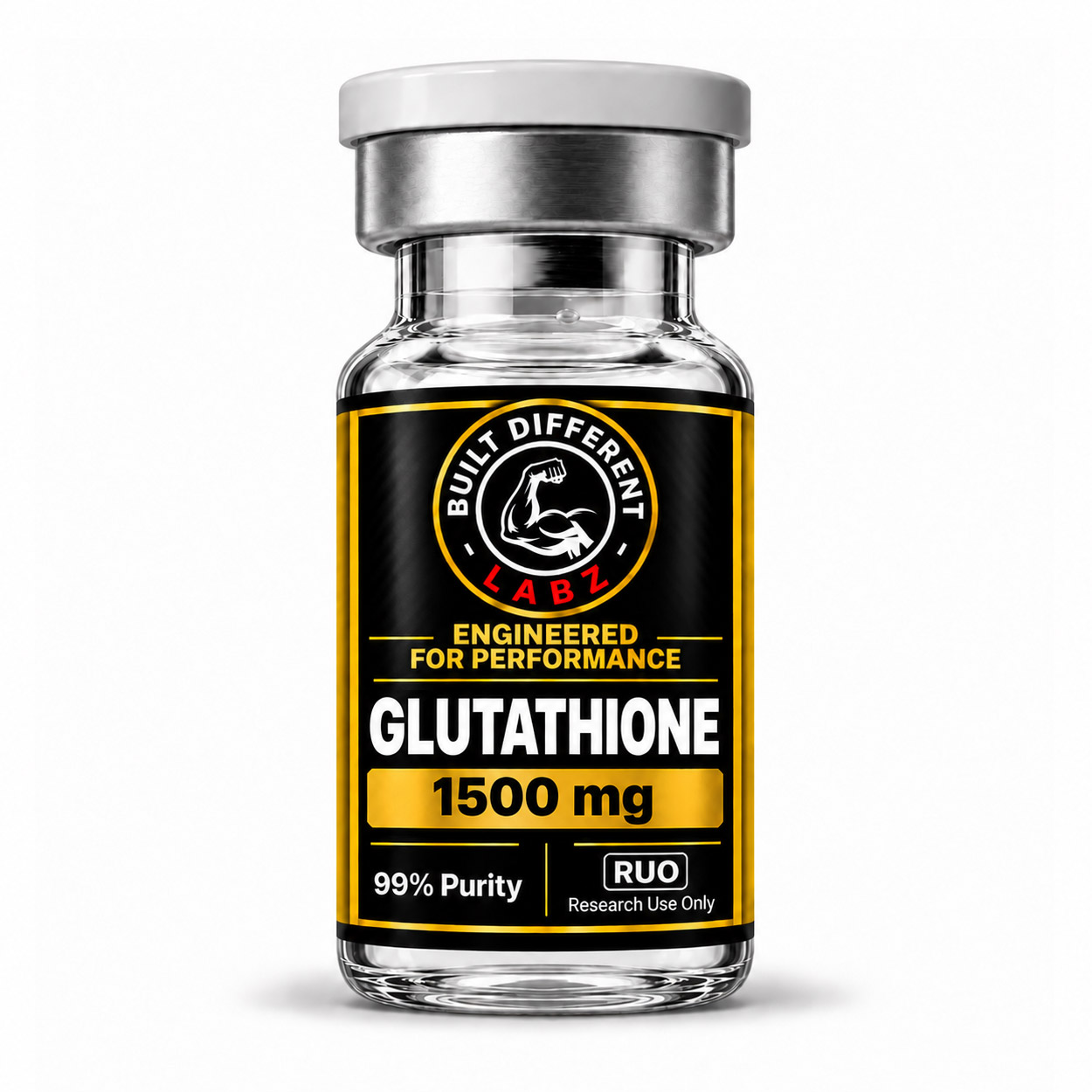
A vial labeled "Glutathione 1500mg" represents a total of 1,500 milligrams of glutathione in the vial. It does not automatically represent an appropriate single human dose.
Glutathione is one of the body's major endogenous antioxidants.
"Endogenous" means the body naturally produces it.
Glutathione is present in nearly every cell, with particularly important concentrations in tissues such as the:
Liver
Kidneys
Lungs
Brain
Red blood cells
The liver is especially important because glutathione participates extensively in metabolic processing and detoxification.
Normal cellular metabolism continuously produces reactive molecules known as:
Reactive oxygen species
or:
ROS.
At controlled levels, these molecules participate in normal cellular signaling.
When their production exceeds the body's antioxidant defenses, oxidative stress can occur.
Oxidative stress can damage:
DNA
Proteins
Cell membranes
Mitochondria
Lipids
Glutathione is one of the body's primary defenses against excessive oxidative stress.
Glutathione exists primarily in two related states:
GSH = reduced glutathione.
GSSG = oxidized glutathione.
Reduced glutathione can donate reducing capacity during antioxidant reactions.
As this occurs, glutathione can become oxidized.
The body can then recycle oxidized glutathione back toward its reduced form.
This creates a continuous cellular antioxidant cycle.
The balance between reduced and oxidized glutathione provides information about cellular redox status.
A relatively healthy reducing environment generally maintains substantial amounts of glutathione as GSH.
During significant oxidative stress, more glutathione may become oxidized.
Therefore, researchers often examine:
GSH/GSSG ratio
as a marker of cellular redox balance.
Glutathione participates in numerous biochemical systems.
One important pathway involves the enzyme:
Glutathione peroxidase.
The simplified process is:
Reactive peroxide
plus
Glutathione
Glutathione peroxidase
Less reactive products
Oxidized glutathione
The body can subsequently recycle oxidized glutathione.
Glutathione peroxidases are enzymes that use glutathione to reduce harmful peroxides.
These include:
Hydrogen peroxide
Lipid peroxides
This helps protect cellular structures from oxidative damage.
Selenium is also important because several glutathione peroxidase enzymes are selenium-dependent.
Another important enzyme is:
Glutathione reductase.
Its job is to help convert oxidized glutathione, GSSG, back into reduced glutathione, GSH.
This process uses:
NADPH.
The antioxidant system therefore functions as a recycling network rather than a one-time reaction.
Oxidative stress can increase during:
Illness
Inflammation
Environmental exposures
Intense exercise
Aging
Metabolic dysfunction
Mitochondrial dysfunction
Glutathione helps maintain cellular redox balance during these conditions.
However, oxidative stress is not universally harmful.
Reactive oxygen species also participate in normal signaling and exercise adaptation.
The objective of antioxidant biology is balance rather than complete elimination of ROS.
The liver contains particularly high concentrations of glutathione.
Glutathione participates in:
Drug metabolism
Chemical processing
Antioxidant defense
Detoxification reactions
Protection against reactive metabolites
This is one reason glutathione is frequently associated with "liver detox."
However, that phrase can oversimplify what actually occurs.
The liver transforms many compounds through metabolic reactions commonly divided into phases.
Phase I metabolism can modify compounds through reactions such as oxidation.
Phase II metabolism can attach molecules that make certain compounds easier to eliminate.
Glutathione conjugation is one important Phase II pathway.
Glutathione S-transferases, or GSTs, are enzymes that can attach glutathione to certain reactive compounds.
The general pathway is:
Reactive compound
plus
Glutathione
GST enzyme
Glutathione conjugate
Further metabolism and elimination
This is a real biochemical detoxification process.
One of the clearest examples of glutathione's importance involves acetaminophen metabolism.
A small portion of acetaminophen is converted into a reactive metabolite called:
NAPQI.
Under normal circumstances, glutathione helps neutralize NAPQI.
In severe acetaminophen overdose, glutathione stores can become depleted.
NAPQI can then damage liver cells.
This is one reason N-acetylcysteine is used medically for acetaminophen poisoning: it helps restore glutathione availability.
Suspected acetaminophen overdose is a medical emergency and should not be self-treated with glutathione products.
N-acetylcysteine, or NAC, is closely connected to glutathione.
NAC provides cysteine.
Cysteine is frequently the limiting amino acid for glutathione synthesis.
The pathway can be simplified as:
NAC
Cysteine
Glutathione synthesis
Increased cellular glutathione availability
This is why NAC and glutathione are frequently discussed together.
Glutathione:
Provides glutathione itself.
NAC:
Provides a precursor used by the body to manufacture glutathione.
NAC also has additional biological effects independent of glutathione.
Neither should automatically be considered superior in every situation.
Glutathione synthesis occurs inside cells.
The body combines:
Glutamate
plus
Cysteine
and then adds:
Glycine.
Unlike ordinary peptide synthesis performed by ribosomes, glutathione is produced through specialized enzymatic reactions.
Cysteine contains a sulfur-containing thiol group.
This chemical group is central to glutathione's antioxidant activity.
Cysteine availability can also limit the body's ability to manufacture glutathione.
This explains why cysteine-containing compounds such as NAC can influence glutathione levels.
Mitochondria produce ATP, the primary cellular energy currency.
They also generate reactive oxygen species during normal energy production.
Mitochondrial glutathione helps protect against excessive oxidative damage.
This makes glutathione important for:
Mitochondrial membranes
Enzymes
Cellular energy systems
Redox balance
Both are discussed in mitochondrial research, but their mechanisms differ.
Glutathione:
Major endogenous antioxidant
Participates in redox reactions
Neutralizes reactive compounds
Functions throughout cells
SS-31:
Experimental mitochondria-targeting peptide
Interacts with cardiolipin
Targets inner mitochondrial membrane biology
Glutathione is therefore a fundamental component of normal human antioxidant physiology rather than an experimental mitochondrial peptide.
Intense exercise temporarily increases reactive oxygen species.
Glutathione participates in the body's response to this oxidative stress.
Exercise itself can also stimulate adaptive antioxidant defenses.
This is an important distinction because some oxidative signaling is necessary for normal training adaptation.
Glutathione is biologically important for cellular recovery from oxidative stress.
However, that does not establish high-dose glutathione as a powerful sports-recovery treatment.
Evidence for dramatic improvements in:
Muscle soreness
Strength recovery
Athletic performance
Muscle growth
is limited.
No.
Glutathione is not an anabolic compound.
It does not primarily stimulate:
Testosterone
Androgen receptors
Growth hormone
IGF-1
It should not be described as a muscle-building peptide.
Bodybuilding interest generally involves:
Antioxidant support
Recovery
Liver function
General wellness
It is not a replacement for anabolic hormones and does not directly stimulate hypertrophy.
Glutathione is not a conventional fat-loss compound.
It does not primarily produce:
Appetite suppression
GLP-1 activity
Amylin activity
Direct lipolysis
Changes in oxidative or metabolic health should not be interpreted as direct fat-burning effects.
Glutathione participates in maintaining healthy mitochondrial function.
This creates a theoretical relationship with cellular energy production.
However, glutathione itself is not a stimulant.
It should not be expected to produce an immediate caffeine-like energy effect.
Immune cells depend on appropriate redox balance.
Glutathione participates in:
Lymphocyte function
Cytokine regulation
Antioxidant protection
Cellular signaling
Glutathione deficiency can negatively affect immune-cell function.
However, glutathione should not simply be marketed as an "immune booster."
The immune system requires regulation rather than maximum activation.
Oxidative stress and inflammation are closely interconnected.
Reactive oxygen species can activate inflammatory signaling pathways.
Inflammation can also increase oxidative stress.
Glutathione helps regulate the redox environment within which these processes occur.
It is not equivalent to a conventional anti-inflammatory medication.
The brain has:
High oxygen consumption
High metabolic activity
Lipid-rich membranes
These characteristics make antioxidant defenses particularly important.
Glutathione is one of the major intracellular antioxidants in nervous-system tissue.
Changes in brain glutathione have been studied in numerous neurological and psychiatric conditions.
This does not establish glutathione as a treatment for those diseases.
Glutathione helps protect neurons against oxidative damage.
Research has investigated glutathione metabolism in conditions involving:
Parkinson's disease
Alzheimer's disease
Neurodegeneration
Brain injury
However, biological involvement does not automatically mean supplemental glutathione reverses these conditions.
Reduced glutathione levels have been observed in specific brain regions affected by Parkinson's disease.
This has generated considerable research interest.
However, glutathione is not an established cure or disease-reversing treatment for Parkinson's disease.
Skin is one of the most heavily marketed areas for glutathione.
Interest primarily involves:
Oxidative stress
Melanin production
Pigmentation
Skin brightness
Glutathione may influence melanogenesis through several mechanisms.
Glutathione has been investigated for its ability to alter skin pigmentation.
Proposed mechanisms include effects involving:
Tyrosinase
Melanin synthesis
Oxidative state
Eumelanin versus pheomelanin production
Some studies of oral or topical glutathione have reported modest pigmentation changes.
However, results are inconsistent and formulation dependent.
Injectable glutathione has been marketed in some settings for cosmetic skin lightening.
This use requires substantially more caution than ordinary antioxidant claims.
Cosmetic intravenous or injectable glutathione should not be assumed safe simply because glutathione naturally exists in the body.
Natural biological substances can still cause adverse effects when delivered pharmacologically.
Melanin is produced by melanocytes.
The major forms include:
Eumelanin:
Generally brown or black pigment.
Pheomelanin:
Generally yellow or reddish pigment.
Glutathione may influence the balance of melanogenesis.
However, pigmentation depends on many factors, including:
Genetics
UV exposure
Hormones
Melanocyte activity
These compounds can influence pigmentation in very different directions.
Melanotan-type compounds:
Activate melanocortin signaling and stimulate melanogenesis.
Glutathione:
Has been investigated for reducing or modifying pigmentation through antioxidant and melanogenesis-related mechanisms.
They are therefore fundamentally different.
Oxidative stress is one component of biological aging.
Glutathione levels and glutathione metabolism can change with age.
This has generated interest in maintaining glutathione status as part of healthy aging.
However, glutathione has not been demonstrated to:
Reverse human aging
Stop aging
Dramatically extend lifespan
Epithalon research primarily involves:
Telomerase
Telomeres
Pineal function
Melatonin
Gene regulation
Glutathione primarily involves:
Antioxidant defense
Redox regulation
Detoxification
Cellular protection
Their mechanisms are fundamentally different.
Alcohol metabolism can increase oxidative stress and alter liver glutathione metabolism.
Chronic heavy alcohol consumption can negatively affect antioxidant defenses.
Glutathione should not be interpreted as protection that makes excessive alcohol consumption safe.
Glutathione participates in the metabolism and elimination of certain reactive compounds.
This does not mean glutathione universally neutralizes:
Heavy metals
Pesticides
Industrial chemicals
Drugs
Poisons
Different toxic exposures require different medical treatments.
Glutathione does not primarily stimulate testosterone production.
It does not directly activate:
GnRH
LH
FSH
Androgen receptors
No steroid-like suppression of endogenous testosterone is expected from glutathione.
No.
Glutathione is not an anabolic steroid, SARM, or androgenic hormone.
Traditional post-cycle therapy does not apply.
Glutathione is not a GH secretagogue.
It does not work like:
CJC-1295
GHRP-2
GHRP-6
Ipamorelin
Sermorelin
Tesamorelin
Its primary biological function is antioxidant and redox regulation.
A vial labeled:
"Glutathione 1500mg"
means the vial is represented as containing a total of:
1,500 milligrams
or:
1.5 grams
of glutathione.
That describes the total amount of material in the vial.
It should not automatically be interpreted as a single administration amount.
Technically, glutathione is a tripeptide.
However, it is structurally unusual.
It contains a gamma-glutamyl bond between glutamate and cysteine rather than the conventional peptide linkage found in most proteins.
Its biological role is also very different from signaling peptides such as:
BPC-157
CJC-1295
GHRP-6
PT-141
Glutathione primarily functions as a cellular antioxidant and redox molecule.
Oral glutathione has historically generated debate because peptides can be degraded during digestion.
However, modern studies suggest that certain oral formulations can influence glutathione status.
Results depend on factors including:
Formulation
Dose
Duration
Baseline glutathione status
Individual absorption
It should not be assumed that every oral glutathione product has identical bioavailability.
Liposomal products attempt to package glutathione within lipid-based structures.
The objective is to potentially improve:
Stability
Absorption
Cellular delivery
Evidence varies by formulation.
"Liposomal" should not automatically be interpreted as proof of superior clinical effectiveness.
Injectable glutathione bypasses gastrointestinal absorption.
However, injectable administration introduces additional concerns involving:
Sterility
Endotoxins
Product identity
Concentration
Contamination
Hypersensitivity
Administration-related complications
An injectable-style vial should not automatically be considered equivalent to an approved pharmaceutical product.
Glutathione is an important antioxidant within respiratory tissue.
The lungs are continuously exposed to:
Oxygen
Environmental pollutants
Particles
Oxidants
Glutathione contributes to pulmonary antioxidant defenses.
This does not establish glutathione as a treatment for asthma, COPD, or other respiratory diseases.
The kidneys participate heavily in glutathione metabolism and amino-acid recycling.
Kidney function also affects the handling of numerous metabolites.
Glutathione should not be described as a kidney detoxification treatment.
Potential adverse effects depend heavily on formulation and route of administration.
Reported or possible effects can include:
Nausea
Abdominal discomfort
Bloating
Headache
Dizziness
Flushing
Rash
Hypersensitivity reactions
Injection-site reactions
Serious reactions are possible with injectable products, particularly when product quality or sterility is uncertain.
Inhaled glutathione can potentially provoke bronchospasm in susceptible individuals.
This is especially relevant for people with asthma or reactive airway disease.
The route of administration therefore matters substantially.
Glutathione itself is naturally present throughout the body, but this does not mean unlimited pharmacological exposure is automatically safe.
Long-term safety depends on:
Amount
Route
Formulation
Product quality
Medical conditions
Concurrent medications
Long-term high-dose injectable use has not been characterized as thoroughly as routine physiological glutathione biology.
For a glutathione vial, important quality characteristics include:
Correct molecular identity
Reduced versus oxidized glutathione content
Chemical purity
Exact fill quantity
Sterility
Endotoxin levels
Particulate contamination
Stability
A vial containing chemically pure glutathione is not automatically sterile.
Many products specifically contain:
Reduced Glutathione
or:
GSH.
This is the biologically active reduced form commonly discussed in antioxidant contexts.
Oxidized glutathione is:
GSSG.
The distinction can matter when evaluating product composition.
A chemical purity test may demonstrate that most detected material corresponds to glutathione.
It does not automatically establish:
Sterility
Endotoxin levels
Exact vial quantity
Pharmaceutical manufacturing quality
Stability
Human safety
These require separate evaluation.
This requires an important distinction from many research peptides.
Glutathione itself is a naturally occurring human molecule and is used in various pharmaceutical, supplement, and compounding contexts.
However, that does not mean every glutathione product or every proposed use is FDA approved.
In particular, a research-market 1500mg vial should not automatically be described as FDA-approved treatment for:
Skin whitening
Anti-aging
Athletic recovery
Liver detoxification
Fat loss
Bodybuilding
General wellness
Regulatory status applies to a specific drug product and indication, not simply to the name of a naturally occurring molecule.
Glutathione as a major human antioxidant:
Very strong.
Glutathione in cellular redox regulation:
Very strong.
Glutathione peroxidase biology:
Very strong.
Glutathione in liver metabolism:
Very strong.
Glutathione conjugation and detoxification:
Very strong.
Role in acetaminophen toxicity:
Very strong.
NAC supporting glutathione synthesis:
Very strong.
Glutathione in mitochondrial protection:
Strong.
Immune-system involvement:
Strong.
Oxidative-stress protection:
Strong.
Oral supplementation increasing glutathione status:
Some supportive human evidence, dependent on formulation.
Skin pigmentation effects:
Some human evidence, but inconsistent.
Injectable cosmetic skin whitening:
Not established as a routine safe or approved cosmetic treatment.
Athletic-performance enhancement:
Not established.
Muscle growth:
Not established.
Fat loss:
Not established.
Human lifespan extension:
Not established.
Unlike many experimental peptides, glutathione is not based primarily on a theoretical biological pathway.
Glutathione is already a fundamental component of normal human cellular physiology.
The basic antioxidant cycle is well established:
Glutathione
Reactive oxygen species
Antioxidant enzymes
Neutralization of reactive compounds
Oxidized glutathione
Recycling back to reduced glutathione
This system operates continuously throughout the body.
Glutathione's importance in antioxidant defense, detoxification, mitochondrial protection, and redox regulation is therefore exceptionally well established.
The biggest limitation is the tendency to take established glutathione biology and extrapolate it into claims that have not been demonstrated.
It is scientifically accurate to say:
Glutathione is one of the body's most important intracellular antioxidants.
It is not scientifically accurate to automatically conclude:
More glutathione will dramatically detoxify the body, whiten the skin, build muscle, burn fat, prevent disease, reverse aging, or extend lifespan.
Those are separate claims requiring separate clinical evidence.
Glutathione is a naturally occurring tripeptide composed of glutamate, cysteine, and glycine and is one of the body's most important intracellular antioxidants.
Its major biological roles include:
Antioxidant defense
Redox regulation
Liver metabolism
Detoxification reactions
Mitochondrial protection
Immune function
Cellular protection
Oxidative-stress management
"Glutathione 1500mg" describes a represented total vial content of 1,500 milligrams, or 1.5 grams. It should not automatically be interpreted as a single administration amount.
The most accurate description is:
Glutathione is an essential naturally occurring cellular antioxidant with exceptionally well-established roles in redox regulation, detoxification, mitochondrial protection and cellular defense against oxidative stress. Unlike experimental GH secretagogues or tissue-repair peptides, glutathione is a normal component of human physiology. However, the fact that glutathione is biologically essential does not establish every supplemental or injectable use as effective or safe. Claims involving dramatic skin whitening, athletic enhancement, muscle growth, fat loss, anti-aging or disease prevention go beyond its well-established antioxidant biology, and the safety and effectiveness of any 1500mg vial depend heavily on its formulation, manufacturing quality, sterility and intended use.
We do not accept returns or issue refunds for any reason, beside manufacturing defects.
Feel free to contact us if you have any questions or concerns about our Return Policy.