We offer FREE SHIPPPING on all orders!
We offer FREE SHIPPPING on all orders!
| THIS PRODUCT IS INTENDED AS A RESEARCH CHEMICAL ONLY. This designation allows the use of research chemicals strictly for invitro testing and laboratory experimentation only. All product information available on this website is for educational purposes only. Bodily introduction of any kind into humans or animals is strictly prohibited by law. This product should only be handled by licensed, qualified professionals. This product is not a drug, food, or cosmetic and may not be misbranded, misused or mislabeled as a drug, food, or cosmetic. |
Tesamorelin is a synthetic growth hormone-releasing hormone analogue that stimulates the pituitary gland to release growth hormone. It subsequently increases downstream insulin-like growth factor 1, or IGF-1.
Tesamorelin stands out from many of the peptides we have covered because it has an established pharmaceutical use and an FDA-approved form for a specific medical indication.
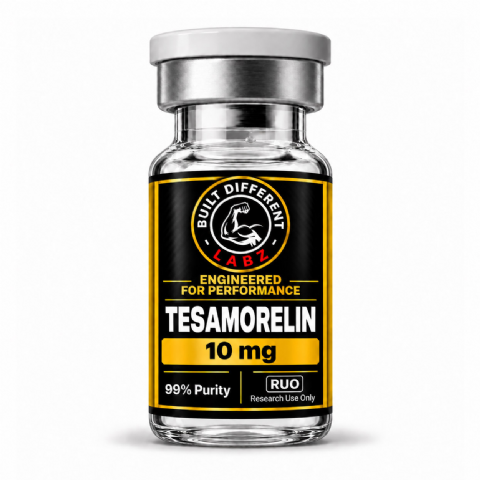
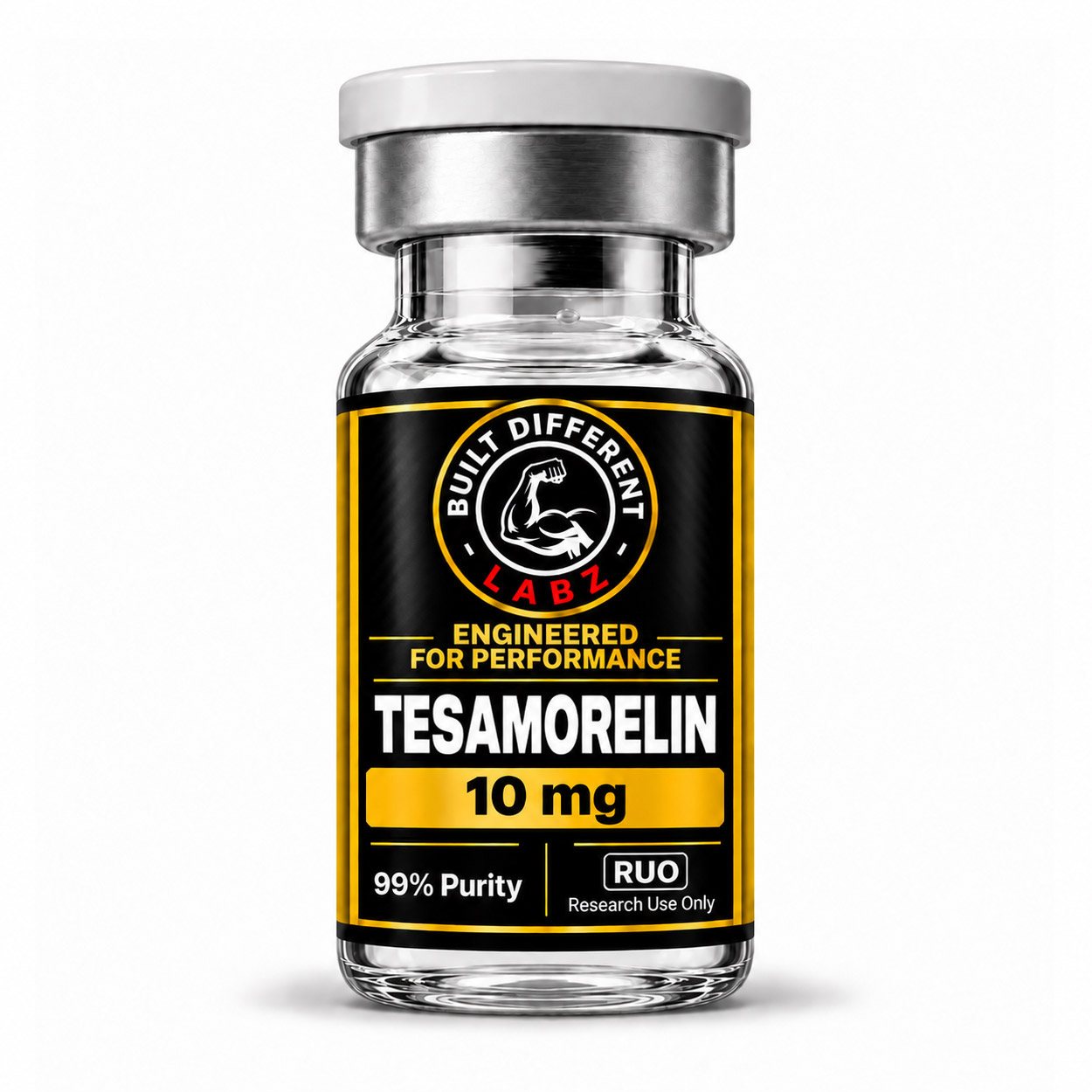
A vial labeled "Tesamorelin 10mg" represents a total of 10 milligrams of Tesamorelin in the vial. It does not mean that 10mg is an established or appropriate single dose.
Tesamorelin is a synthetic analogue of human GHRH.
GHRH stands for growth hormone-releasing hormone.
Natural GHRH is produced by the hypothalamus and signals the pituitary gland to release growth hormone.
Tesamorelin contains the 44-amino-acid sequence of human GHRH with a modification that improves its stability.
Its basic pathway is:
Tesamorelin
GHRH receptor activation
Pituitary stimulation
Growth hormone release
Increased IGF-1 production
Effects on fat metabolism and other GH-responsive tissues
Tesamorelin's primary pharmacological action is stimulation of endogenous growth hormone secretion.
Potential downstream effects include:
Increased growth hormone
Increased IGF-1
Increased lipolysis
Reduction of visceral abdominal fat in its approved population
Changes in body composition
Effects on glucose metabolism
Effects on connective tissue and protein metabolism
Its best-established clinical effect is reduction of excess abdominal visceral fat in adults with HIV-associated lipodystrophy.
Tesamorelin is unusual among commonly discussed peptides because an FDA-approved pharmaceutical version exists.
Its approved use is specifically for reducing excess abdominal fat in adults with HIV and lipodystrophy.
This is a narrow indication.
FDA approval for that population does not automatically establish Tesamorelin as an approved treatment for:
General obesity
Cosmetic weight loss
Bodybuilding
Anti-aging
Athletic performance
Muscle building
General abdominal-fat reduction
That distinction is important when writing product information.
Visceral adipose tissue, or VAT, is fat stored around the internal organs in the abdominal cavity.
It differs from subcutaneous fat, which is the fat directly underneath the skin.
Visceral fat surrounds organs such as the:
Liver
Intestines
Pancreas
Excess visceral fat is associated with metabolic and cardiovascular risk.
Tesamorelin became especially interesting because clinical studies demonstrated reductions in visceral abdominal fat in the population for which it was developed.
Tesamorelin is frequently described online as a "belly-fat peptide."
That description is overly broad.
The clinically demonstrated effect is specifically a reduction in visceral abdominal adipose tissue in adults with HIV-associated lipodystrophy.
It should not automatically be assumed that identical results occur in otherwise healthy people simply trying to become leaner.
Growth hormone promotes lipolysis.
Lipolysis is the process through which stored triglycerides are broken down and fatty acids are released from fat cells.
Tesamorelin increases endogenous GH secretion, which can increase lipolytic signaling.
The simplified pathway is:
Tesamorelin
Increased GH
Increased lipolysis
Changes in fat metabolism
Potential reduction in visceral adipose tissue
This mechanism is substantially different from appetite-suppressing drugs.
These compounds can both be discussed in relation to body composition, but they work very differently.
| Characteristic | Tesamorelin | Cagrilintide |
|---|---|---|
| Main pathway | GHRH/GH | Amylin |
| Appetite suppression | Not primary | Major effect |
| GH stimulation | Yes | No |
| IGF-1 increase | Yes | Not primary |
| Visceral-fat research | Major area | Weight loss overall |
| Calorie intake reduction | Not primary mechanism | Major mechanism |
| FDA-approved product | Yes, specific indication | No |
Cagrilintide primarily helps reduce food intake.
Tesamorelin primarily alters the GH/IGF-1 system and fat metabolism.
Tesamorelin does not contain growth hormone.
Instead, it binds to GHRH receptors on pituitary somatotroph cells.
Those cells subsequently release endogenous growth hormone.
This distinction is important.
Tesamorelin stimulates the body's GH-production system rather than providing recombinant HGH directly.
HGH supplies growth hormone directly.
Tesamorelin stimulates the pituitary gland to produce it.
| Characteristic | Tesamorelin | HGH |
|---|---|---|
| Compound | GHRH analogue | Growth hormone |
| Main target | GHRH receptor | GH receptor |
| GH source | Pituitary | External administration |
| IGF-1 | Increases indirectly | Increases |
| Natural feedback | Partially retained | More bypassed |
| Visceral-fat indication | Specific approved use | Different approved indications |
The ability to retain some physiological regulation of GH secretion is an important feature of GHRH analogues.
IGF-1 is one of the major downstream mediators of growth hormone.
Growth hormone stimulates IGF-1 production, particularly in the liver.
IGF-1 participates in:
Cellular growth
Muscle biology
Bone metabolism
Protein synthesis
Tissue repair
Tesamorelin can significantly increase IGF-1.
This is both part of its pharmacological effect and an important safety consideration.
These peptides are closely related.
Both stimulate the GHRH receptor.
Sermorelin consists of the active 1-29 portion of GHRH.
Tesamorelin is based on the full 44-amino-acid GHRH sequence and contains a modification that improves resistance to enzymatic degradation.
Simplified:
Sermorelin:
GHRH 1-29 analogue
Short acting
Stimulates GH
No currently marketed FDA-approved drug
Tesamorelin:
Modified GHRH 1-44 analogue
More resistant to degradation
Stimulates GH and IGF-1
FDA-approved pharmaceutical product for a specific indication
These compounds stimulate GH through different receptors.
Tesamorelin:
GHRH receptor agonist
Ipamorelin:
Ghrelin receptor agonist
Both ultimately stimulate the pituitary to release growth hormone.
However, they approach the pituitary through different signaling pathways.
Tesamorelin isn't an anabolic steroid.
Because it increases GH and IGF-1, there is biological potential for effects on:
Protein metabolism
Lean tissue
Recovery
Connective tissue
However, it should not be characterized as a proven bodybuilding drug.
Its established clinical purpose concerns visceral adipose tissue, not maximizing skeletal-muscle hypertrophy.
It can influence anabolic signaling indirectly through GH and IGF-1.
That is very different from androgenic anabolic activity.
Tesamorelin does not directly activate androgen receptors like testosterone or anabolic steroids.
Interest in bodybuilding generally centers around:
Visceral-fat reduction
GH secretion
IGF-1
Recovery
Body composition
Maintaining a leaner appearance
However, clinical evidence from HIV-associated lipodystrophy should not be presented as proof of equivalent bodybuilding results in healthy athletes.
Tesamorelin's strongest evidence concerns visceral fat rather than subcutaneous fat.
This distinction matters aesthetically.
A person can reduce visceral fat without experiencing an equally dramatic reduction in the pinchable fat underneath the skin.
Tesamorelin should therefore not simply be described as a universal fat-melting peptide.
Reduction of visceral fat does not necessarily produce enormous changes on the scale.
A treatment can improve abdominal fat distribution without causing the degree of total body-weight reduction associated with modern obesity medications.
Tesamorelin and GLP-1-based weight-loss medications therefore shouldn't be evaluated solely by comparing pounds lost.
Semaglutide primarily:
Reduces appetite
Increases satiety
Slows gastric emptying
Improves glucose regulation
Tesamorelin primarily:
Stimulates GH
Increases IGF-1
Promotes lipolytic signaling
Can reduce visceral adipose tissue in its approved population
These are fundamentally different strategies.
Tirzepatide activates GIP and GLP-1 receptors.
Its major weight-loss mechanism involves appetite and metabolic regulation.
Tesamorelin activates GHRH receptors.
Its primary clinical body-composition effect involves GH-mediated visceral-fat reduction.
Tesamorelin has generated substantial research interest regarding liver fat.
Clinical research in people with HIV has found reductions in hepatic fat in certain populations.
This has made Tesamorelin scientifically interesting for metabolic liver research.
However, it should not automatically be marketed as an established treatment for fatty liver disease in the general population.
Changes in visceral adiposity can potentially influence metabolic parameters.
Research has examined effects involving:
Triglycerides
Cholesterol
Insulin sensitivity
Other cardiometabolic markers
Results depend on the population and duration of treatment.
Tesamorelin isn't primarily a cholesterol medication.
This is an important safety issue.
Growth hormone can oppose some of insulin's actions.
Increasing GH can potentially:
Increase blood glucose
Reduce insulin sensitivity
Worsen glucose tolerance
Contribute to diabetes in susceptible individuals
Glucose monitoring is therefore relevant during legitimate medical treatment.
Growth hormone has complex effects on metabolism.
Although reducing visceral fat may improve some metabolic parameters, increased GH exposure itself can reduce insulin sensitivity.
Both effects can occur simultaneously.
This is why the overall metabolic effect cannot be predicted simply by saying that Tesamorelin reduces abdominal fat.
People with diabetes or impaired glucose regulation require particular caution with GH-stimulating therapies.
Tesamorelin can potentially worsen glucose control.
This is one reason medically prescribed Tesamorelin involves clinical monitoring rather than simply treating it as a cosmetic peptide.
Growth hormone and IGF-1 participate in:
Tissue maintenance
Collagen metabolism
Bone metabolism
Muscle recovery
Connective-tissue biology
Consequently, recovery benefits are biologically plausible.
However, Tesamorelin is not an approved treatment for sports injuries.
GH and IGF-1 influence collagen and connective-tissue metabolism.
This creates theoretical interest in tendon recovery.
It does not establish that Tesamorelin repairs torn tendons or ligaments.
Those claims go beyond the clinical evidence.
Natural growth hormone secretion is strongly associated with deep sleep.
Tesamorelin interacts with this endocrine system, but it is not primarily a sleep medication.
It does not work like DSIP, melatonin, or conventional sleep medications.
Tesamorelin is frequently discussed by anti-aging clinics because GH and IGF-1 decline with age.
Claims sometimes include:
Better body composition
Improved recovery
Increased energy
Improved skin
Better sleep
However, Tesamorelin is not FDA approved as an anti-aging medication.
There is also no good evidence that it extends human lifespan.
A product labeled:
"Tesamorelin 10mg"
represents 10 milligrams of total peptide in the vial.
That is the vial content, not a recommended amount to administer at once.
This distinction is particularly important because pharmaceutical Tesamorelin has specific formulation and prescribing requirements that should not be extrapolated to research-grade 10mg vials.
This is extremely important.
An FDA-approved Tesamorelin product is manufactured under pharmaceutical standards.
A vial sold online as:
"Tesamorelin 10mg - 99 percent purity - Research Use Only"
is not automatically equivalent.
Potential differences include:
Peptide identity
Actual concentration
Purity
Sterility
Endotoxin levels
Stability
Storage
Manufacturing consistency
Excipients
The existence of an FDA-approved Tesamorelin medication does not make an unrelated research vial FDA approved.
Tesamorelin is more resistant to enzymatic degradation than natural GHRH.
However, its purpose isn't to maintain permanently elevated GH concentrations.
It stimulates the pituitary and produces downstream GH and IGF-1 effects.
Its biological consequences can therefore continue beyond the period during which high concentrations of Tesamorelin itself remain in circulation.
Different effects occur on different timelines.
GH secretion:
Relatively rapid after receptor stimulation.
IGF-1:
Changes with repeated exposure.
Visceral-fat reduction:
Develops over months rather than days.
Body composition:
Gradual.
Claims of dramatic fat loss after only a few injections are not consistent with how the drug has been clinically studied.
An important finding from clinical research is that reductions in visceral fat are not necessarily permanent after treatment stops.
Visceral fat can accumulate again following discontinuation.
This indicates that Tesamorelin changes ongoing metabolic signaling rather than permanently destroying visceral fat cells.
Potential adverse effects associated with pharmaceutical Tesamorelin include:
Injection-site reactions
Joint pain
Muscle pain
Swelling
Peripheral edema
Tingling
Numbness
Carpal tunnel-like symptoms
Elevated blood glucose
Increased IGF-1
Hypersensitivity reactions
Not everyone experiences these effects.
Local reactions can include:
Redness
Itching
Pain
Irritation
Swelling
A severe allergic reaction requires immediate medical attention.
GH can influence sodium and fluid balance.
Potential effects include:
Puffiness
Swelling
Increased scale weight
Tightness in hands
Edema
Water retention should not be mistaken for muscle gain.
Increased GH and IGF-1 signaling can contribute to fluid retention and soft-tissue changes.
Possible symptoms include:
Tingling fingers
Numbness
Hand discomfort
Nerve compression
These effects are also associated with excessive HGH exposure.
Because Tesamorelin increases IGF-1, clinically significant elevation can occur.
This matters because IGF-1 is a powerful growth signal.
During medically supervised therapy, persistently elevated IGF-1 may require reassessment.
This is another reason GH-related peptides should not be viewed as compounds where "more is better."
Tesamorelin is particularly important in this area because GH and IGF-1 promote cellular growth.
This does not mean Tesamorelin has been proven to cause cancer.
The concern is that increasing growth-promoting signaling could potentially stimulate an existing malignancy.
Active malignancy is therefore a major concern with pharmaceutical Tesamorelin therapy.
A previous history of malignancy also requires careful clinical consideration.
Tesamorelin requires a functioning pituitary GH system.
Its mechanism depends on stimulating the pituitary gland.
This differs from injecting HGH, which supplies growth hormone directly and therefore bypasses that step.
Tesamorelin isn't primarily a testosterone-enhancing compound.
It targets the GH/IGF-1 axis rather than the reproductive hormone axis.
It should not be marketed as a direct testosterone booster.
Tesamorelin is not generally associated with the direct testosterone suppression produced by anabolic steroids or exogenous testosterone.
It doesn't primarily activate androgen receptors.
Traditional anabolic-steroid post-cycle therapy is not generally associated with Tesamorelin.
Its primary endocrine target is the GH axis rather than the testosterone axis.
Tesamorelin:
GHRH receptor agonist
Stimulates GH
Increases IGF-1
Clinically demonstrated visceral-fat effects
Has an FDA-approved pharmaceutical form
BPC-157:
Experimental tissue-repair peptide
Major preclinical interest in tendons and gastrointestinal tissue
Does not primarily stimulate GH
No FDA-approved product
TB-500-related research primarily involves:
Cell migration
Actin regulation
Angiogenesis
Tissue repair
Tesamorelin primarily involves:
GHRH signaling
Growth hormone
IGF-1
Visceral-fat metabolism
This is a useful comparison:
| Peptide | Primary pathway | Main effect |
|---|---|---|
| Tesamorelin | GHRH receptor | GH and IGF-1 stimulation |
| Sermorelin | GHRH receptor | GH stimulation |
| Ipamorelin | Ghrelin receptor | GH stimulation |
Tesamorelin has particularly strong clinical evidence for reducing visceral fat in its approved patient population.
Research peptide quality remains an important consideration.
Potential problems include:
Incorrect peptide
Incorrect amount
Chemical impurities
Degradation
Bacterial contamination
Endotoxins
Poor sterility
Improper storage
A label stating:
"Tesamorelin 10mg - 99 percent purity"
does not independently establish pharmaceutical quality.
When properly performed, analytical methods such as HPLC can assess peptide purity.
Mass spectrometry can help verify molecular identity.
However, analytical purity does not automatically demonstrate:
Sterility
Low endotoxin levels
Exact vial quantity
Correct formulation
Safety for human injection
These require separate testing.
Research Use Only, or RUO, indicates that a particular product is being marketed for laboratory research rather than as an approved medication for human treatment.
An RUO Tesamorelin vial should not be confused with FDA-approved pharmaceutical Tesamorelin.
Growth hormone stimulation:
Strong.
IGF-1 elevation:
Strong.
Visceral-fat reduction in adults with HIV-associated lipodystrophy:
Strong clinical evidence.
General obesity treatment:
Not established as an approved indication.
Subcutaneous-fat reduction:
Less impressive than its visceral-fat effect.
Muscle building:
Not established as a bodybuilding treatment.
Athletic recovery:
Biologically plausible but not an approved indication.
Anti-aging:
Not established.
Liver-fat reduction in certain studied populations:
Promising clinical evidence.
Long-term use:
Better characterized than many research peptides, but still requires medical monitoring.
FDA-approved pharmaceutical form:
Yes, for a specific indication.
Tesamorelin has something many commonly marketed peptides do not have: substantial controlled human clinical evidence demonstrating a measurable body-composition effect.
Its ability to reduce visceral abdominal fat in its approved population is clinically established.
It also has a clearly characterized mechanism:
GHRH receptor activation
Growth hormone secretion
IGF-1 elevation
Changes in adipose-tissue metabolism
That gives Tesamorelin considerably stronger pharmacological grounding than many peptides marketed primarily from animal studies or anecdotal reports.
The biggest mistake is taking evidence from adults with HIV-associated lipodystrophy and assuming identical results apply to healthy bodybuilders or anyone wanting to lose abdominal fat.
Those are different populations and different medical circumstances.
Tesamorelin can also produce meaningful endocrine effects.
Elevated IGF-1, glucose intolerance, edema, joint symptoms, nerve-compression symptoms, and concerns involving active malignancy make it substantially different from a harmless wellness supplement.
Tesamorelin is a modified 44-amino-acid GHRH analogue primarily associated with:
Growth hormone stimulation
Increased IGF-1
Lipolysis
Visceral-fat reduction
Body-composition changes
Metabolic research
Unlike many research peptides, Tesamorelin has an FDA-approved pharmaceutical form and substantial human clinical evidence.
Its established medical use, however, is specifically the reduction of excess abdominal fat in adults with HIV-associated lipodystrophy. That approval should not be generalized to bodybuilding, ordinary obesity, anti-aging, or cosmetic abdominal-fat reduction.
"Tesamorelin 10mg" describes the represented total amount of Tesamorelin contained in a vial. It should not be interpreted as a recommended 10mg dose.
The most accurate description is:
Tesamorelin is a clinically validated GHRH analogue that stimulates endogenous growth hormone and increases IGF-1, with demonstrated ability to reduce visceral abdominal fat in adults with HIV-associated lipodystrophy. Its use for general fat loss, bodybuilding, athletic recovery, or anti-aging goes beyond its established FDA-approved indication.
We do not accept returns or issue refunds for any reason, beside manufacturing defects.
Feel free to contact us if you have any questions or concerns about our Return Policy.