We offer FREE SHIPPPING on all orders!
We offer FREE SHIPPPING on all orders!
| THIS PRODUCT IS INTENDED AS A RESEARCH CHEMICAL ONLY. This designation allows the use of research chemicals strictly for invitro testing and laboratory experimentation only. All product information available on this website is for educational purposes only. Bodily introduction of any kind into humans or animals is strictly prohibited by law. This product should only be handled by licensed, qualified professionals. This product is not a drug, food, or cosmetic and may not be misbranded, misused or mislabeled as a drug, food, or cosmetic. |
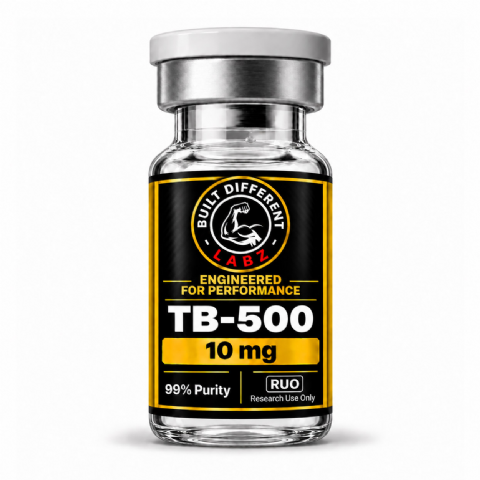
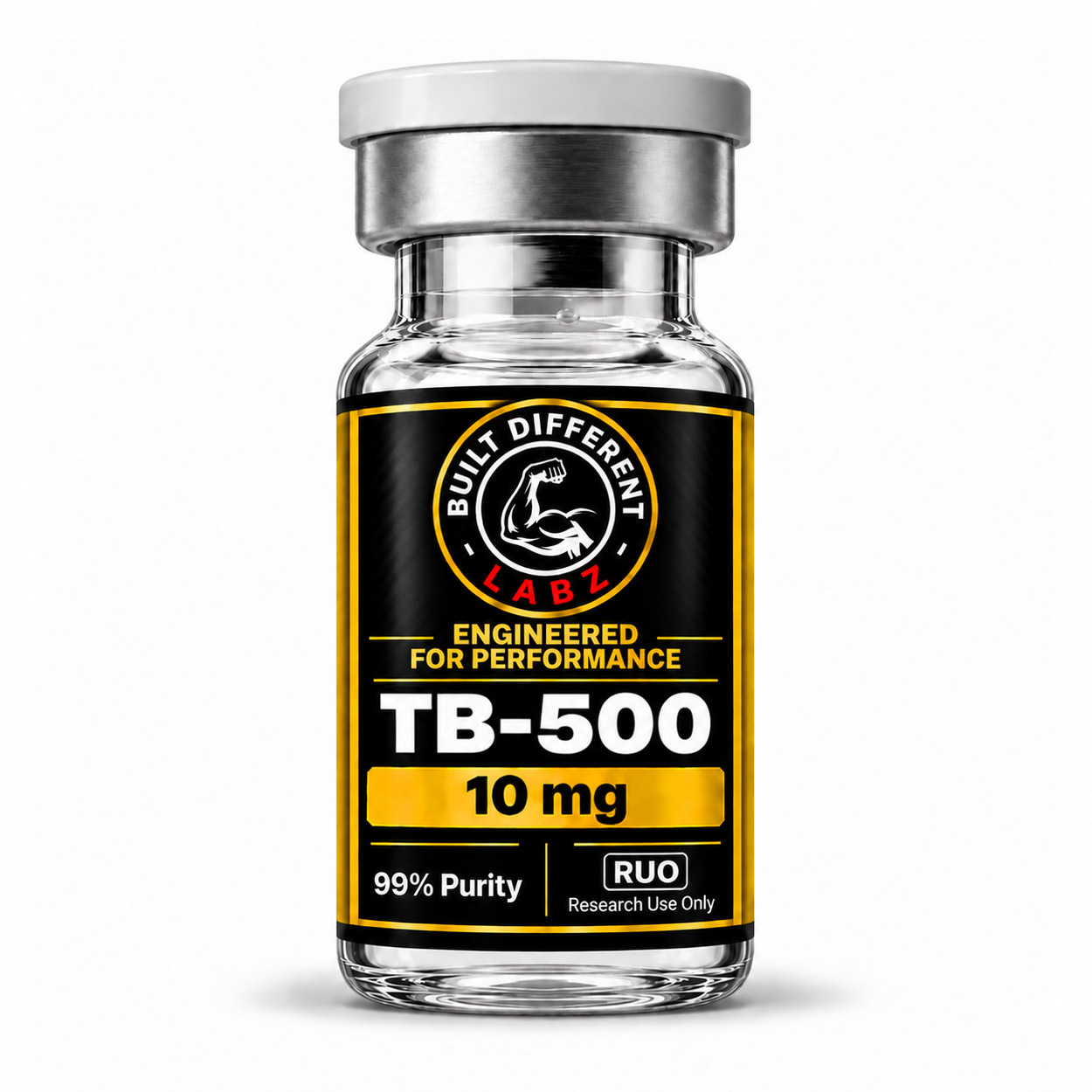
TB-500 is an experimental synthetic peptide associated with tissue repair, wound healing, cell migration, and recovery from musculoskeletal injuries. It is especially popular in bodybuilding and athletic recovery circles.
Like BPC-157, the most important distinction is that the biological research is interesting, but claims made about TB-500 in humans often go far beyond the available clinical evidence.
TB-500 is a synthetic peptide related to thymosin beta-4, commonly abbreviated Tbeta4.
Thymosin beta-4 is a naturally occurring 43-amino-acid peptide found in many tissues throughout the human body.
TB-500 is generally described as a synthetic fragment or derivative associated with the active region of thymosin beta-4 rather than simply being interchangeable with naturally occurring full-length thymosin beta-4.
This distinction matters because research performed using thymosin beta-4 cannot automatically be treated as research proving that commercially sold TB-500 produces exactly the same effects.
The primary interest in TB-500 involves tissue repair and regeneration.
Research surrounding thymosin beta-4 and related peptides has investigated effects involving:
Tendon repair
Ligament repair
Muscle recovery
Wound healing
Cell migration
Blood-vessel formation
Inflammation
Heart tissue
Corneal healing
Nervous-system injuries
Skin repair
In the bodybuilding community, TB-500 is primarily used experimentally in an attempt to improve recovery from injuries.
It is not primarily considered a muscle-building peptide.
One of the most important mechanisms associated with thymosin beta-4 involves a protein called actin.
Actin is an extremely important structural protein inside cells.
It plays roles in:
Cell movement
Cell structure
Muscle contraction
Tissue organization
Wound healing
Thymosin beta-4 binds to G-actin and helps regulate actin availability and polymerization.
This interaction may influence the ability of cells to migrate into damaged tissue.
Cell migration is extremely important during healing because repair cells need to move into an injured area before they can rebuild it.
This is one of the most interesting proposed properties of the thymosin beta-4 pathway.
When tissue is injured, various cells must migrate toward the injury.
These can include:
Endothelial cells
Fibroblasts
Keratinocytes
Immune cells
Other repair-related cells
Thymosin beta-4 appears capable of influencing cellular movement.
This may help explain why it has been investigated for wound healing and tissue regeneration.
Another important area is angiogenesis.
Angiogenesis means the formation of new blood vessels.
Damaged tissue needs:
Oxygen
Amino acids
Glucose
Growth factors
Repair cells
Other nutrients
Blood vessels provide these materials.
Thymosin beta-4 research suggests that it can influence endothelial cells and pathways associated with blood-vessel development.
This is one reason TB-500 became particularly interesting for poorly vascularized tissues such as tendons.
Tendon recovery is probably one of the biggest reasons athletes become interested in TB-500.
Common examples include injuries involving:
Biceps tendon
Triceps tendon
Patellar tendon
Quadriceps tendon
Achilles tendon
Rotator cuff
Forearm tendons
Elbow tendons
Tendons heal relatively slowly because their blood supply is limited compared with muscle.
The theoretical attraction of TB-500 is that its effects on cell migration, angiogenesis, inflammation, and tissue remodeling could potentially improve the healing environment.
That does not mean TB-500 has been clinically proven to repair human tendon injuries.
There is not enough human clinical evidence to say that it can.
There is an enormous difference between:
Tendinitis
Tendinosis
Minor tendon damage
Partial tendon tear
Complete tendon rupture
A completely ruptured Achilles or biceps tendon, for example, is a major structural injury that may require surgical repair.
An experimental peptide should not be considered a replacement for proper diagnosis, imaging, rehabilitation, or surgery when surgery is indicated.
The same theoretical mechanisms have generated interest in ligament recovery.
People commonly discuss it in relation to:
ACL injuries
MCL injuries
Ankle sprains
Shoulder injuries
Elbow ligament injuries
There is biological reasoning behind studying thymosin beta-4 pathways in connective-tissue repair.
There is not strong evidence showing that TB-500 reliably regenerates damaged human ligaments.
Muscle contains a much greater blood supply than tendons and ligaments and normally heals considerably faster.
Research involving thymosin beta-4 has suggested potential effects on:
Muscle-cell migration
Tissue remodeling
Inflammation
Blood-vessel development
Recovery following injury
This has created interest in TB-500 for muscle strains and tears.
Again, improving muscle recovery is different from directly increasing muscle size.
There is little convincing evidence that TB-500 directly produces significant muscle hypertrophy.
It does not behave like:
Testosterone
Anabolic steroids
SARMs
Growth hormone
IGF-1
Someone recovering from an injury might indirectly regain muscle faster if they can resume normal training sooner.
That would be different from TB-500 directly causing muscle growth.
There is no strong evidence that TB-500 directly increases strength.
Any improvement could theoretically result from:
Reduced injury symptoms
Improved mobility
Better recovery
Returning to normal training
That is different from increasing muscle-force production pharmacologically.
There is little evidence supporting TB-500 as a meaningful fat-loss compound.
It should not be considered a traditional fat burner.
Thymosin beta-4 has demonstrated anti-inflammatory and tissue-protective properties in experimental research.
Inflammation is complicated because some inflammation is necessary for healing.
The goal of regenerative medicine isn't necessarily to eliminate inflammation completely.
Instead, researchers are interested in whether certain signaling pathways can create a more favorable healing environment.
TB-500-related pathways may influence that process.
Wound healing is one of the better-established areas of thymosin beta-4 research.
The healing process involves several stages:
Initial injury
Inflammation
Cell migration
Formation of new blood vessels
Collagen production
Tissue remodeling
Thymosin beta-4 appears capable of influencing several of these processes.
This is one reason researchers have studied it in skin and corneal wound healing.
Thymosin beta-4 has also generated significant interest in cardiovascular research.
Experimental studies have investigated whether it could influence:
Cardiac-cell survival
Blood-vessel formation
Tissue regeneration
Recovery following cardiac injury
This is scientifically interesting but should not be interpreted as evidence that commercially available TB-500 is an established treatment for heart disease.
Thymosin beta-4 has also been investigated in neurological and nerve-injury models.
Potential mechanisms include effects on:
Cell migration
Inflammation
Blood vessels
Tissue protection
Neural repair
This remains experimental and does not establish TB-500 as a treatment for human nerve damage.
One unusual claim commonly associated with TB-500 is increased flexibility.
Some users report:
Improved range of motion
Less stiffness
Easier joint movement
There isn't strong clinical evidence demonstrating that TB-500 directly increases flexibility.
If the effect occurs, it could potentially be secondary to reduced discomfort, inflammation, or improved tissue mobility.
Thymosin beta-4 has been investigated in relation to hair-follicle biology and cellular migration.
This has generated claims that TB-500 can increase hair growth.
There isn't sufficient clinical evidence to consider TB-500 an established treatment for hair loss.
Thymosin beta-4 participates in several biological processes involving immune and inflammatory responses.
TB-500 should not simply be described as an "immune booster."
The immune system involves hundreds of interconnected signaling pathways, and altering inflammatory signaling isn't necessarily equivalent to improving immune function.
Although the two are frequently grouped together, they are different peptides.
| Characteristic | BPC-157 | TB-500 |
|---|---|---|
| Primary research interest | Tissue protection and repair | Cell migration and tissue repair |
| Tendons | Major area of interest | Major area of interest |
| Ligaments | Major area of interest | Major area of interest |
| Muscle recovery | Potential | Potential |
| Gut research | Extensive | Much less prominent |
| Angiogenesis | Potential effect | Important area of interest |
| Cell migration | Potential effect | Particularly important |
| Actin interaction | Not primary mechanism | Major mechanism associated with Tbeta4 |
| Direct muscle building | Not established | Not established |
| Human evidence | Very limited | Limited, with much research involving Tbeta4 rather than TB-500 |
| FDA-approved as TB-500 | No | No |
The simplified theory behind combining them is:
BPC-157 may support localized tissue protection and repair.
TB-500 may promote cellular migration, vascularization, and broader tissue-repair processes.
However, there is no established clinical evidence showing that combining BPC-157 and TB-500 heals injuries better than either compound alone.
There is an important distinction that gets overlooked on peptide websites.
Thymosin beta-4 and TB-500 should not automatically be treated as identical.
There is legitimate scientific research involving thymosin beta-4.
Commercial products marketed as "TB-500" may represent a particular synthetic fragment or related peptide.
Therefore, when someone says:
"Studies prove TB-500 does this."
You need to examine what compound was actually used in the study.
Frequently the research involves thymosin beta-4 rather than the exact TB-500 product being sold online.
That makes the evidence surrounding commercial TB-500 considerably more complicated.
TB-500 is commonly sold as a lyophilized powder intended for laboratory research.
Online discussions frequently describe reconstituting the peptide and administering it subcutaneously.
However, there is no FDA-approved standard protocol establishing:
Human dose
Injection frequency
Treatment duration
Injection location
Maximum cumulative exposure
Long-term safety
Protocols found on bodybuilding forums or peptide websites should therefore not be confused with established medical dosing guidelines.
You'll frequently encounter claims that TB-500 must be injected directly around an injured tendon.
The scientific basis for that claim is weak.
Thymosin beta-4 related compounds can potentially produce systemic effects.
There isn't good human evidence demonstrating that injecting TB-500 beside an injury produces better outcomes than systemic administration.
Injecting around injured anatomical structures can also introduce additional risks.
There is no established human timeline.
Anecdotal reports sometimes describe improvements over several weeks.
That does not prove that TB-500 caused those improvements.
Most musculoskeletal injuries naturally improve over time, especially when combined with:
Rest
Physical therapy
Progressive loading
Improved sleep
Reduced training volume
Without placebo-controlled studies, separating natural recovery from drug effects is difficult.
The true side-effect profile of TB-500 in humans is not well characterized.
Possible or anecdotally reported problems include:
Headache
Fatigue
Nausea
Dizziness
Injection-site irritation
Flushing
Temporary lethargy
The bigger issue is that there isn't enough controlled human research to determine how frequently these occur or whether they're actually caused by TB-500.
Long-term TB-500 use has not been adequately studied.
Important unanswered questions include potential effects on:
Cardiovascular health
Immune function
Abnormal tissue growth
Angiogenesis
Cancer
Fertility
Liver function
Kidney function
This doesn't mean TB-500 necessarily causes these problems.
It means researchers don't have sufficient evidence to rule them out.
This subject requires careful wording.
Thymosin beta-4 participates in cellular migration and angiogenesis.
Those processes are useful for wound healing.
Unfortunately, cellular migration and angiogenesis can also be involved in tumor growth and metastasis.
That creates a theoretical concern about manipulating these pathways.
It does not establish that TB-500 causes cancer.
There simply isn't adequate long-term human research to determine the relationship.
As with BPC-157, one of the biggest practical concerns with TB-500 is product quality.
Products sold online may be labeled:
"Research Use Only"
or
"Not for Human Consumption"
Potential problems include:
Incorrect concentration
Incorrect peptide
Degradation
Chemical impurities
Bacterial contamination
Endotoxins
Poor manufacturing controls
Sterility problems
A label claiming "99 percent purity" is not itself proof that the contents have actually been independently verified at that purity.
No.
TB-500 is not an FDA-approved medication for treating athletic injuries or accelerating recovery.
There is no FDA-established therapeutic TB-500 regimen for tendon, ligament, or muscle injuries.
TB-500 and thymosin beta-4 related substances are important concerns for competitive athletes.
WADA prohibits thymosin beta-4 and its derivatives, including TB-500.
Athletes subject to anti-doping rules should therefore consider TB-500 a prohibited substance.
TB-500 is not an anabolic steroid and isn't generally believed to suppress the hypothalamic-pituitary-gonadal axis in the manner that testosterone or anabolic steroids can.
It is not known primarily for altering:
Testosterone
Estrogen
DHT
LH
FSH
However, the lack of comprehensive human research makes absolute statements about endocrine effects inappropriate.
Traditional post-cycle therapy is generally associated with compounds that suppress natural testosterone production.
TB-500 isn't known to cause that type of suppression.
Consequently, traditional steroid-style PCT isn't generally associated with TB-500.
TB-500 isn't a conventional growth-hormone secretagogue.
It shouldn't be confused with peptides such as:
CJC-1295
Ipamorelin
GHRP-2
GHRP-6
Those compounds primarily target growth-hormone signaling.
TB-500 is being investigated primarily for tissue-repair mechanisms.
The overall picture looks roughly like this:
Tissue repair:
Interesting preclinical evidence.
Wound healing:
Substantial scientific interest surrounding thymosin beta-4.
Angiogenesis:
Strong biological rationale and preclinical evidence.
Cell migration:
One of the better-established biological properties associated with thymosin beta-4.
Tendon recovery:
Promising theoretical and preclinical evidence, insufficient human evidence for TB-500.
Ligament recovery:
Insufficient human evidence.
Muscle injury recovery:
Interesting preclinical evidence.
Muscle growth:
Not established.
Strength enhancement:
Not established.
Fat loss:
Not established.
Long-term safety:
Unknown.
FDA-approved TB-500 therapy:
No.
If future research confirms its effectiveness, TB-500's most interesting characteristic may be its ability to influence several components of tissue repair simultaneously.
Instead of targeting one pathway, thymosin beta-4 biology involves processes such as:
Cell migration
Actin regulation
Angiogenesis
Inflammatory signaling
Cell survival
Tissue remodeling
That combination makes the pathway scientifically interesting for regenerative medicine.
The biggest problem is the gap between research on thymosin beta-4 and claims made about commercially available TB-500.
There is substantially more legitimate research concerning thymosin beta-4 biology than there is strong clinical evidence establishing TB-500 as an effective treatment for injured humans.
Those two things are frequently presented as though they're interchangeable.
They're not.
TB-500 is an experimental peptide associated with thymosin beta-4 and is primarily discussed for:
Tendon recovery
Ligament recovery
Muscle injury recovery
Wound healing
Angiogenesis
Cell migration
Tissue remodeling
Inflammatory regulation
The underlying biology is genuinely interesting, particularly the relationship between thymosin beta-4, actin, cellular migration, and blood-vessel development.
However, TB-500 is not an FDA-approved injury treatment, standardized human dosing has not been established, long-term safety remains uncertain, and much of the scientific literature commonly attributed to "TB-500" actually concerns thymosin beta-4 rather than the exact commercial peptide sold under the TB-500 name.
The most accurate description is:
TB-500 is an experimental tissue-repair peptide with biologically plausible regenerative mechanisms and promising preclinical research, but insufficient controlled human evidence to establish its effectiveness, optimal dosing, or long-term safety.
We do not accept returns or issue refunds for any reason, beside manufacturing defects.
Feel free to contact us if you have any questions or concerns about our Return Policy.