We offer FREE SHIPPPING on all orders!
We offer FREE SHIPPPING on all orders!
| THIS PRODUCT IS INTENDED AS A RESEARCH CHEMICAL ONLY. This designation allows the use of research chemicals strictly for invitro testing and laboratory experimentation only. All product information available on this website is for educational purposes only. Bodily introduction of any kind into humans or animals is strictly prohibited by law. This product should only be handled by licensed, qualified professionals. This product is not a drug, food, or cosmetic and may not be misbranded, misused or mislabeled as a drug, food, or cosmetic. |
NAD+ stands for Nicotinamide Adenine Dinucleotide. It is an essential naturally occurring coenzyme found in virtually every cell of the human body and is fundamental to energy metabolism, mitochondrial function, cellular redox reactions, DNA repair, and numerous signaling pathways.
NAD+ is not a peptide, hormone, anabolic steroid, or growth hormone secretagogue.
Its major biological and research interests include:
Cellular energy production
Mitochondrial function
Redox metabolism
ATP production
DNA repair
Sirtuin activity
PARP activity
Cellular stress responses
Metabolic health
Aging biology
Circadian regulation
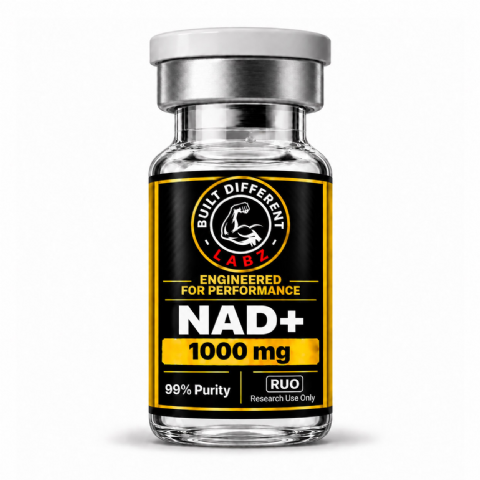
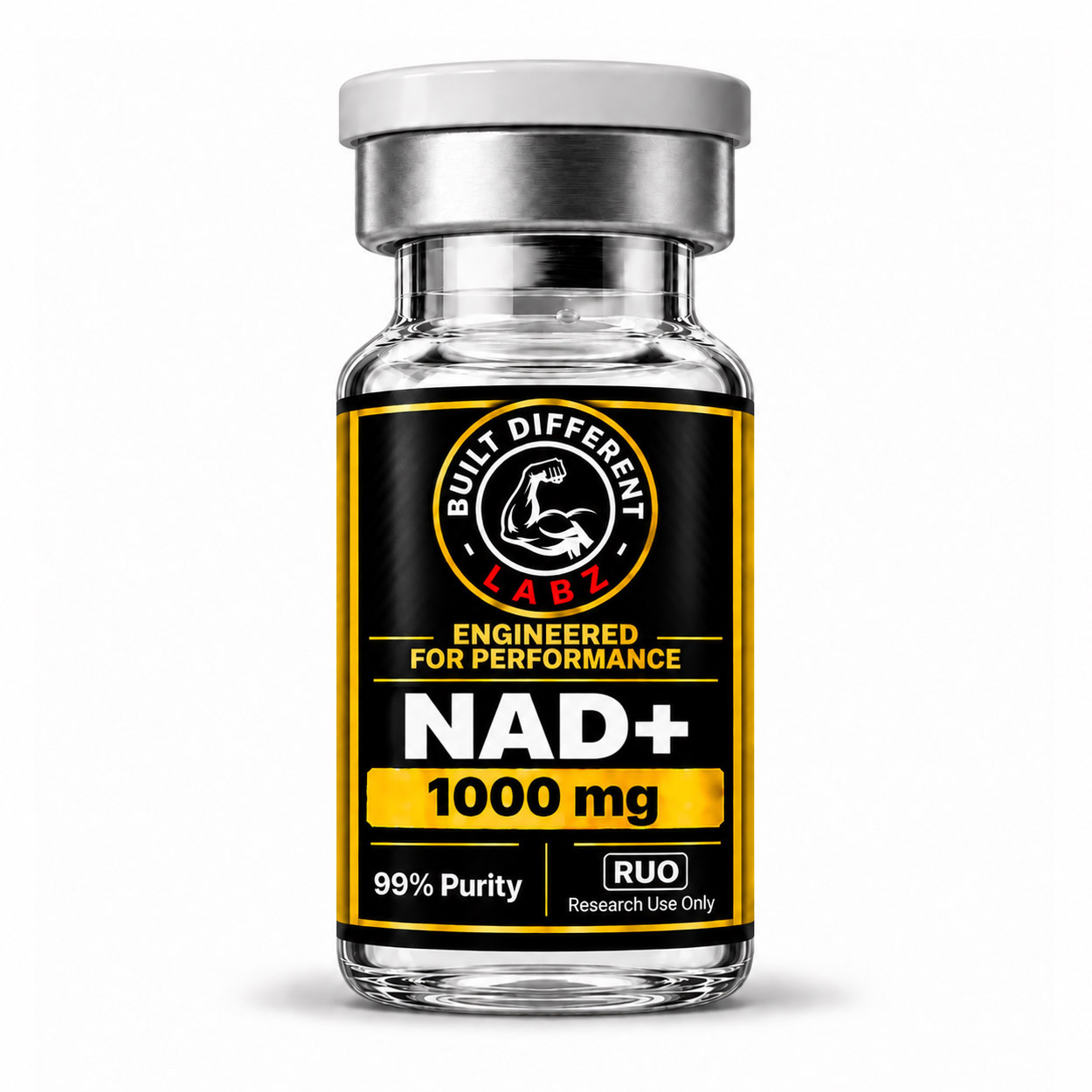
A vial labeled "NAD+ 1000mg" represents a total of 1,000 milligrams, or 1 gram, of represented NAD+ material in the vial. It does not mean that 1,000mg is an established or appropriate single human dose.
NAD+ is a coenzyme required for hundreds of biochemical reactions.
The abbreviation represents:
Nicotinamide Adenine Dinucleotide.
It exists primarily in two related states:
NAD+ = oxidized form.
NADH = reduced form.
Together they form one of the body's most important redox systems.
NAD+ can accept electrons during metabolic reactions.
When it accepts electrons, it becomes:
NADH.
NADH can subsequently donate those electrons to other biochemical systems.
The simplified cycle is:
NAD+
Accepts electrons
NADH
Donates electrons
NAD+
This continuous recycling is fundamental to energy metabolism.
A coenzyme is a molecule that helps enzymes perform chemical reactions.
NAD+ is not primarily a structural component of tissue.
Instead, it acts as a biochemical carrier and signaling molecule.
Without adequate NAD-related metabolism, cells cannot efficiently perform many essential reactions.
One of NAD+'s most important functions is its involvement in extracting energy from nutrients.
The body obtains energy from:
Carbohydrates
Fat
Protein
These nutrients are metabolized through pathways that transfer electrons to NAD+.
NADH then carries those electrons toward mitochondrial energy-production systems.
ATP stands for:
Adenosine Triphosphate.
ATP is the primary energy currency of cells.
The general pathway can be simplified as:
Food
Glucose and fatty acids
Metabolic reactions
NAD+ becomes NADH
Electron transport chain
ATP production
Without NAD-related redox reactions, normal ATP production would be severely impaired.
Glycolysis is the pathway through which glucose is broken down in the cytoplasm.
NAD+ is required during glycolysis.
One important step converts:
NAD+
to:
NADH.
If NAD+ cannot be regenerated, glycolysis cannot continue normally.
The citric acid cycle is also known as:
The Krebs cycle
or:
TCA cycle.
It occurs inside mitochondria.
Multiple reactions within this cycle transfer electrons to NAD+.
The resulting NADH then supplies electrons to the mitochondrial electron transport chain.
NADH transfers high-energy electrons to:
Complex I
of the mitochondrial respiratory chain.
Those electrons move through the electron transport system.
This contributes to creation of a proton gradient.
ATP synthase then uses that gradient to manufacture ATP.
The simplified pathway is:
Nutrients
NAD+
NADH
Electron transport chain
Proton gradient
ATP synthase
ATP
This is one of the fundamental processes sustaining human life.
NAD+ is deeply connected with mitochondrial biology.
Mitochondria require NAD-related metabolism for:
ATP production
Fatty-acid oxidation
TCA-cycle activity
Redox regulation
Metabolic signaling
This is why NAD+ is frequently marketed as a mitochondrial or energy-related compound.
However, participating in mitochondrial energy production does not mean supplemental NAD+ automatically produces noticeable increases in energy.
Both are important for cellular energy metabolism but perform different jobs.
L-Carnitine:
Helps transport long-chain fatty acids into mitochondria.
NAD+:
Transfers electrons during metabolic reactions and participates in energy production.
A simplified comparison is:
L-Carnitine = fuel transportation.
NAD+ = electron transfer and metabolic processing.
MOTS-C:
Mitochondria-derived signaling peptide
Associated with AMPK
Metabolic stress signaling
Glucose regulation
Exercise adaptation
NAD+:
Essential metabolic coenzyme
Redox carrier
Required for energy metabolism
Substrate for numerous enzymes
MOTS-C is primarily a signaling peptide.
NAD+ is a fundamental metabolic molecule.
SS-31 is an experimental mitochondria-targeting peptide associated with:
Cardiolipin
Inner mitochondrial membranes
Electron transport
Oxidative stress
NAD+ is a naturally occurring coenzyme directly involved in redox metabolism.
Therefore:
SS-31 = experimental mitochondrial membrane-targeting peptide.
NAD+ = fundamental endogenous metabolic coenzyme.
NAD+ is required for normal fatty-acid metabolism.
Beta-oxidation generates:
NADH
FADH2
Acetyl-CoA
These products feed into mitochondrial energy-production systems.
NAD metabolism is therefore essential for using fat as fuel.
NAD+ is essential for fat metabolism.
That does not mean additional NAD+ automatically causes substantial body-fat loss.
The distinction is similar to L-Carnitine.
A molecule can be essential for fat metabolism without becoming a powerful fat-loss medication when additional quantities are supplied.
NAD+ participates extensively in:
Glycolysis
Pyruvate metabolism
TCA-cycle activity
Mitochondrial respiration
It is therefore essential for normal glucose metabolism.
However, NAD+ is not insulin and does not replace diabetes medication.
NAD metabolism is connected with pathways regulating:
Insulin sensitivity
Mitochondrial function
Energy balance
Sirtuins
Metabolic health
Animal and mechanistic studies have generated considerable interest in manipulating NAD metabolism for metabolic disease.
Human therapeutic effects are much less certain.
Sirtuins are a family of NAD-dependent enzymes.
Important members include:
SIRT1
SIRT2
SIRT3
SIRT4
SIRT5
SIRT6
SIRT7
These enzymes participate in:
Metabolic regulation
DNA maintenance
Stress responses
Mitochondrial function
Gene regulation
Aging biology
Sirtuins require NAD+ to function.
Sirtuins influence many processes associated with cellular aging, including:
DNA repair
Metabolism
Mitochondrial function
Cellular stress
Chromatin regulation
This has generated major interest in the:
NAD+ and sirtuin axis.
However, activating NAD-related pathways does not automatically mean human aging is reversed.
NAD+ is also required by enzymes called:
PARPs.
PARP stands for:
Poly ADP-Ribose Polymerase.
PARP enzymes participate in detecting and responding to DNA damage.
When DNA damage occurs, PARPs can consume NAD+ while coordinating repair processes.
A simplified pathway is:
DNA damage
PARP activation
NAD+ consumption
DNA-repair signaling
Under extreme cellular stress, excessive PARP activation can significantly reduce cellular NAD+.
This demonstrates that NAD+ is not merely an energy molecule.
It is also deeply involved in cellular maintenance.
Another important NAD-consuming enzyme is:
CD38.
CD38 participates in:
Calcium signaling
Immune function
NAD metabolism
Research suggests CD38 activity may contribute to age-related changes in NAD metabolism.
This has generated considerable interest in CD38 as part of aging research.
NAD metabolism can change with age, and reduced NAD availability has been observed in multiple tissues and experimental models.
Potential contributors include:
Increased NAD consumption
DNA damage
CD38 activity
Inflammation
Reduced synthesis or recycling
Mitochondrial dysfunction
However, it is too simplistic to say that every symptom of aging is caused by "NAD deficiency."
NAD+ has become one of the most heavily researched molecules in aging biology.
The proposed model is:
Aging
Altered NAD metabolism
Reduced sirtuin activity
Changes in mitochondrial function
Reduced cellular stress resistance
Restoring NAD availability
Potential improvement in cellular function
This is scientifically interesting.
It does not establish NAD+ as a proven human life-extension therapy.
No convincing evidence demonstrates that NAD+ administration reverses human biological aging.
It is more accurate to say:
NAD metabolism is an important component of aging biology.
That is very different from saying:
NAD+ is a proven anti-aging treatment.
Human lifespan extension from NAD+ therapy has not been demonstrated.
Animal studies involving NAD metabolism and precursors are scientifically interesting but cannot automatically be translated into human longevity claims.
Cellular senescence occurs when cells enter a persistent state where they stop dividing but remain metabolically active.
NAD metabolism interacts with many pathways associated with:
Cellular stress
DNA repair
Mitochondria
Aging
However, NAD+ is not a senolytic.
It does not specifically eliminate senescent cells.
FOXO4-DRI:
Experimental senolytic concept designed to influence survival of certain senescent cells.
NAD+:
Metabolic coenzyme supporting cellular energy, redox reactions, DNA repair, and signaling.
They represent completely different aging-research strategies.
Epithalon research primarily involves:
Telomerase
Telomeres
Pineal function
Circadian biology
Aging-related gene regulation
NAD+ primarily involves:
Redox metabolism
Cellular energy
Sirtuins
PARPs
Mitochondria
Both appear frequently in longevity discussions, but their mechanisms are fundamentally different.
Exercise creates substantial changes in:
ATP demand
NAD+/NADH balance
Mitochondrial activity
AMPK signaling
Sirtuin activity
NAD metabolism is therefore intimately involved in exercise physiology.
Mitochondrial energy production is essential for endurance exercise.
Because NAD+ participates in mitochondrial respiration, researchers have investigated whether manipulating NAD metabolism can influence physical performance.
However, supplemental or administered NAD+ has not been established as a powerful human endurance-enhancing drug.
Skeletal muscle contains large numbers of mitochondria and requires extensive NAD-dependent metabolism.
NAD pathways participate in:
Energy production
Exercise adaptation
Glucose metabolism
Fatty-acid metabolism
Mitochondrial maintenance
This makes NAD biology important for muscle health.
NAD+ is not a direct anabolic growth factor.
It does not primarily activate:
Androgen receptors
IGF-1 receptors
Growth hormone receptors
It should not be described as a direct muscle-building compound.
IGF-1 LR3:
Direct growth-factor analogue
IGF-1 receptor activation
PI3K/Akt/mTOR signaling
Anabolic cellular signaling
NAD+:
Metabolic coenzyme
Redox reactions
ATP production
Sirtuin and PARP substrate
IGF-1 LR3 directly targets growth signaling.
NAD+ primarily supports metabolism and cellular maintenance.
Recovery from exercise requires:
ATP production
Protein synthesis
Mitochondrial function
Cellular repair
Redox balance
NAD metabolism participates in several of these processes.
However, NAD+ has not been established as a direct treatment for exercise-induced muscle damage or sports injuries.
The brain has extremely high energy requirements.
Neurons depend heavily on:
Mitochondrial function
ATP
Redox balance
DNA repair
NAD metabolism is therefore critical for normal neurological function.
NAD-related pathways have been investigated extensively in:
Neurodegeneration
Axonal injury
Mitochondrial dysfunction
Brain aging
Cellular stress
This is a major research field.
However, NAD+ is not an established cure for Alzheimer's disease, Parkinson's disease, or other neurodegenerative disorders.
NAD metabolism is particularly interesting in axonal degeneration research.
The enzyme:
SARM1
plays an important role in certain forms of axonal degeneration.
SARM1 activation can rapidly consume NAD+, contributing to axonal destruction.
This has made NAD metabolism an important target in neurological research.
Some wellness clinics market NAD+ for:
Mental clarity
Focus
Brain fog
Energy
These claims are biologically plausible at a broad metabolic level but are not supported by the same level of clinical evidence as established treatments for neurological or psychiatric conditions.
NAD+ infusions have also been marketed for:
Alcohol dependence
Opioid dependence
Drug withdrawal
Addiction recovery
Evidence supporting NAD+ as an established addiction treatment is limited.
It should not replace evidence-based addiction medicine.
Because NAD+ is essential for mitochondrial energy metabolism, it has attracted interest in fatigue-related conditions.
However, fatigue can have many causes, including:
Sleep disorders
Anemia
Endocrine disease
Infection
Cardiovascular disease
Medication effects
Nutritional deficiencies
NAD+ should not be assumed to correct unexplained fatigue.
Immune cells undergo dramatic metabolic changes when activated.
NAD metabolism influences:
Immune-cell energy production
Inflammation
CD38
Sirtuins
Cellular stress
NAD+ is therefore relevant to immune biology.
It is not accurately described as a simple immune booster.
Inflammation can alter NAD metabolism.
NAD-dependent enzymes can also influence inflammatory signaling.
This creates a two-way relationship between:
Metabolism
and
Inflammation.
NAD+ is not a conventional anti-inflammatory medication.
NAD metabolism interacts with the body's circadian clock.
NAD concentrations and NAD-dependent enzymes can fluctuate according to metabolic and circadian signals.
SIRT1, for example, interacts with components of the molecular circadian clock.
This creates an interesting link between:
Metabolism
Sleep-wake cycles
Cellular energy
Aging
NAD+ does not primarily stimulate:
GnRH
LH
FSH
Testosterone
It is not an androgen.
NAD+ is not known to produce the classic testosterone suppression associated with anabolic steroids.
No.
Traditional steroid-style post-cycle therapy does not apply to NAD+.
NAD+ is not a growth hormone secretagogue.
It does not work like:
GHRP-2
GHRP-6
Ipamorelin
CJC-1295
Sermorelin
Tesamorelin
Its primary role involves cellular metabolism and enzyme function.
Instead of providing NAD+ itself, some strategies attempt to increase NAD+ by providing precursor molecules.
Major NAD-related precursors include:
Nicotinamide
Nicotinic acid
Nicotinamide riboside
Nicotinamide mononucleotide
These compounds enter different portions of NAD biosynthesis and salvage pathways.
NMN stands for:
Nicotinamide Mononucleotide.
NMN is an NAD+ precursor.
The simplified pathway is:
NMN
NAD+
NMN is therefore not the same molecule as NAD+.
NR stands for:
Nicotinamide Riboside.
NR can enter NAD biosynthesis through pathways that ultimately produce NAD+.
The simplified concept is:
NR
NMN
NAD+
The actual metabolism involves specific enzymes and tissue-dependent processes.
NAD+ is a relatively large, charged molecule.
This creates questions about:
Cellular uptake
Membrane transport
Extracellular breakdown
Tissue distribution
NAD precursors may sometimes be more easily absorbed or transported before being converted into NAD+ inside cells.
This is one reason NR and NMN have received significant research attention.
This question is more complicated than many marketing descriptions suggest.
Historically, NAD+ was thought to have limited ability to cross cell membranes directly.
More recent research indicates that extracellular NAD metabolism and transport may be more complicated, with potential tissue-specific mechanisms.
However, administered NAD+ should not simply be assumed to enter every cell intact.
Some extracellular NAD+ may first be broken down into smaller metabolites that are subsequently taken up and recycled.
Both are essential components of cellular redox biology.
Glutathione primarily functions as:
Antioxidant
Redox buffer
Detoxification molecule
NAD+ primarily functions as:
Electron carrier
Metabolic coenzyme
Enzyme substrate
Another related molecule, NADPH, is particularly important for regenerating reduced glutathione.
This demonstrates how cellular antioxidant and energy systems are interconnected.
NAD+ and NADP+ are related but have different primary functions.
NAD+/NADH:
Primarily associated with energy metabolism and catabolic reactions.
NADP+/NADPH:
Primarily associated with biosynthesis and antioxidant defense.
NADPH helps maintain reduced glutathione.
A vial labeled:
"NAD+ 1000mg"
means the supplier represents the vial as containing a total of:
1,000 milligrams
or:
1 gram
of NAD+.
This describes the total represented vial content.
It should not automatically be interpreted as an appropriate single administration amount.
If the product is ultimately prepared as a liquid, the total milligrams and the concentration in milligrams per milliliter are separate specifications.
NAD+ is offered by some medical and wellness clinics through intravenous administration.
This should not be confused with the regulatory and evidence status of an FDA-approved drug specifically indicated for anti-aging or wellness.
Administration also introduces considerations involving:
Product sterility
Endotoxins
Concentration
Infusion-related reactions
Manufacturing quality
Rapid intravenous administration has been associated anecdotally and clinically with unpleasant symptoms in some people.
Reported symptoms can include:
Nausea
Abdominal discomfort
Chest pressure
Headache
Flushing
Lightheadedness
General discomfort
The occurrence and severity can depend on formulation and administration conditions.
Chest pain, severe shortness of breath, fainting, or other severe symptoms require medical evaluation rather than assuming they are normal NAD+ effects.
Potential adverse effects associated with NAD+ products can include:
Nausea
Headache
Flushing
Abdominal discomfort
Dizziness
Fatigue
Lightheadedness
Injection-site reactions
The complete adverse-effect profile of repeated high-dose parenteral NAD+ use has not been established through large long-term clinical trials.
NAD+ is essential to human life.
However:
An essential endogenous molecule
does not automatically mean
pharmacological quantities are proven safe indefinitely.
Long-term questions include:
Metabolic adaptation
Effects on NAD-consuming enzymes
Immune signaling
Cancer biology
Cardiovascular effects
Neurological effects
Chronic high-dose exposure
More human research is needed.
NAD metabolism has a complicated relationship with cancer.
Healthy cells require NAD+ for:
Energy
DNA repair
Survival
Cancer cells also require metabolism and NAD-related pathways to survive and proliferate.
Therefore, the relationship cannot be reduced to:
"NAD+ prevents cancer"
or:
"NAD+ causes cancer."
Neither statement is scientifically justified.
The effect of manipulating NAD metabolism can depend heavily on cancer type, cellular environment, and treatment context.
For a NAD+ vial, important quality characteristics include:
Correct molecular identity
Chemical purity
Exact quantity
Stability
Sterility
Endotoxin levels
Particulate contamination
Manufacturing conditions
NAD+ can also degrade depending on environmental conditions.
Analytical testing can help establish chemical identity and purity.
However, 99 percent purity does not automatically establish:
Sterility
Endotoxin levels
Exact vial quantity
Correct concentration
Pharmaceutical manufacturing quality
Human safety
Clinical effectiveness
These are separate characteristics.
NAD+ is a naturally occurring human coenzyme and is widely studied and used in various research, nutritional, compounding, and wellness contexts.
However, a product labeled "NAD+ 1000mg" should not automatically be described as an FDA-approved treatment for:
Anti-aging
Longevity
Chronic fatigue
Brain fog
Addiction
Athletic performance
Fat loss
Mitochondrial optimization
General wellness
FDA approval applies to specific pharmaceutical products and indications rather than simply to the existence of NAD+ as a naturally occurring molecule.
NAD+ as an essential human coenzyme:
Extremely strong.
NAD+/NADH redox biology:
Extremely strong.
Role in ATP production:
Extremely strong.
Role in glycolysis and the TCA cycle:
Extremely strong.
Role in mitochondrial respiration:
Extremely strong.
Sirtuins requiring NAD+:
Very strong.
PARPs consuming NAD+:
Very strong.
NAD metabolism and DNA repair:
Very strong.
NAD metabolism and aging biology:
Strong mechanistic and preclinical evidence.
Age-related changes in NAD metabolism:
Supported.
Increasing NAD through certain precursors:
Supported in human studies.
NAD+ infusion producing major anti-aging effects:
Not established.
NAD+ infusion producing major athletic enhancement:
Not established.
NAD+ as an addiction treatment:
Not established.
NAD+ causing major fat loss:
Not established.
NAD+ building muscle:
Not established.
Human lifespan extension:
Not established.
Long-term repeated high-dose parenteral use:
Insufficiently characterized.
The biggest advantage of NAD+ is that its fundamental biology is not speculative.
NAD+ is genuinely essential for life.
The central pathway is:
Nutrients
NAD+
NADH
Mitochondrial electron transport
ATP production
At the same time:
NAD+
Sirtuins and PARPs
Metabolic regulation, stress responses and DNA maintenance
Few molecules sit at the intersection of so many important cellular systems.
This makes NAD+ exceptionally interesting for metabolic and aging research.
The biggest limitation is the enormous difference between:
"NAD+ is essential for cellular metabolism."
and:
"Administering large amounts of NAD+ dramatically improves health."
The first statement is unquestionably established.
The second requires clinical evidence for each proposed outcome.
Essential molecules do not necessarily produce additional benefits when supplied above normal physiological requirements.
There is currently a substantial gap between the strength of NAD+'s fundamental biology and many of the claims made for high-dose NAD+ wellness treatments.
NAD+ is an essential naturally occurring coenzyme required for cellular energy production, mitochondrial metabolism, redox reactions, DNA repair, sirtuin activity, PARP activity, metabolic regulation, and cellular stress responses.
Its major biological and research areas include:
ATP production
Mitochondrial function
NAD+/NADH redox metabolism
Glucose metabolism
Fat metabolism
Sirtuins
DNA repair
PARPs
Cellular stress
Metabolic health
Aging biology
Circadian regulation
"NAD+ 1000mg" describes a represented total vial content of 1,000 milligrams, or 1 gram. It should not automatically be interpreted as a recommended 1,000mg dose.
The most accurate description is:
NAD+ is one of the body's most fundamental metabolic coenzymes, acting as both an electron carrier required for cellular energy production and a substrate for important signaling enzymes involved in DNA repair, mitochondrial function, stress responses and aging biology. Its essential role in human physiology is exceptionally well established. However, the scientific certainty surrounding NAD+'s normal biological function is much stronger than the evidence supporting high-dose NAD+ administration for anti-aging, longevity, fat loss, bodybuilding, athletic enhancement, brain fog, addiction treatment or general wellness. NAD+ research remains highly important, but claims about therapeutic benefits from a 1000mg research or wellness product should be distinguished carefully from the molecule's unquestionably essential role inside normal human cells.
We do not accept returns or issue refunds for any reason, beside manufacturing defects.
Feel free to contact us if you have any questions or concerns about our Return Policy.