We offer FREE SHIPPPING on all orders!
We offer FREE SHIPPPING on all orders!
| THIS PRODUCT IS INTENDED AS A RESEARCH CHEMICAL ONLY. This designation allows the use of research chemicals strictly for invitro testing and laboratory experimentation only. All product information available on this website is for educational purposes only. Bodily introduction of any kind into humans or animals is strictly prohibited by law. This product should only be handled by licensed, qualified professionals. This product is not a drug, food, or cosmetic and may not be misbranded, misused or mislabeled as a drug, food, or cosmetic. |
The "GLOW Stack" is a research-market peptide combination commonly built around three compounds:
BPC-157 10mg
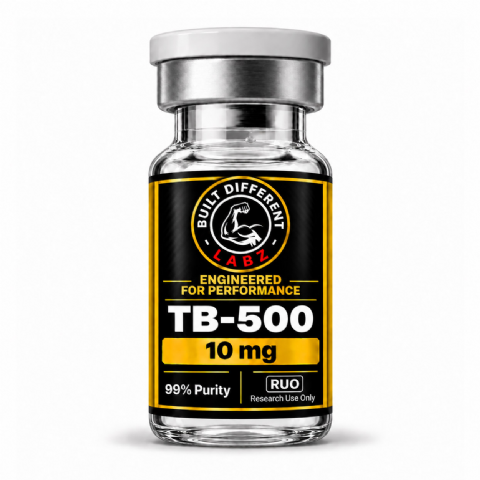
TB-500 10mg
GHK-Cu 50mg
The name "GLOW Stack" reflects the combination's popularity in research involving tissue repair, skin quality, collagen, wound healing, connective tissue, hair and broader regenerative biology.
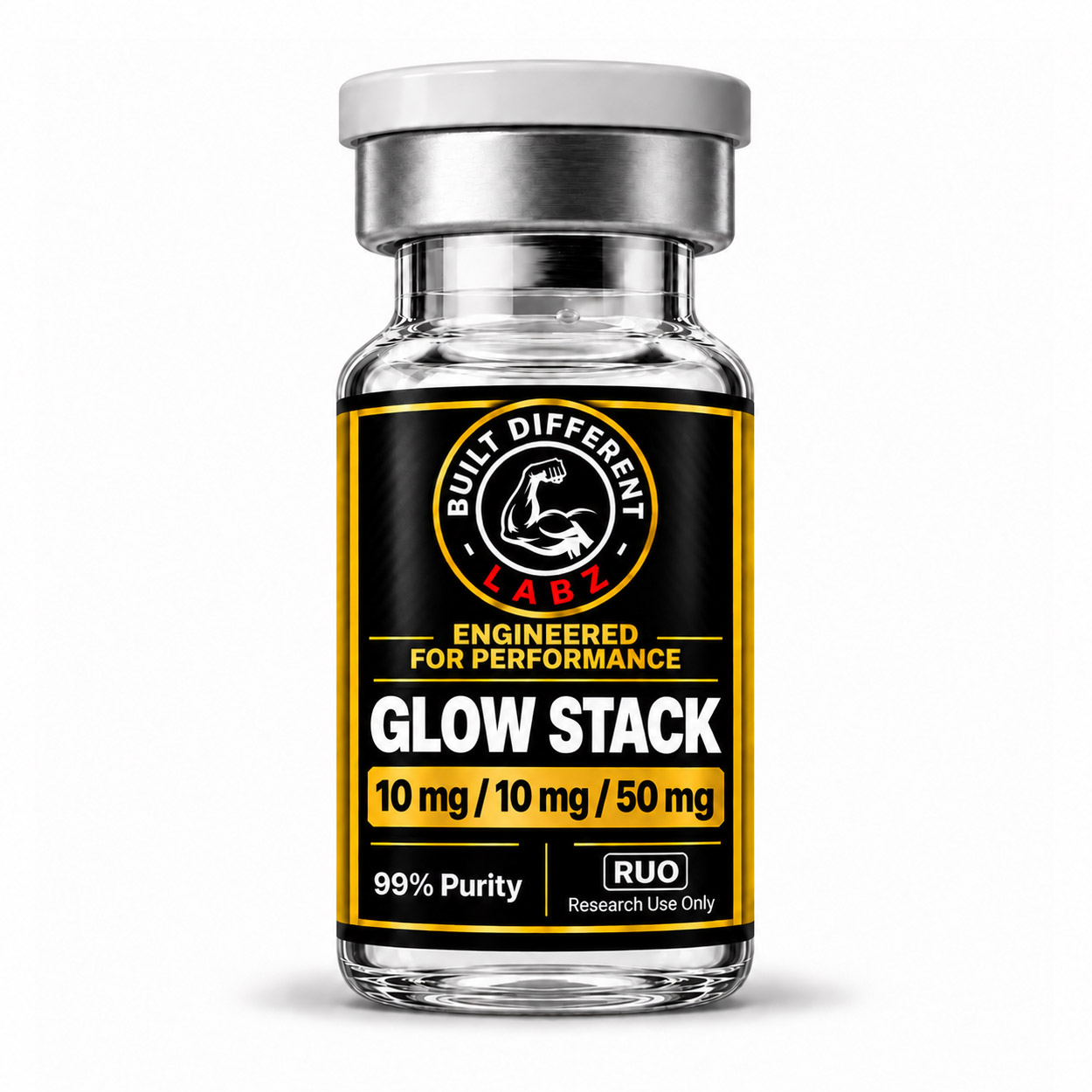
A vial labeled "GLOW Stack 10mg / 10mg / 50mg" generally represents:
BPC-157: 10mg
TB-500: 10mg
GHK-Cu: 50mg
Total represented peptide material: 70mg
These amounts describe the represented contents of the vial. They are not established or recommended single human doses.
The GLOW Stack combines three compounds associated with different areas of tissue-repair research.
BPC-157:
Connective-tissue repair
Fibroblast activity
Tendon and ligament research
Angiogenesis
Gastrointestinal protection
Inflammatory signaling
TB-500-related biology:
Cell migration
Actin regulation
Angiogenesis
Wound healing
Tissue remodeling
GHK-Cu:
Collagen
Elastin
Skin remodeling
Fibroblasts
Wound healing
Antioxidant signaling
Hair-follicle research
The concept is to combine broader regenerative signaling with skin and connective-tissue biology.
The word "GLOW" is primarily a marketing and research-community term rather than a scientific classification.
The name is associated particularly with GHK-Cu because copper peptide research has focused heavily on:
Skin appearance
Collagen
Elasticity
Wound repair
Tissue remodeling
Hair
Adding BPC-157 and TB-500 expands the concept toward general tissue repair and connective-tissue research.
The basic concept can be summarized as:
BPC-157
Connective-tissue and protective signaling
plus
TB-500
Cell migration and tissue remodeling
plus
GHK-Cu
Collagen, skin and extracellular-matrix signaling
equals
A broad experimental regenerative peptide combination.
However, plausible complementary mechanisms do not establish that the three-peptide combination is clinically synergistic.
BPC-157 is a synthetic 15-amino-acid peptide.
Its commonly reported sequence is:
GEPPPGKPADDAGLV.
Research has investigated BPC-157 in areas including:
Tendon healing
Ligament healing
Skeletal-muscle injury
Gastrointestinal tissue
Wound healing
Fibroblast migration
Angiogenesis
Nitric-oxide signaling
Nerve injury
Bone healing
Most of the notable evidence remains preclinical.
Fibroblasts are cells responsible for producing and organizing much of the extracellular matrix.
They participate in:
Collagen production
Wound repair
Scar formation
Tendon remodeling
Ligament remodeling
Skin repair
BPC-157 has demonstrated interesting effects involving fibroblast migration and tissue-repair signaling in experimental models.
BPC-157 research has also investigated pathways involving:
VEGF.
VEGF stands for:
Vascular Endothelial Growth Factor.
It is an important regulator of new blood-vessel formation.
New blood vessels can support healing by providing damaged tissue with:
Oxygen
Nutrients
Repair cells
Angiogenesis is therefore one potential component of BPC-157's experimental repair profile.
TB-500 is a research-market peptide associated with the biology of:
Thymosin beta-4.
Thymosin beta-4 is a naturally occurring 43-amino-acid peptide involved in:
Actin regulation
Cell migration
Wound healing
Angiogenesis
Tissue remodeling
Inflammatory signaling
Commercial TB-500 terminology can be inconsistent, so a product labeled TB-500 should not automatically be assumed identical to full-length pharmaceutical or laboratory thymosin beta-4.
One of the best-characterized areas of thymosin beta-4 biology involves:
Actin.
Thymosin beta-4 binds:
G-actin.
Actin participates in:
Cell structure
Cell movement
Muscle contraction
Wound repair
Tissue organization
This relationship helps explain why thymosin beta-4 became interesting in regenerative research.
Repair requires cells to move into damaged areas.
These cells can include:
Fibroblasts
Endothelial cells
Immune cells
Tissue-specific repair cells
Thymosin beta-4-related effects on cell migration therefore provide an interesting theoretical complement to BPC-157.
GHK-Cu stands for:
Glycyl-L-Histidyl-L-Lysine Copper.
It is a naturally occurring copper-binding tripeptide.
The underlying peptide is:
Gly-His-Lys.
GHK can bind copper to create:
GHK-Cu.
GHK-Cu has been studied extensively in relation to:
Skin
Collagen
Elastin
Wound healing
Fibroblasts
Extracellular matrix
Antioxidant activity
Inflammatory signaling
Hair follicles
Tissue remodeling
This is the component most directly responsible for the "GLOW" concept.
The amino-acid arrangement of GHK allows it to form a complex with:
Copper ions.
Copper is biologically important for several enzymes involved in:
Connective tissue
Antioxidant defense
Energy metabolism
Pigmentation
Iron metabolism
GHK-Cu may function partly as a biological copper carrier and signaling molecule.
Collagen provides structural support to:
Skin
Tendons
Ligaments
Bone
Blood vessels
Connective tissue
GHK-Cu has been investigated for effects involving:
Fibroblast activity
Collagen production
Extracellular-matrix remodeling
This makes collagen biology one of the strongest areas of interest surrounding GHK-Cu.
Elastin contributes to tissue elasticity.
It is particularly important in:
Skin
Blood vessels
Lungs
Skin appearance depends partly on the organization and condition of both:
Collagen
and:
Elastin.
GHK-Cu research has examined both systems.
Copper is required by the enzyme:
Lysyl oxidase.
Lysyl oxidase participates in cross-linking:
Collagen
Elastin
Cross-linking helps provide structural strength to connective tissue.
This provides another biological connection between copper and extracellular-matrix integrity.
Copper is also associated with:
Copper/zinc superoxide dismutase.
This enzyme helps regulate reactive oxygen species.
GHK-Cu has therefore attracted research interest involving:
Oxidative stress
Cellular protection
Inflammation
Tissue repair
It should not simply be described as a conventional antioxidant supplement, however.
The theoretical combination can be viewed as addressing several stages of tissue repair.
BPC-157:
Tissue protection and fibroblast-related signaling.
TB-500:
Cell migration and actin-related remodeling.
GHK-Cu:
Collagen, extracellular matrix and skin remodeling.
This creates an attractive biological hypothesis.
But there is a major distinction between:
Complementary mechanisms on paper
and:
Demonstrated clinical synergy.
The latter has not been established.
Skin is probably the most obvious research area for this combination.
Healthy skin depends on:
Collagen
Elastin
Fibroblasts
Blood supply
Extracellular matrix
Barrier integrity
Controlled inflammation
Wound repair
All three compounds intersect with at least some of these systems.
GHK-Cu has the most direct history in cosmetic skin research.
Skin aging involves changes including:
Collagen loss
Elastin changes
Reduced elasticity
Altered pigmentation
Slower repair
Oxidative stress
Changes in extracellular matrix
GHK-Cu has been studied for several of these processes.
This does not establish that the entire GLOW Stack reverses human skin aging.
Topical copper peptides have been investigated for effects on:
Fine lines
Skin firmness
Skin texture
Collagen-related remodeling
This represents a considerably more established application of GHK-Cu than claims surrounding systemic injectable GHK-Cu.
Route of administration matters.
Evidence for a topical formulation cannot automatically be transferred to an injectable research vial.
All three components have biological connections to connective-tissue repair, but GHK-Cu has especially strong relevance to collagen biology.
The theoretical model is:
Fibroblast signaling
Collagen production
Extracellular-matrix remodeling
Blood-vessel support
Tissue repair
This explains why the combination is marketed heavily toward skin and recovery research.
Wound healing occurs through overlapping stages:
Hemostasis
Inflammation
Proliferation
Remodeling.
The three components have experimental connections with different portions of this process.
BPC-157:
Fibroblasts, angiogenesis and tissue-protective signaling.
TB-500:
Cell migration, actin and angiogenesis.
GHK-Cu:
Collagen, fibroblasts and extracellular-matrix remodeling.
Wound healing is therefore one of the more biologically plausible areas for studying the combination.
BPC-157 and thymosin beta-4-related biology both involve angiogenesis.
GHK-Cu also has research connections with wound-associated vascular responses.
Blood-vessel formation can assist tissue repair.
However, angiogenesis is not universally beneficial.
It can also participate in pathological processes.
GHK-Cu has attracted substantial interest in hair research.
Potential areas include:
Hair-follicle signaling
Follicle size
Dermal remodeling
Microenvironment surrounding the follicle
Copper peptides are consequently found in some topical hair products.
However, GHK-Cu should not be described as a proven replacement for established hair-loss treatments.
Claims that the GLOW Stack reliably regrows substantial amounts of human hair are not supported by strong controlled clinical evidence.
The most defensible description is:
GHK-Cu has promising biological and cosmetic research involving hair follicles.
That is different from guaranteeing treatment of androgenetic alopecia.
BPC-157 and TB-500 are the primary reasons the combination has connective-tissue interest.
Tendons consist largely of organized collagen.
Potential research mechanisms include:
Fibroblast activity
Cell migration
Angiogenesis
Collagen remodeling
Extracellular-matrix organization
GHK-Cu adds another collagen-related component.
Ligaments also rely heavily on organized collagen.
The same theoretical repair mechanisms make the combination interesting for ligament research.
However, there is no strong human clinical evidence showing that the GLOW Stack repairs torn ligaments.
There is no evidence establishing that this combination can reconnect a completely ruptured tendon or ligament.
Severe structural injuries may require:
Imaging
Immobilization
Rehabilitation
Surgical repair
depending on the injury.
Cellular healing signals cannot automatically restore mechanically disrupted anatomy.
BPC-157 and thymosin beta-4-related biology have been investigated in muscle-injury models.
Potential mechanisms include:
Tissue repair
Angiogenesis
Cell migration
Inflammatory regulation
GHK-Cu may contribute broader extracellular-matrix and connective-tissue signaling.
However, the stack is not a direct anabolic muscle-building combination.
It does not primarily activate:
Androgen receptors
Growth hormone receptors
IGF-1 receptors
Therefore, it should not be described as equivalent to:
Testosterone
Anabolic steroids
HGH
IGF-1 LR3
Its primary research concept is regeneration and tissue quality rather than direct muscle hypertrophy.
The Wolverine Stack generally consists of:
BPC-157 + TB-500.
The GLOW Stack generally adds:
GHK-Cu.
Therefore:
Wolverine Stack
BPC-157 + TB-500
Tissue-repair emphasis.
GLOW Stack
BPC-157 + TB-500 + GHK-Cu
Tissue repair plus additional collagen, skin and cosmetic-regeneration emphasis.
BPC-157 provides one experimental tissue-repair pathway.
The GLOW Stack expands the theoretical mechanisms by adding:
TB-500-related cell migration
and:
GHK-Cu-related collagen and extracellular-matrix signaling.
Whether this actually produces better human outcomes has not been demonstrated.
GHK-Cu alone is more directly associated with:
Skin
Collagen
Hair
Cosmetic applications
Adding BPC-157 and TB-500 changes the concept toward broader systemic tissue repair.
For purely cosmetic skin applications, evidence supporting topical copper peptides should not automatically be interpreted as evidence supporting the entire injectable combination.
PEG-MGF is associated more closely with:
Muscle mechanical stress
MGF-related signaling
Satellite cells
Muscle regeneration
The GLOW Stack focuses more broadly on:
Connective tissue
Wounds
Cell migration
Collagen
Skin
Hair
Extracellular matrix
The combination is sometimes marketed for general joint health.
However, "joint health" can involve:
Cartilage
Tendons
Ligaments
Synovium
Bone
Inflammation
There is insufficient human evidence showing that the combination regenerates damaged articular cartilage or reverses osteoarthritis.
Because the components influence processes involved in wound repair, scar biology is an interesting research area.
However, collagen production is only one component of scarring.
Scar appearance depends on:
Collagen quantity
Collagen organization
Inflammation
Mechanical tension
Wound depth
Genetics
Remodeling
More collagen does not automatically mean a better scar.
GHK-Cu and wound-repair biology can be relevant to skin recovery.
However, the GLOW Stack is not an established acne medication.
Acne involves:
Sebum
Follicular obstruction
Cutibacterium acnes
Hormonal signaling
Inflammation
A tissue-repair peptide combination does not address every component.
GHK-Cu interacts with copper biology, and copper participates in pigmentation pathways.
However, predicting pigmentation changes from systemic GHK-Cu exposure is not straightforward.
The stack should not be marketed as a guaranteed treatment for hyperpigmentation.
None of the three compounds primarily functions as:
Testosterone
An androgen
A SARM
They do not primarily target:
GnRH
LH
FSH
Androgen receptors
The combination is not known for the classic testosterone suppression produced by anabolic steroids.
However, long-term controlled human endocrine data for the combination do not exist.
Traditional steroid-style post-cycle therapy is not inherently associated with BPC-157, TB-500 or GHK-Cu.
They are not anabolic steroids.
The combination is not primarily a GH-secretagogue stack.
It does not work like:
CJC-1295
Ipamorelin
GHRP-2
GHRP-6
Sermorelin
The combination is not primarily a weight-loss treatment.
It does not reproduce the appetite-regulating mechanisms of:
Semaglutide
Tirzepatide
Retatrutide
Cagrilintide
Claims of major direct fat loss from the GLOW Stack are unsupported.
The combination is frequently associated with anti-aging marketing because GHK-Cu has significant skin-aging research.
A more accurate description would be:
The GLOW Stack contains compounds investigated in biological processes that change with aging, including collagen remodeling, tissue repair, wound healing and oxidative stress.
That is different from demonstrating reversal of systemic human aging.
There is no evidence showing that the combination extends human lifespan.
GHK-Cu has been studied for its ability to influence patterns of gene expression.
This has generated significant interest in regenerative and aging research.
Gene-expression modulation does not mean GHK-Cu:
Rewrites DNA
Permanently modifies genes
Performs gene therapy
Functions like CRISPR
It means cellular signaling can influence which genes are more or less actively expressed.
Copper is essential to human biology.
However:
Essential
does not mean:
Unlimited amounts are harmless.
Excess copper can be toxic.
Potential consequences of excessive copper exposure can involve:
Gastrointestinal symptoms
Liver injury
Oxidative stress
Neurological effects
The biological handling of copper therefore matters when discussing systemic GHK-Cu exposure.
A vial labeled:
"GLOW Stack 10mg / 10mg / 50mg"
generally represents:
BPC-157: 10mg
TB-500: 10mg
GHK-Cu: 50mg
Total represented peptide material:
70mg.
These are total represented vial amounts.
They should not be interpreted as a single administration amount.
There is no FDA-approved dosing regimen for a GLOW Stack.
The GHK-Cu component is often represented at a larger mass than BPC-157 or TB-500.
That does not mean GHK-Cu is:
Five times stronger
or:
Five times more important.
Milligram quantities cannot be used to compare potency between different molecules.
Different compounds have different:
Molecular weights
Pharmacodynamics
Receptor interactions
Tissue distributions
Biological potencies
Therefore, comparing peptides solely by milligrams is misleading.
A three-component vial creates more analytical complexity than a single peptide.
Testing ideally needs to establish:
BPC-157 identity
BPC-157 quantity
TB-500 identity
TB-500 quantity
GHK-Cu identity
GHK-Cu quantity
Overall purity
Sterility
Endotoxin levels
Stability
A single "99 percent purity" number may not adequately describe all three components.
Combining three molecules creates questions regarding:
Chemical compatibility
Oxidation
Degradation
Aggregation
Copper-mediated reactions
Temperature sensitivity
Light sensitivity
pH
Storage conditions
GHK-Cu is particularly distinctive because it contains a metal-peptide complex.
This makes formulation chemistry relevant.
GHK-Cu commonly has a characteristic blue coloration because of the copper complex.
However:
Blue color
does not prove:
Correct concentration
High purity
Sterility
Correct identity
or:
Pharmaceutical quality.
Color alone is not an analytical test.
A high HPLC purity result can provide useful chemical information.
It does not automatically establish:
Correct amount of all three compounds
Sterility
Endotoxin levels
Biological potency
Copper content
Correct TB-500 identity
Pharmaceutical manufacturing quality
Human safety
These characteristics require different testing.
Chemical purity is completely different from microbiological sterility.
An injectable-style research vial can contain chemically pure peptides and still contain:
Bacteria
Fungi
Endotoxins
Particulates
This distinction is especially important for products marketed in injectable-style vials.
Endotoxins are inflammatory bacterial components.
Exposure can potentially cause:
Fever
Chills
Inflammation
Low blood pressure
Severe systemic reactions
An HPLC purity report does not establish acceptable endotoxin levels.
The complete three-peptide combination does not have sufficient controlled human research to establish reliable adverse-event frequencies.
Potentially reported or plausible effects include:
Headache
Nausea
Fatigue
Dizziness
Flushing
Injection-site irritation
Swelling
Skin reactions
Hypersensitivity
GHK-Cu introduces additional uncertainty surrounding systemic copper exposure.
Unknown adverse effects remain possible.
Long-term controlled human safety data for this exact combination are lacking.
Important unanswered questions include:
Chronic angiogenesis
Copper metabolism
Immune effects
Abnormal tissue growth
Cardiovascular effects
Neurological effects
Reproductive effects
Drug interactions
Cancer-related signaling
This becomes particularly relevant when a three-component formulation is used repeatedly.
This subject is biologically complicated.
Processes involved in normal tissue repair include:
Angiogenesis
Cell migration
Cell proliferation
Extracellular-matrix remodeling
Those same processes can also participate in tumor biology.
There is insufficient evidence demonstrating that the GLOW Stack causes cancer.
There is also insufficient evidence establishing its long-term safety in people with existing or undiagnosed malignancies.
RUO means:
Research Use Only.
For a GLOW Stack vial, this generally indicates that the product is marketed for laboratory or analytical research rather than as an approved medication for human treatment.
RUO does not mean:
Approved injectable medication.
No.
There is no FDA-approved pharmaceutical medication called the:
GLOW Stack.
The combination of:
BPC-157 + TB-500 + GHK-Cu
is not FDA approved as a treatment for:
Skin aging
Wrinkles
Hair loss
Wound healing
Tendon injuries
Ligament injuries
Muscle injuries
Joint damage
Cartilage regeneration
Anti-aging
Athletic recovery
General wellness
GHK-Cu basic copper-binding biology:
Strong.
GHK-Cu collagen and fibroblast biology:
Strong experimental evidence.
Topical copper-peptide skin research:
Meaningful.
GHK-Cu systemic injectable cosmetic evidence:
Limited.
GHK-Cu hair research:
Promising but not definitive.
BPC-157 tissue-repair research:
Promising preclinical evidence.
BPC-157 controlled human evidence:
Very limited.
Thymosin beta-4 actin biology:
Strong.
Thymosin beta-4 cell-migration biology:
Strong.
TB-500 research-market equivalence to thymosin beta-4:
Not automatically established.
BPC-157 plus TB-500 plus GHK-Cu synergy:
Not established.
Human skin rejuvenation from the complete injectable stack:
Not established.
Human hair regrowth from the complete stack:
Not established.
Human tendon or ligament repair:
Not established.
Human cartilage regeneration:
Not established.
Systemic anti-aging:
Not established.
Human lifespan extension:
Not established.
Long-term combination safety:
Insufficiently characterized.
The theoretical advantage of the GLOW Stack is its unusually broad collection of complementary regenerative pathways.
The simplified model is:
BPC-157
Fibroblast and connective-tissue signaling
plus
TB-500-related biology
Cell migration and actin regulation
plus
GHK-Cu
Collagen, elastin and extracellular-matrix remodeling
equals
A potentially complementary regenerative research combination.
This makes the stack particularly interesting for research involving the intersection of:
Skin
Connective tissue
Wounds
Collagen
and:
Tissue remodeling.
The biggest limitation is the gap between the scientific evidence supporting individual biological mechanisms and the claims made about the complete three-peptide combination.
There is legitimate scientific interest surrounding:
GHK-Cu and collagen
GHK-Cu and skin biology
Thymosin beta-4 and cell migration
Thymosin beta-4 and actin
BPC-157 and experimental tissue repair
Angiogenesis
Fibroblast biology
But this does not establish that combining:
10mg BPC-157
10mg TB-500
50mg GHK-Cu
creates a clinically proven skin-rejuvenation or injury-healing treatment.
The exact combination has substantially less evidence than the individual biological pathways used to justify it.
The GLOW Stack is a research-market combination generally consisting of:
BPC-157 10mg
TB-500 10mg
GHK-Cu 50mg.
This represents a total of 70mg of represented peptide material in the vial, not an established single human dose.
Its primary research interests include:
Skin quality
Collagen
Elastin
Fibroblasts
Hair follicles
Wound healing
Angiogenesis
Cell migration
Tendon and ligament research
Connective-tissue remodeling
Muscle recovery
Regenerative biology
The most accurate description is:
The GLOW Stack combines BPC-157, TB-500 and GHK-Cu into an experimental regenerative research formulation. BPC-157 contributes experimental connective-tissue, fibroblast and tissue-protective biology; TB-500-related research contributes actin regulation, cell migration and wound-remodeling biology; and GHK-Cu contributes particularly strong interest in collagen, elastin, fibroblasts, skin remodeling and hair-follicle biology. These mechanisms provide a scientifically interesting rationale for studying the compounds together, particularly for skin and connective-tissue research. However, the complete combination has not been established through robust controlled human trials as a treatment for skin aging, hair loss, tendon or ligament injuries, cartilage damage or systemic aging. A research-market 10mg/10mg/50mg combination vial also requires separate consideration of the identity, quantity, purity, stability, sterility and endotoxin profile of all three components.
We do not accept returns or issue refunds for any reason, beside manufacturing defects.
Feel free to contact us if you have any questions or concerns about our Return Policy.