We offer FREE SHIPPPING on all orders!
We offer FREE SHIPPPING on all orders!
| THIS PRODUCT IS INTENDED AS A RESEARCH CHEMICAL ONLY. This designation allows the use of research chemicals strictly for invitro testing and laboratory experimentation only. All product information available on this website is for educational purposes only. Bodily introduction of any kind into humans or animals is strictly prohibited by law. This product should only be handled by licensed, qualified professionals. This product is not a drug, food, or cosmetic and may not be misbranded, misused or mislabeled as a drug, food, or cosmetic. |
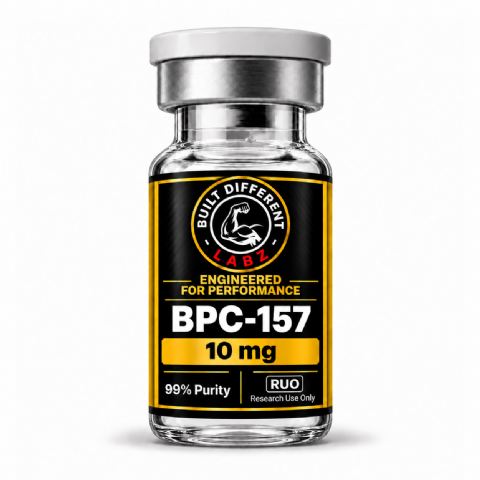
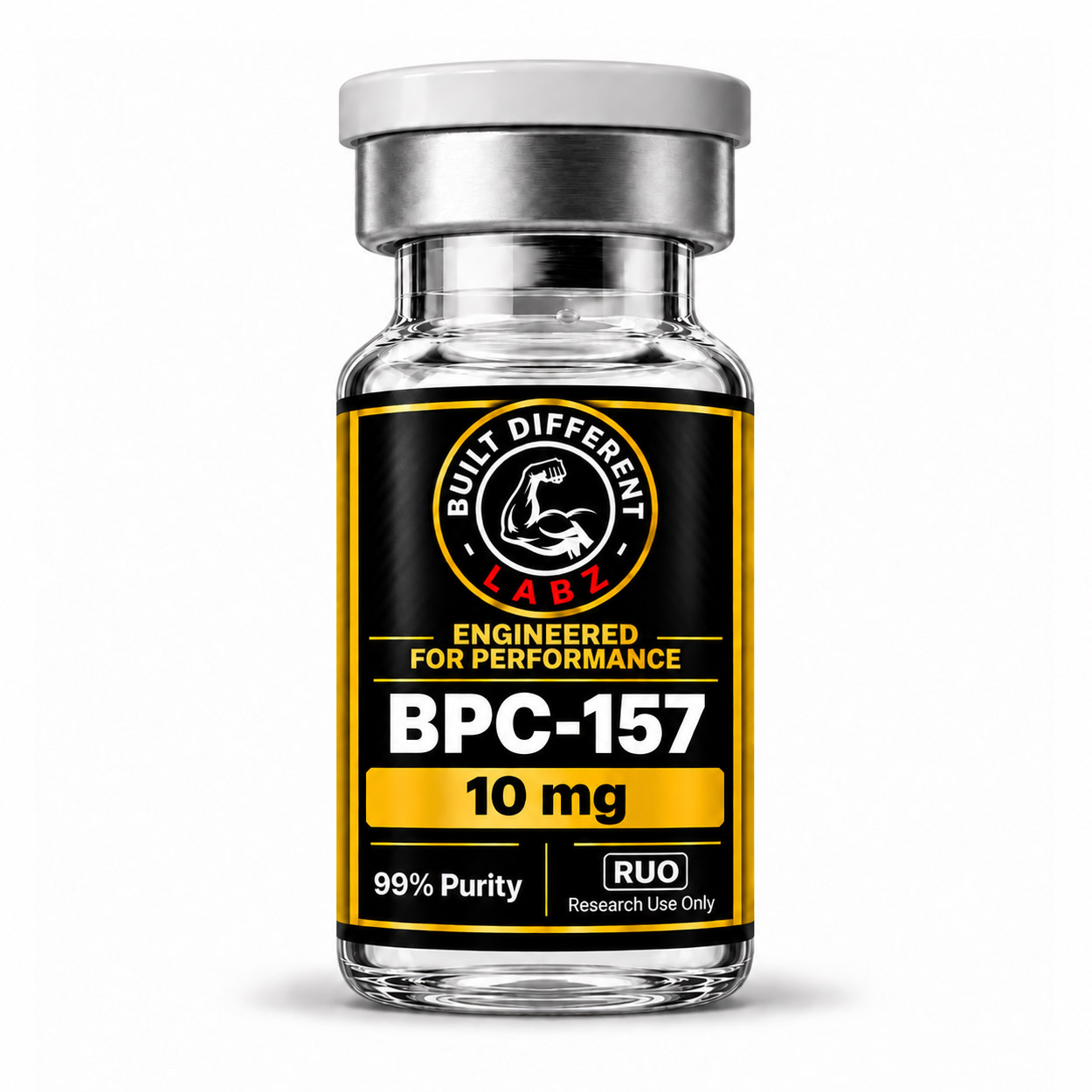
BPC-157 is a synthetic peptide that has become popular in injury-recovery, bodybuilding, and regenerative-medicine discussions. It is often described as a "healing peptide," but that description can make the science sound more established than it really is.
The most important point is this:
BPC-157 has a large amount of animal and laboratory research behind it, but human research is still very limited. It is not an FDA-approved medication, and there is no officially established human dosing protocol.
BPC-157 stands for Body Protection Compound-157.
It is a synthetic peptide made up of 15 amino acids.
Its commonly reported amino-acid sequence is:
GEPPPGKPADDAGLV
BPC-157 was developed from research involving protective compounds associated with the stomach and gastrointestinal system.
It is not:
Testosterone
Growth hormone
A steroid
A SARM
An opioid
A standard anti-inflammatory drug
A traditional growth-hormone secretagogue
Its main area of interest is tissue protection and tissue repair.
BPC-157 became popular because animal studies have suggested that it may have beneficial effects on several different types of tissue.
Research has looked at possible effects involving:
Tendons
Ligaments
Muscles
Bone
Nerves
Blood vessels
Stomach tissue
Intestinal tissue
Inflammation
Wound healing
Because of this, BPC-157 is frequently marketed toward athletes, bodybuilders, and people recovering from injuries.
The problem is that many of the claims made online come from animal studies and are presented as though they have already been proven in humans.
They have not.
Tendon healing is probably one of the main reasons people are interested in BPC-157.
Tendons can take a long time to heal because they generally receive less blood flow than muscle tissue.
Animal studies involving BPC-157 have reported effects related to:
Fibroblast activity
Fibroblast migration
Collagen organization
Tendon repair
Tendon-to-bone healing
Formation of new blood vessels around injured tissue
Fibroblasts are cells involved in producing collagen and rebuilding damaged connective tissue.
If BPC-157 improves fibroblast activity and blood flow around damaged tissue, there is a theoretical reason it could support tendon healing.
That is a reasonable scientific hypothesis.
It is not yet the same thing as demonstrating that BPC-157 heals human tendon injuries faster.
Ligaments are similar to tendons in that they contain a large amount of collagen and can have relatively poor blood supply.
Animal research suggests BPC-157 may influence:
Collagen production
Tissue organization
Angiogenesis
Inflammatory signaling
Connective-tissue repair
This has led to interest in BPC-157 for injuries involving structures such as:
ACL
MCL
Shoulder ligaments
Ankle ligaments
Elbow ligaments
However, there are not high-quality clinical trials proving that BPC-157 repairs these injuries in humans.
Animal studies have also examined BPC-157 in skeletal muscle injuries.
Reported findings have included possible improvements in:
Muscle regeneration
Recovery after muscle damage
Blood supply to injured muscle
Tissue organization
Reduction of inflammatory damage
This does not mean BPC-157 directly builds muscle.
There is very little evidence that BPC-157 acts as a true muscle-building compound.
If it eventually proves useful for athletes, its role would probably be more related to recovery than direct hypertrophy.
There is very little evidence that BPC-157 directly increases muscle mass.
It does not appear to work like:
Testosterone
Trenbolone
Growth hormone
IGF-1
SARMs
People sometimes report better workouts or faster recovery while using it, but that could theoretically come from reduced pain or improved recovery rather than direct anabolic activity.
Claims that BPC-157 dramatically increases muscle growth are not well supported by current evidence.
There is no strong evidence that BPC-157 is an effective fat-loss compound.
It is not generally considered a fat burner.
Any fat-loss claims should be treated cautiously.
BPC-157 was originally studied heavily in relation to the gastrointestinal system.
Animal studies have examined possible effects involving:
Stomach ulcers
Intestinal inflammation
Gastrointestinal injury
Fistulas
Damage caused by certain medications
Healing of gastrointestinal tissue
This is one of the strongest areas of preclinical research surrounding BPC-157.
Even so, it has not been established as an approved treatment for gastrointestinal disease in humans.
BPC-157 does not appear to behave exactly like a traditional NSAID such as ibuprofen or naproxen.
Instead, it may influence several biological pathways involved in inflammation and tissue repair.
Preclinical research has suggested interactions involving:
Nitric oxide
Oxidative stress
Inflammatory signaling
Growth factors
Blood-vessel formation
One reason BPC-157 attracts attention is that it may theoretically support healing while also changing the inflammatory environment around an injury.
That is different from simply suppressing pain.
One of the most interesting proposed mechanisms involves angiogenesis.
Angiogenesis means the formation of new blood vessels.
BPC-157 has been associated in research with pathways involving VEGF.
VEGF stands for vascular endothelial growth factor.
VEGF plays an important role in:
Blood-vessel formation
Tissue repair
Wound healing
Delivery of oxygen and nutrients to injured tissue
Better vascularization could theoretically help damaged tissue repair itself.
This is especially interesting for tendons and ligaments because they often have limited blood supply.
BPC-157 has also been studied in connection with the nitric oxide system.
Nitric oxide helps regulate:
Blood-vessel dilation
Circulation
Blood pressure
Cellular signaling
Tissue repair
Some researchers believe part of BPC-157's effects could involve normalization or modification of nitric-oxide signaling.
This remains primarily a preclinical area of research.
There are animal studies examining BPC-157 in nerve injuries.
Researchers have reported possible effects involving:
Peripheral nerve recovery
Nerve regeneration
Functional recovery after nerve damage
Reduction of certain forms of neurological injury
This is an interesting area, but it is especially important not to exaggerate it.
There is not enough human evidence to say that BPC-157 can reliably regenerate damaged human nerves.
Some animal studies have also investigated BPC-157 in bone injuries.
Possible effects have been reported involving:
Bone repair
Fracture healing
Blood supply to damaged bone
Tissue regeneration around injuries
Again, this remains mostly preclinical research.
A small human study involving people with chronic knee pain has received attention.
Some participants reported meaningful pain relief following BPC-157 treatment.
However, the study was very small and did not provide the kind of controlled evidence needed to establish effectiveness.
There was no large randomized placebo-controlled trial demonstrating that BPC-157 was responsible for the improvement.
This is a good example of the difference between "interesting" and "proven."
Very little compared with the amount of animal research.
Recent reviews have noted that human BPC-157 research consists of only a small number of pilot studies involving a very small number of participants.
That means researchers still do not have reliable answers for several basic questions, including:
What dose works best?
How frequently should it be used?
What is the safest route of administration?
How long should treatment last?
What are the long-term side effects?
Are there interactions with medications?
Are there specific people who should not use it?
Does it actually improve structural healing in humans?
Those are major unanswered questions.
No.
BPC-157 is not an FDA-approved medication for treating injuries or other medical conditions.
This means the FDA has not approved a standard BPC-157 drug product with established:
Purity standards
Dosing instructions
Approved indications
Long-term safety data
Manufacturing specifications
Clinical treatment guidelines
That is very important when evaluating products sold online.
BPC-157 is often sold in lyophilized powder form and reconstituted for injection.
Subcutaneous injection is commonly discussed online.
However, there is no FDA-approved standardized BPC-157 injection protocol.
Online recommendations regarding injection amount, injection frequency, injection location, and treatment length generally come from:
Peptide clinics
Bodybuilding forums
Anecdotal experiences
Experimental protocols
Animal-study extrapolation
They should not be mistaken for established medical guidelines.
BPC-157 is also sold in oral forms.
These can include:
Capsules
Tablets
Liquids
Sublingual products
BPC-157 is somewhat unusual among peptides because preclinical research suggests it may be relatively stable in the digestive system.
That has created interest in oral administration.
However, the amount absorbed into the bloodstream after oral use in humans is not well established.
It is also unclear whether oral and injectable versions would produce the same effects.
Some companies sell BPC-157 nasal sprays.
There is even less human research involving this delivery method.
Claims that nasal BPC-157 has predictable systemic absorption should therefore be treated cautiously.
Available research suggests BPC-157 may have a relatively short plasma half-life.
Some pharmacokinetic research has suggested that it may disappear from measurable circulation fairly quickly.
However, that does not necessarily mean its biological effects stop immediately.
A compound can briefly interact with receptors or signaling pathways and cause downstream biological changes that continue after the compound itself has disappeared from the bloodstream.
This is one reason blood half-life and biological effect are not always the same thing.
A frequently cited estimate is less than approximately 30 minutes in plasma.
However, human pharmacokinetic data are extremely limited.
Any precise half-life number should therefore be treated as an estimate rather than a firmly established human value.
There is no scientifically established timeline for BPC-157 in humans.
Online users sometimes claim noticeable improvements within:
Several days
One week
Two weeks
Several weeks
Those reports are anecdotal.
Actual injury healing depends on many factors, including:
Type of tissue injured
Severity of the injury
Age
Blood supply
Rehabilitation
Nutrition
Sleep
Hormone levels
Overall health
Whether continued activity is aggravating the injury
A reduction in pain also does not necessarily mean the underlying tissue has fully healed.
That distinction is important.
Possibly indirectly.
BPC-157 is not primarily considered a conventional painkiller.
If it reduces inflammation or improves tissue recovery, pain could potentially decrease.
However, feeling less pain could also create a risk if someone begins loading an injured tendon or ligament before it has structurally recovered.
Pain relief and tissue repair are not necessarily the same thing.
Because controlled human research is so limited, there is no reliable list of established BPC-157 side effects.
Anecdotal reports sometimes mention:
Headache
Fatigue
Dizziness
Nausea
Changes in appetite
Injection-site irritation
Flushing
Changes in mood
Temporary discomfort after injection
The problem is that anecdotal reports cannot reliably establish whether BPC-157 caused those symptoms.
Long-term safety is one of the biggest unknowns.
There are not large long-term clinical trials following people using BPC-157 for months or years.
Researchers therefore do not know enough about possible effects on:
Cardiovascular health
Liver function
Kidney function
Hormonal systems
Immune function
Neurological function
Cancer risk
Fertility
Absence of documented long-term problems is not the same as proof of long-term safety.
You will sometimes see claims that BPC-157 either causes cancer or prevents cancer.
Neither claim has been established.
The concern comes partly from BPC-157's possible effects on angiogenesis and growth-related signaling.
Cancer cells can also use angiogenesis to obtain their own blood supply.
That does not mean BPC-157 has been shown to cause cancer.
It means researchers would need to carefully study whether modifying angiogenic pathways could create risks in people with existing tumors or abnormal cell growth.
That research has not been completed.
One of the most practical risks associated with BPC-157 is product quality.
Many products sold online are labeled:
"Research use only"
or
"Not for human consumption"
There can be significant differences between suppliers.
Potential problems include:
Incorrect peptide concentration
Low purity
Contamination
Bacterial contamination
Endotoxins
Incorrect amino-acid sequence
Degraded peptide
Improper storage
Nonsterile injectable material
A vial labeled 5 mg does not automatically mean it actually contains exactly 5 mg of pure BPC-157.
This is especially important with injectable products.
BPC-157 is prohibited in sports governed by the World Anti-Doping Agency.
It falls under the category of non-approved substances.
Therefore, competitive athletes who are subject to drug testing should not assume BPC-157 is permitted simply because it is not an anabolic steroid.
BPC-157 and growth hormone are very different.
Growth hormone affects:
IGF-1
Protein synthesis
Metabolism
Body composition
Tissue growth
BPC-157 is mainly being investigated for:
Tissue protection
Connective-tissue repair
Angiogenesis
Inflammatory signaling
Gastrointestinal protection
BPC-157 is not generally considered a replacement for growth hormone.
BPC-157 and TB-500 are frequently discussed together.
They are different peptides.
BPC-157 is generally associated with research involving:
Tendons
Ligaments
Gastrointestinal protection
Local tissue repair
Angiogenesis
TB-500 is associated with thymosin beta-4 related pathways and is often discussed in relation to:
Cell migration
Tissue repair
Wound healing
Muscle recovery
Angiogenesis
Some people combine the two because they believe the mechanisms are complementary.
However, there is no established clinical evidence proving that combining them provides superior healing in humans.
BPC-157 is not known to directly increase testosterone.
It is not typically associated with:
Testosterone suppression
Estrogen conversion
DHT conversion
Shutdown of natural testosterone production
However, this does not mean there could never be interactions with hormonal pathways.
Human research is simply too limited to make broad guarantees.
BPC-157 is not generally considered suppressive to the hypothalamic-pituitary-gonadal axis in the same way anabolic steroids are.
Therefore, traditional post-cycle therapy is not normally associated with BPC-157.
Again, long-term controlled human data are limited.
There is no strong evidence that BPC-157 significantly increases growth hormone levels.
Its proposed regenerative effects appear to involve different biological pathways.
This is one of the most important misconceptions.
There is no solid human evidence showing that BPC-157 can completely repair a major tendon rupture.
A minor tendon injury and a full tendon tear are very different conditions.
A completely ruptured tendon may require:
Surgery
Immobilization
Physical therapy
Progressive loading
Months of rehabilitation
Using an experimental peptide should not be viewed as a substitute for proper diagnosis and treatment.
There is not enough evidence to say that BPC-157 regenerates human cartilage.
Claims that it can rebuild damaged cartilage or reverse advanced arthritis are not supported by strong clinical evidence.
Possibly in theory, based on animal connective-tissue research.
Not proven in humans.
Rotator cuff injuries can involve:
Tendinitis
Tendinosis
Partial tears
Full-thickness tears
Muscle atrophy
Tendon retraction
Those conditions may require very different treatment approaches.
This is one of the types of injuries for which people commonly experiment with BPC-157.
There is biological rationale based on tendon research.
But there is not enough controlled human evidence to say that it reliably treats tennis elbow or golfer's elbow.
Potential areas of interest include:
Patellar tendon
Quadriceps tendon
Ligaments
Inflammatory pain
Human knee-pain research exists, but it is very limited.
There is not enough evidence to establish it as a standard treatment.
Again, the theoretical interest comes from its possible effects on connective tissue.
However, shoulder pain can result from many different problems, including:
Rotator cuff tears
Bursitis
Labral tears
Arthritis
Tendinitis
Impingement
Cervical nerve problems
BPC-157 would not automatically address all of these causes.
A simple way to think about BPC-157 is:
Tendon repair:
Promising animal evidence, very limited human evidence.
Ligament repair:
Promising animal evidence, insufficient human evidence.
Muscle recovery:
Promising preclinical evidence, insufficient human evidence.
Bone healing:
Some promising animal evidence.
Gut protection:
Substantial preclinical research, limited clinical evidence.
Nerve repair:
Interesting animal evidence, insufficient human evidence.
Pain reduction:
Some early human observations, but no strong proof.
Muscle growth:
Little convincing evidence.
Fat loss:
Little convincing evidence.
Long-term safety:
Unknown.
FDA approval:
No.
This is important with BPC-157.
A treatment can work extremely well in rodents and fail completely in humans.
Animal studies often use:
Different dosing
Different metabolism
Artificially induced injuries
Young healthy animals
Controlled laboratory conditions
Humans have more complicated variables.
That is why randomized controlled clinical trials are so important.
They determine whether the effect actually works in real patients.
If future clinical trials confirm the animal research, the biggest potential advantage would probably be improving healing in tissues that normally recover slowly.
That would primarily include:
Tendons
Ligaments
Connective tissue
Certain gastrointestinal tissues
That could potentially have important applications in sports medicine and rehabilitation.
But that potential still needs to be demonstrated in proper human clinical trials.
The main problem is not that there is zero research.
There is actually a substantial amount of research.
The problem is that most of the research is not in humans.
That creates a huge gap between:
"Scientists observed an interesting effect in animals."
and
"This treatment is proven safe and effective in people."
Much of the online peptide industry tends to blur that distinction.
BPC-157 is a synthetic 15-amino-acid peptide being investigated for tissue-protective and regenerative effects.
The strongest areas of research interest include:
Tendon healing
Ligament healing
Muscle recovery
Blood-vessel formation
Gastrointestinal protection
Inflammatory regulation
Wound healing
Nerve recovery
Bone repair
Animal research is genuinely interesting and provides biological reasons to continue studying BPC-157.
However, human research remains extremely limited.
There is currently no established human dosing protocol, no FDA-approved BPC-157 medication, and no reliable long-term safety data.
The most accurate way to describe it is:
BPC-157 is an experimental regenerative peptide with promising preclinical evidence but insufficient human clinical evidence to determine its true effectiveness, ideal dose, or long-term safety.
We do not accept returns or issue refunds for any reason, beside manufacturing defects.
Feel free to contact us if you have any questions or concerns about our Return Policy.