We offer FREE SHIPPPING on all orders!
We offer FREE SHIPPPING on all orders!
| THIS PRODUCT IS INTENDED AS A RESEARCH CHEMICAL ONLY. This designation allows the use of research chemicals strictly for invitro testing and laboratory experimentation only. All product information available on this website is for educational purposes only. Bodily introduction of any kind into humans or animals is strictly prohibited by law. This product should only be handled by licensed, qualified professionals. This product is not a drug, food, or cosmetic and may not be misbranded, misused or mislabeled as a drug, food, or cosmetic. |
DSIP stands for Delta Sleep-Inducing Peptide. It is a naturally occurring neuropeptide that has been studied for possible effects on sleep regulation, stress response, pain perception, hormonal signaling, and nervous-system function.
Compared with peptides such as BPC-157, TB-500, GHK-Cu, PT-141, and Ipamorelin, DSIP is much more closely associated with sleep and neuroendocrine regulation.
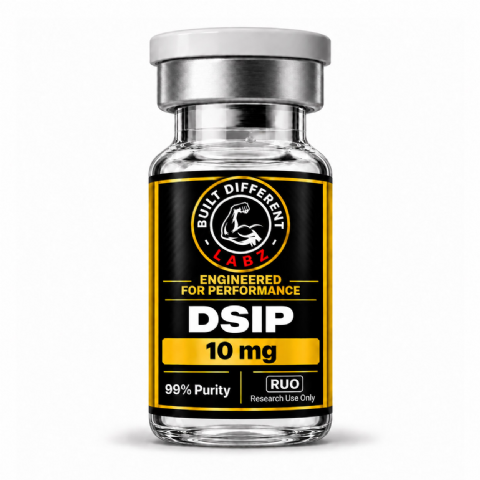
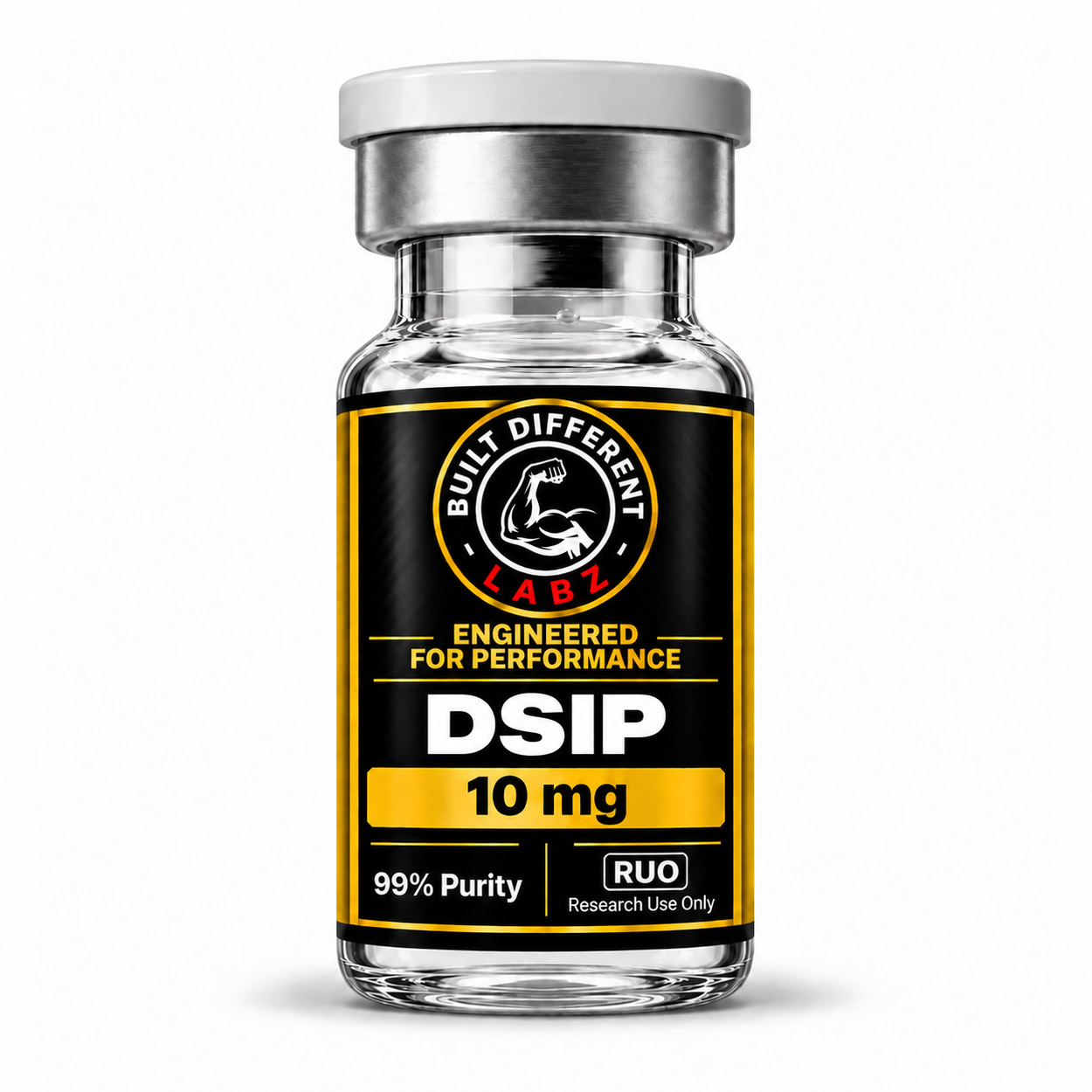
A vial labeled "DSIP 10mg" represents a total of 10 milligrams of DSIP in the vial. It does not mean that 10mg is an established or appropriate single human dose.
DSIP is a small peptide made up of nine amino acids.
It was originally identified during research involving sleep-related brain activity.
Its name came from early experiments suggesting that it could influence slow-wave sleep.
The term "delta sleep" refers to deep stages of non-REM sleep characterized by slow delta brain waves.
DSIP has been investigated for possible effects involving:
Deep sleep
Sleep quality
Sleep architecture
Stress response
Cortisol regulation
Pain perception
Mood
Neuroendocrine signaling
Circadian rhythm
Recovery
Hormonal balance
However, the evidence is inconsistent, and DSIP has never become an established mainstream sleep medication.
The main reason DSIP became interesting is its potential relationship with deep sleep.
Deep sleep is important for:
Physical recovery
Memory consolidation
Immune function
Hormonal regulation
Growth hormone secretion
Nervous-system recovery
Early research suggested DSIP might increase or normalize certain aspects of slow-wave sleep.
However, later research did not always reproduce these effects consistently.
That means DSIP should not be described as a proven sleep-inducing drug.
Not necessarily.
Despite the name "Delta Sleep-Inducing Peptide," DSIP does not behave like a conventional sedative.
It is not comparable to:
Benzodiazepines
Z-drugs
Antihistamines
Melatonin
Strong prescription sleep medications
Some people report easier sleep or deeper sleep, while others report little noticeable effect.
Its possible action appears to be more regulatory than directly sedating.
Sleep architecture refers to the pattern of sleep stages throughout the night.
These stages include:
Light non-REM sleep
Deep slow-wave sleep
REM sleep
Researchers have investigated whether DSIP might alter the proportion or organization of these stages.
Some early studies suggested changes in slow-wave sleep and sleep continuity.
However, the research is not strong enough to establish a predictable clinical effect.
DSIP has been explored experimentally for insomnia and sleep disturbances.
Theoretical benefits could include:
Falling asleep more easily
Fewer nighttime awakenings
Increased deep sleep
Improved sleep quality
Better recovery
But DSIP is not an FDA-approved treatment for insomnia.
Evidence supporting it is much weaker than evidence for established sleep therapies.
DSIP has also been investigated for effects on the body's stress systems.
Research has suggested possible interactions with the hypothalamic-pituitary-adrenal axis.
This is the system involved in cortisol production.
The HPA axis includes:
Hypothalamus
Pituitary gland
Adrenal glands
Cortisol
DSIP may influence how this system responds to stress.
One area of interest is whether DSIP can alter cortisol levels or stress-induced cortisol responses.
Cortisol is important for:
Stress adaptation
Blood sugar regulation
Blood pressure
Immune function
Energy availability
Chronically elevated cortisol can interfere with sleep and recovery.
Some experimental research has suggested DSIP may help normalize certain stress-related hormonal patterns.
However, this is not well established clinically.
Deep sleep is closely associated with natural growth hormone release.
One of the largest daily growth hormone pulses often occurs during slow-wave sleep.
Because DSIP has been investigated for deep sleep, some people assume it directly increases growth hormone.
That is not clearly established.
Any increase in GH could theoretically be secondary to improved sleep architecture rather than direct pituitary stimulation.
This makes DSIP very different from Ipamorelin.
Ipamorelin directly stimulates growth hormone release through the ghrelin receptor.
DSIP does not primarily work that way.
A simplified comparison:
| Characteristic | DSIP | Ipamorelin |
|---|---|---|
| Primary interest | Sleep and neuroendocrine regulation | Growth hormone release |
| Main receptor pathway | Unclear/multiple | Ghrelin receptor |
| Direct GH stimulation | Not clearly established | Yes |
| Sleep | Major research interest | Secondary interest |
| Cortisol | Possible regulatory effect | Generally limited direct effect |
| Muscle building | Not established | Indirect potential |
| FDA approved | No | No |
DSIP has also been investigated for possible effects on pain perception.
Some experimental research has suggested it may influence endogenous pain-control pathways.
Potential areas of interest have included:
Chronic pain
Stress-related pain
Withdrawal-related discomfort
Neurological pain
The evidence is limited and inconsistent.
DSIP should not be considered an established analgesic.
Some users report calming or anti-anxiety effects.
This may theoretically relate to:
Improved sleep
Stress-axis regulation
Neurotransmitter effects
However, DSIP is not an approved treatment for anxiety disorders.
There is not enough clinical evidence to say that it reliably reduces anxiety.
Sleep, cortisol, and mood are strongly interconnected.
If DSIP improves sleep in a particular person, mood could theoretically improve secondarily.
Claims that DSIP directly treats depression are not established.
DSIP has occasionally been studied in relation to withdrawal from substances such as opioids or alcohol.
Researchers have investigated whether it might influence:
Withdrawal symptoms
Sleep disruption
Stress
Pain
Autonomic symptoms
This is an experimental area and not an established addiction treatment.
DSIP is sometimes marketed to athletes and bodybuilders as a recovery peptide.
The theoretical reasoning is:
Better sleep
Better recovery
Potentially better hormonal rhythm
Reduced stress
Improved training recovery
That is biologically plausible.
However, there is little evidence that DSIP directly increases muscle growth or athletic performance.
No strong evidence shows that DSIP directly builds muscle.
It is not comparable to:
Testosterone
Anabolic steroids
Growth hormone
IGF-1
SARMs
Any bodybuilding benefit would most likely be indirect through sleep or recovery.
There is no strong evidence that DSIP reliably increases testosterone.
It is not primarily a testosterone-stimulating peptide.
If improved sleep normalized hormonal function in someone who was sleep-deprived, testosterone could theoretically improve indirectly.
That is different from DSIP directly stimulating testosterone production.
DSIP is not known to suppress natural testosterone production in the manner of anabolic steroids.
It does not primarily act through androgen receptors.
No traditional steroid-style post-cycle therapy is generally associated with DSIP.
It is not known to suppress the hypothalamic-pituitary-gonadal axis in the way anabolic steroids can.
DSIP is not primarily an appetite-regulating peptide.
Some users report changes in appetite, but this is not considered one of its main or reliably demonstrated effects.
There is no strong evidence that DSIP directly burns fat.
Better sleep can indirectly help metabolic health and appetite regulation, but DSIP should not be considered a fat-loss drug.
DSIP has been discussed in relation to circadian regulation.
The circadian system controls:
Sleep timing
Hormone release
Body temperature
Metabolism
Alertness
Theoretically, a peptide involved in sleep regulation could influence circadian signaling.
However, DSIP is not an established treatment for jet lag or circadian-rhythm disorders.
DSIP and melatonin are very different.
Melatonin is a hormone produced by the pineal gland that helps regulate circadian timing.
DSIP is a peptide investigated for possible effects on sleep architecture and neuroendocrine regulation.
Melatonin has a much clearer role in circadian biology.
DSIP's mechanism is less well defined.
| Characteristic | DSIP | Melatonin |
|---|---|---|
| Compound type | Peptide | Hormone |
| Main role | Experimental sleep regulation | Circadian signaling |
| FDA-approved as drug | No | No in supplement form |
| Human evidence | Limited | Extensive |
| Sleep onset | Uncertain | Can help in some situations |
| Deep sleep | Experimental interest | Variable |
| Circadian timing | Less established | Strong role |
Research suppliers commonly sell DSIP in lyophilized vials labeled:
5mg
10mg
A vial labeled:
"DSIP 10mg"
means the supplier represents the vial as containing a total of 10 milligrams of DSIP.
It does not mean that 10mg is an appropriate single administration.
There is no FDA-approved DSIP dosing protocol.
DSIP is frequently sold as a lyophilized research peptide.
Online experimental protocols may discuss subcutaneous administration.
However, there is no standardized FDA-established regimen specifying:
Dose
Frequency
Treatment duration
Timing
Maximum exposure
Long-term safety
Research protocols found online should not be treated as established medical guidance.
There is no reliably established timeline.
Some anecdotal reports describe effects the same night.
Others report that several administrations are needed before noticing changes.
And some people report no effect at all.
Because sleep naturally varies from night to night, placebo effects and normal variation can make anecdotal reports difficult to interpret.
The pharmacokinetics of DSIP in humans are not well characterized.
It appears to be relatively short-lived as a circulating peptide.
However, as with many signaling peptides, the biological effects may potentially outlast the peptide's presence in the bloodstream.
Precise human duration data are limited.
Because human research is limited, the true side-effect profile is not well established.
Anecdotal reports sometimes include:
Headache
Fatigue
Drowsiness
Dizziness
Vivid dreams
Temporary changes in sleep pattern
Nausea
Injection-site irritation
It is difficult to determine how often these effects occur or whether DSIP directly causes them.
Possibly.
Sleep-regulating compounds can have unpredictable effects in some individuals.
Anecdotal reports sometimes describe:
Restlessness
Fragmented sleep
Unusual dreams
Feeling groggy the next morning
This variability is another reason DSIP is difficult to characterize.
DSIP has been investigated in relation to autonomic and stress responses, but it is not considered a conventional blood-pressure drug.
There is insufficient evidence to predict cardiovascular effects reliably.
Long-term human safety is not well characterized.
There are not large modern clinical trials following healthy people using DSIP for months or years.
Important unanswered questions include possible effects on:
Endocrine function
Neurological function
Cardiovascular regulation
Immune function
Sleep architecture
Hormonal rhythms
Lack of reported problems should not be interpreted as proof of safety.
As with other research peptides, product quality is a major issue.
Potential problems include:
Incorrect peptide identity
Incorrect amount
Chemical impurities
Peptide degradation
Bacterial contamination
Endotoxins
Poor sterility
Improper storage
A vial labeled:
"DSIP 10mg - 99 percent purity"
does not independently prove that it actually contains 10mg of correctly synthesized DSIP.
When properly tested, peptide purity is commonly assessed with analytical techniques such as HPLC.
Mass spectrometry can help confirm molecular identity.
However, 99 percent analytical purity does not automatically demonstrate:
Sterility
Low endotoxin levels
Exact vial quantity
Safety for human injection
Those require separate testing.
Research Use Only, or RUO, means a product is being marketed for laboratory research rather than as an approved medication for human treatment.
RUO labeling should not be interpreted as FDA approval for human injection.
No.
DSIP is not FDA approved for:
Insomnia
Sleep enhancement
Anxiety
Stress
Athletic recovery
Growth hormone optimization
Pain
Anti-aging
There is no FDA-approved DSIP dosing regimen.
These peptides have very different research profiles.
BPC-157 is primarily associated with:
Tendons
Ligaments
Gut protection
Tissue repair
DSIP is primarily associated with:
Sleep
Stress
Neuroendocrine regulation
Nervous-system signaling
TB-500 is primarily associated with:
Cell migration
Actin regulation
Angiogenesis
Tissue repair
DSIP is primarily associated with:
Sleep
Neuroendocrine signaling
Stress regulation
They are fundamentally different compounds.
GHK-Cu is primarily associated with:
Skin
Collagen
Hair
Wound healing
DSIP is primarily associated with:
Sleep
Nervous-system regulation
Stress response
PT-141 primarily acts through melanocortin receptors and affects sexual desire and arousal.
DSIP is primarily discussed for sleep and neuroendocrine regulation.
This is probably the most relevant comparison for recovery.
Ipamorelin directly stimulates growth hormone release.
DSIP may indirectly support the natural hormonal environment by influencing sleep.
Ipamorelin:
Direct GH secretagogue
Ghrelin receptor agonist
More predictable endocrine mechanism
DSIP:
Sleep-related peptide
Mechanism less clearly defined
Effects more variable
Sleep regulation:
Interesting but inconsistent research.
Deep sleep:
Early studies suggest potential effects, but not reliably established.
Insomnia:
Insufficient evidence for routine clinical treatment.
Stress regulation:
Biologically interesting but limited clinical evidence.
Cortisol regulation:
Possible effect, not firmly established.
Pain:
Experimental evidence only.
Muscle growth:
Not established.
Fat loss:
Not established.
Testosterone enhancement:
Not established.
Athletic performance:
Not established.
Long-term safety:
Insufficiently characterized.
FDA-approved treatment:
No.
If DSIP truly improves deep sleep or normalizes sleep architecture in certain individuals, the potential downstream benefits could include:
Better recovery
Improved mood
Better cognitive function
More normal hormonal rhythms
Reduced stress
Better physical recovery
Sleep itself is one of the most important components of recovery.
The challenge is that DSIP's effects are not consistent enough to consider it a proven sleep therapy.
The biggest limitation is that DSIP's name makes it sound much more established than it really is.
"Delta Sleep-Inducing Peptide" sounds as though it reliably induces deep sleep.
The scientific reality is more complicated.
Some studies suggest beneficial sleep-related effects.
Other studies show weak, variable, or inconsistent results.
Its mechanism also remains less clearly understood than peptides such as Ipamorelin or PT-141.
DSIP is an experimental nine-amino-acid neuropeptide primarily associated with research involving:
Deep sleep
Sleep architecture
Stress regulation
Cortisol
Neuroendocrine signaling
Pain perception
Recovery
Circadian function
Its most interesting potential use is sleep regulation, particularly slow-wave sleep.
However, DSIP is not a proven sleep medication, human research is limited and inconsistent, long-term safety is not well established, and there is no FDA-approved DSIP dosing protocol.
"DSIP 10mg" describes the represented total amount of peptide contained in a vial. It should not be interpreted as a recommended 10mg dose.
The most accurate description is:
DSIP is an experimental sleep-related neuropeptide with interesting but inconsistent evidence for effects on deep sleep, stress regulation, and neuroendocrine function, with insufficient modern clinical evidence to establish its effectiveness, optimal dosing, or long-term safety.
We do not accept returns or issue refunds for any reason, beside manufacturing defects.
Feel free to contact us if you have any questions or concerns about our Return Policy.