We offer FREE SHIPPPING on all orders!
We offer FREE SHIPPPING on all orders!
| THIS PRODUCT IS INTENDED AS A RESEARCH CHEMICAL ONLY. This designation allows the use of research chemicals strictly for invitro testing and laboratory experimentation only. All product information available on this website is for educational purposes only. Bodily introduction of any kind into humans or animals is strictly prohibited by law. This product should only be handled by licensed, qualified professionals. This product is not a drug, food, or cosmetic and may not be misbranded, misused or mislabeled as a drug, food, or cosmetic. |
Retatrutide is an investigational metabolic peptide being developed primarily for obesity and related metabolic disease. It is especially notable because it activates three different hormone receptors involved in appetite, glucose regulation, and energy metabolism:
GLP-1 receptor
GIP receptor
Glucagon receptor
For this reason, retatrutide is commonly described as a:
Triple receptor agonist
or:
GLP-1/GIP/glucagon triple agonist.
Its major research areas include:
Obesity
Weight reduction
Appetite regulation
Metabolic health
Type 2 diabetes
Insulin sensitivity
Glucose regulation
Fat metabolism
Liver fat
Cardiometabolic risk
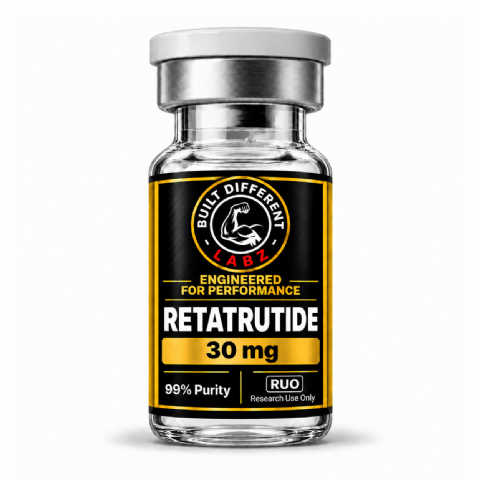
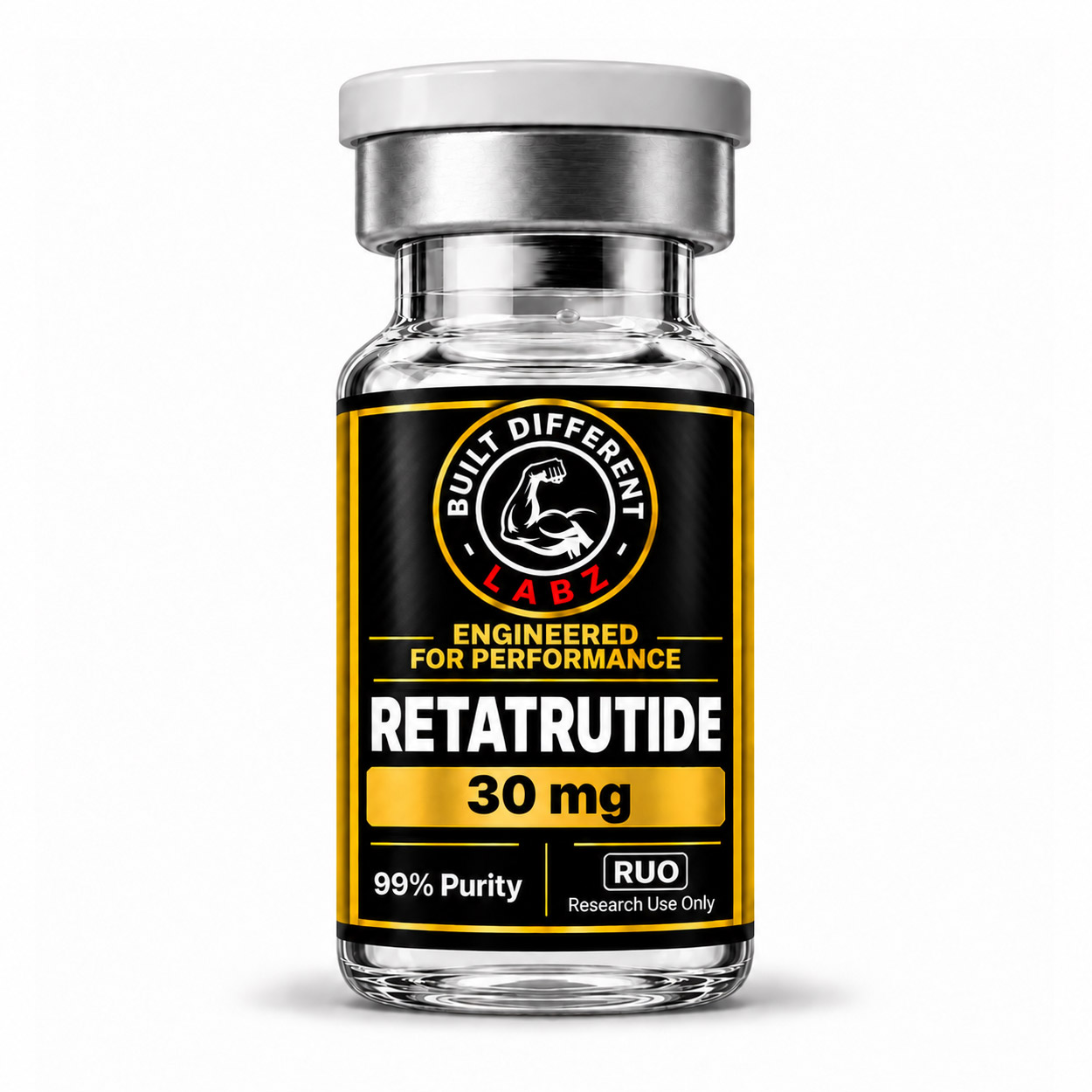
A vial labeled "Retatrutide 30mg" represents a total of 30 milligrams of represented retatrutide material in the vial. It does not mean that 30mg is an established or appropriate single human dose.
Retatrutide is a synthetic peptide engineered to activate three metabolically important receptors simultaneously.
The central concept is:
Retatrutide
GLP-1 receptor
plus
GIP receptor
plus
Glucagon receptor
Coordinated effects on appetite, glucose regulation, and energy metabolism
This triple mechanism distinguishes retatrutide from currently established single- and dual-receptor incretin drugs.
An agonist is a molecule that activates a receptor.
Retatrutide activates three receptors:
GLP-1R
GIPR
GCGR
This is why it is frequently described as a:
GLP-1/GIP/glucagon receptor triagonist.
GLP-1 stands for:
Glucagon-Like Peptide-1.
It is an incretin hormone released from the gastrointestinal tract following food intake.
GLP-1 signaling can:
Increase glucose-dependent insulin secretion
Reduce glucagon under appropriate conditions
Slow gastric emptying
Increase satiety
Reduce food intake
GLP-1 receptor activation is already a well-established therapeutic strategy for diabetes and obesity.
GIP stands for:
Glucose-Dependent Insulinotropic Polypeptide.
It is another incretin hormone released after eating.
GIP can influence:
Insulin secretion
Nutrient metabolism
Adipose tissue
Energy balance
The combination of GLP-1 and GIP receptor activation is already clinically validated by tirzepatide.
Glucagon is a peptide hormone produced primarily by pancreatic alpha cells.
Its traditional role is associated with:
Increasing hepatic glucose production
Maintaining blood glucose during fasting
However, glucagon biology is more complicated.
Glucagon receptor signaling can also influence:
Energy expenditure
Lipid metabolism
Amino-acid metabolism
Liver metabolism
This is why researchers became interested in combining glucagon receptor activity with GLP-1-based appetite suppression.
At first, adding glucagon to an obesity drug may seem counterintuitive because glucagon can increase blood glucose.
The theory is that GLP-1 and GIP activity can provide metabolic and glucose-related benefits while glucagon receptor activity may contribute additional:
Energy expenditure
Fat oxidation
Liver-fat reduction
Metabolic effects
The objective is to create a coordinated multi-receptor metabolic drug.
The weight-loss effect appears to involve multiple mechanisms.
The most important is reduced energy intake.
Retatrutide can influence:
Hunger
Satiety
Food intake
Gastric function
The glucagon component may additionally influence:
Energy expenditure
Fat metabolism
Hepatic metabolism
Therefore, the overall model is approximately:
Reduced calorie intake
plus
Altered metabolic signaling
equals
Progressive weight reduction
Calling retatrutide simply a "fat burner" is inaccurate.
It changes biological systems controlling:
Appetite
Satiety
Glucose
Insulin
Glucagon
Energy metabolism
The reduction in body fat occurs largely because sustained energy balance changes cause stored energy to be mobilized.
Appetite suppression is one of the most noticeable expected effects of incretin-based obesity drugs.
GLP-1-related signaling can increase:
Fullness
Satiety
while decreasing:
Hunger
Food intake
Food-related reward
Retatrutide's multi-receptor activity may amplify overall metabolic effects beyond GLP-1 signaling alone.
GLP-1 receptor activation can slow gastric emptying, particularly during earlier treatment.
This can contribute to:
Prolonged fullness
Reduced meal size
It also contributes to gastrointestinal side effects.
The gastric-emptying effect can diminish somewhat with continued GLP-1 receptor exposure.
Retatrutide can influence insulin through its incretin receptor activity.
GLP-1 and GIP can increase insulin secretion in a glucose-dependent manner.
This means their insulin-stimulating effect becomes more relevant when glucose is elevated.
The three receptor components affect glucose differently.
GLP-1:
Generally improves glucose regulation.
GIP:
Supports glucose-dependent insulin secretion.
Glucagon:
Can increase hepatic glucose production.
The drug is engineered to balance these effects rather than simply maximizing one receptor.
Semaglutide primarily activates:
GLP-1 receptor.
Retatrutide activates:
GLP-1 receptor
plus
GIP receptor
plus
Glucagon receptor.
Therefore:
Semaglutide = single agonist.
Retatrutide = triple agonist.
This does not mean retatrutide is simply "three times stronger." Receptor pharmacology does not work that way.
Tirzepatide activates:
GIP receptor
plus
GLP-1 receptor.
Retatrutide activates:
GIP receptor
plus
GLP-1 receptor
plus
Glucagon receptor.
Therefore:
Tirzepatide = dual agonist.
Retatrutide = triple agonist.
The addition of glucagon receptor activity is the major mechanistic distinction.
Cagrilintide is a long-acting:
Amylin analogue.
It primarily influences:
Satiety
Appetite
Gastric emptying
Food intake
Retatrutide works through:
GLP-1
GIP
Glucagon
Both are being investigated for substantial weight reduction, but they target different hormone systems.
CagriSema combines:
Cagrilintide
plus
Semaglutide.
Therefore, it combines:
Amylin signaling
plus
GLP-1 signaling.
Retatrutide instead places:
GLP-1
GIP
and
Glucagon
activity within a single engineered peptide.
Retatrutide attracted major attention because its Phase 2 obesity trial produced very large average reductions in body weight.
At the highest studied treatment group, average weight reduction reached approximately:
24 percent
at 48 weeks.
An especially interesting observation was that the average weight-loss curve had not clearly plateaued by the end of the study.
This result helped justify the large Phase 3 development program.
It is important, however, not to interpret a clinical-trial average as a guaranteed individual result.
Weight reductions approaching one-quarter of initial body weight were historically unusual for non-surgical obesity treatment.
This placed retatrutide in a range approaching the magnitude historically associated with some forms of bariatric surgery.
However, comparisons between clinical trials and bariatric surgery require caution because:
Patient populations differ
Follow-up periods differ
Treatment durability differs
Safety profiles differ
A substantial portion of weight lost during effective obesity treatment generally comes from fat mass.
However, weight loss can also include:
Lean tissue
Water
Glycogen
Therefore, total body-weight reduction should not automatically be interpreted as pure fat loss.
This is an important consideration with any therapy producing large amounts of weight loss.
During substantial caloric restriction, the body can lose both:
Fat mass
and:
Lean mass.
Adequate nutrition and resistance exercise are therefore important considerations during medically supervised weight-loss treatment.
Retatrutide should not be described as automatically preserving all muscle mass.
No.
Retatrutide is not an anabolic compound.
It does not primarily activate:
Androgen receptors
Growth hormone receptors
IGF-1 receptors
Its primary purpose is metabolic and weight-management research.
Substantial overall weight loss generally reduces visceral adipose tissue.
Visceral fat is the metabolically active fat surrounding abdominal organs.
Reducing excessive visceral fat can improve numerous metabolic risk factors.
Retatrutide is therefore highly interesting from a cardiometabolic perspective.
Retatrutide has generated particularly interesting research involving:
Hepatic steatosis
or:
Liver fat.
Obesity, insulin resistance, and excess liver fat are closely connected.
Substantial weight reduction can itself dramatically reduce liver fat.
The glucagon receptor component may provide additional hepatic metabolic effects.
Metabolic dysfunction-associated steatotic liver disease is strongly associated with:
Obesity
Insulin resistance
Type 2 diabetes
Visceral fat
Retatrutide is therefore scientifically interesting for liver disease associated with metabolic dysfunction.
However, regulatory approval for one indication should never be assumed from positive research in another.
Large improvements in body weight and insulin resistance can improve:
Triglycerides
Lipoprotein profiles
Metabolic risk markers
Retatrutide research has therefore examined numerous cardiometabolic measurements in addition to body weight.
Weight reduction frequently lowers blood pressure.
Metabolic improvements may also contribute.
However, cardiovascular responses need to be considered alongside another important effect:
Heart rate.
GLP-1-related medications can increase resting heart rate modestly.
Retatrutide studies have also observed increases in heart rate.
This is an important safety variable during long-term development.
Retatrutide is also being investigated for type 2 diabetes.
Its GLP-1 and GIP activity provides a strong rationale for improving glucose regulation.
However, retatrutide should not be substituted for established diabetes therapy outside appropriate medical care.
Large reductions in body weight can substantially improve insulin sensitivity.
Additionally, incretin signaling can directly improve aspects of glucose regulation.
Therefore, retatrutide has potential relevance to:
Insulin resistance
Prediabetes
Type 2 diabetes
Metabolic syndrome
Metabolic syndrome typically includes combinations of:
Abdominal obesity
Elevated glucose
Insulin resistance
High triglycerides
Abnormal cholesterol
High blood pressure
A drug capable of producing substantial weight reduction could potentially improve several of these abnormalities simultaneously.
Obesity increases risk for:
Cardiovascular disease
Hypertension
Type 2 diabetes
Sleep apnea
Fatty liver disease
Large sustained weight reduction generally improves numerous cardiovascular risk factors.
However, demonstrating improvement in risk factors is not identical to demonstrating fewer heart attacks, strokes, or cardiovascular deaths.
Those outcomes require dedicated clinical evidence.
Obesity is a major contributor to obstructive sleep apnea.
Large weight reduction can reduce airway obstruction and improve disease severity in many people.
This creates another potential downstream benefit of effective obesity treatment.
Retatrutide itself should not simply be described as a sleep-apnea medication without indication-specific evidence.
Obesity is associated with chronic low-grade inflammation.
Adipose tissue can produce inflammatory signaling molecules.
Significant fat reduction can therefore decrease inflammatory burden.
Some metabolic pathways influenced by incretin drugs may also affect inflammation.
Retatrutide is not a conventional anti-inflammatory drug.
GLP-1 receptor signaling affects brain regions involved in:
Appetite
Reward
Food motivation
Many patients using incretin-based therapies report substantial changes in hunger and food-related thoughts.
Retatrutide's central appetite effects are therefore an important part of its potential therapeutic value.
There is growing research interest in whether GLP-1-related signaling influences alcohol reward and consumption.
This is an emerging research area.
Retatrutide should not currently be considered an established treatment for alcohol-use disorder.
Retatrutide does not directly function as:
Testosterone
An androgen
A SARM
It does not primarily target:
GnRH
LH
FSH
However, substantial weight reduction in people with obesity can indirectly alter sex-hormone physiology because obesity itself can influence testosterone and estrogen metabolism.
Retatrutide is not known to cause the classic hypothalamic-pituitary-gonadal suppression associated with anabolic steroids.
No traditional steroid-style post-cycle therapy is inherently associated with retatrutide.
It is not an anabolic steroid.
Retatrutide is not a growth hormone secretagogue.
It does not work like:
CJC-1295
GHRP-2
GHRP-6
Ipamorelin
Sermorelin
Tesamorelin
Its principal targets are GLP-1, GIP, and glucagon receptors.
MOTS-C:
Primarily an experimental mitochondrial-derived signaling peptide associated with AMPK, glucose metabolism, and metabolic adaptation.
Retatrutide:
A specifically engineered triple receptor agonist producing strong appetite and metabolic effects.
The clinical obesity evidence supporting retatrutide is substantially more advanced.
AOD-9604:
Experimental HGH-derived fragment designed around proposed fat-metabolism effects.
Retatrutide:
Triple incretin/glucagon receptor agonist with substantial human obesity-trial evidence.
The level of human weight-loss evidence is dramatically different.
L-Carnitine is required for transport of long-chain fatty acids into mitochondria.
Retatrutide changes appetite and systemic metabolic signaling.
Therefore:
L-Carnitine = fatty-acid transport.
Retatrutide = appetite and endocrine metabolic regulation.
As with other potent incretin-based therapies, gastrointestinal adverse effects have been among the most common issues in clinical development.
These can include:
Nausea
Diarrhea
Vomiting
Constipation
Reduced appetite
Abdominal discomfort
These effects can be particularly noticeable while treatment exposure is being increased.
Nausea is one of the most characteristic adverse effects of GLP-1-related therapies.
It is connected with changes in:
Gastric emptying
Satiety signaling
Central appetite pathways
Severity varies considerably between individuals.
Vomiting and diarrhea can become medically important when severe because they can contribute to:
Dehydration
Electrolyte abnormalities
Kidney stress
Persistent severe gastrointestinal symptoms warrant medical evaluation.
Slower gastrointestinal motility and reduced food intake can contribute to constipation.
This is another common issue across incretin-based weight-management therapies.
Substantial or rapid weight loss can increase the risk of:
Gallstones
Gallbladder inflammation
This risk is not necessarily caused exclusively by the drug itself.
Rapid weight reduction is independently associated with gallstone formation.
Acute pancreatitis is a serious medical condition involving inflammation of the pancreas.
Severe persistent abdominal pain, particularly if radiating toward the back and accompanied by vomiting, requires urgent medical evaluation.
A history of pancreatitis is an important consideration when discussing incretin-based therapies with a clinician.
Because GLP-1 signaling can slow gastric emptying, these drugs require particular consideration in people with severe gastrointestinal motility disorders.
Symptoms such as persistent:
Vomiting
Severe fullness
Abdominal distension
Inability to tolerate food
should not simply be dismissed as normal appetite suppression.
Retatrutide's incretin effects are glucose dependent, so severe hypoglycemia would not necessarily be expected when used alone in the same way as excessive insulin.
However, risk can become more important when combined with medications such as:
Insulin
Sulfonylureas
This is one reason diabetes medications may require clinician-directed adjustment as weight and glucose improve.
The peptide itself is not simply a kidney toxin.
However, severe:
Vomiting
Diarrhea
Dehydration
can reduce kidney perfusion and potentially contribute to acute kidney injury.
GLP-1 receptor agonist development has historically included concern regarding thyroid C-cell tumors observed in rodents.
Whether and how this translates across compounds and humans requires product-specific clinical evaluation.
People with relevant personal or family endocrine tumor syndromes require particular medical consideration with drugs carrying this class-related warning.
There is no basis for describing retatrutide broadly as either causing or preventing cancer.
Metabolic signaling, weight reduction, and cancer biology are complicated.
Long-term safety surveillance remains particularly important for new metabolic drugs intended for chronic use.
A vial labeled:
"Retatrutide 30mg"
means the supplier represents the vial as containing a total of:
30 milligrams
of retatrutide.
This describes total represented vial content.
It should not be interpreted as a 30mg single dose.
Clinical development uses carefully controlled pharmaceutical material and structured dose escalation. Those trial procedures should not be converted into a self-administration protocol for an unapproved research vial.
This distinction is extremely important.
Clinical-trial retatrutide is manufactured and controlled according to pharmaceutical development standards.
A research-market vial labeled retatrutide is not automatically equivalent.
Differences can involve:
Molecular identity
Peptide sequence
Concentration
Purity
Sterility
Endotoxin levels
Stability
Manufacturing controls
The fact that a molecule is undergoing successful clinical trials does not validate unrelated research-market products.
Important characteristics include:
Correct peptide identity
Correct sequence
Chemical purity
Exact vial quantity
Biological potency
Sterility
Endotoxin levels
Stability
HPLC can help assess chemical purity.
Mass spectrometry can help confirm molecular identity.
However, 99 percent chemical purity does not automatically establish:
Sterility
Endotoxin levels
Correct vial quantity
Correct concentration
Pharmaceutical equivalence
Human safety
Clinical effectiveness
These are separate characteristics.
Research Use Only, or RUO, means the particular product is marketed for laboratory or analytical research rather than as an approved medication for human treatment.
An RUO retatrutide vial should not be treated as equivalent to pharmaceutical material used in controlled clinical trials.
Retatrutide is an investigational drug rather than an established FDA-approved obesity medication.
Its clinical development is much more advanced than most compounds sold through the research-peptide market, but successful clinical trials do not themselves constitute FDA approval.
It should therefore be distinguished from already approved incretin-based medications.
GLP-1 receptor biology:
Extremely strong.
GIP receptor biology:
Extremely strong.
Glucagon receptor biology:
Extremely strong.
Incretin-based obesity treatment:
Extremely strong.
Retatrutide receptor pharmacology:
Strong.
Human weight-loss effects:
Very promising and supported by controlled clinical trials.
Approximately 24 percent average weight reduction at 48 weeks in the highest-dose Phase 2 obesity group:
Major clinical signal.
Glucose and metabolic improvements:
Strongly promising.
Liver-fat reduction:
Promising.
Long-term cardiovascular outcomes:
Still require dedicated evidence.
Long-term safety:
Still being characterized.
Human lifespan extension:
Not established.
Bodybuilding enhancement:
Not established.
Research-vial equivalence to pharmaceutical retatrutide:
Not established.
Retatrutide's most interesting characteristic is its triple receptor design.
The simplified concept is:
GLP-1
Appetite reduction and glucose regulation
plus
GIP
Incretin and metabolic signaling
plus
Glucagon
Energy and hepatic metabolic signaling
equals
Powerful coordinated metabolic intervention
Instead of targeting only appetite, retatrutide attempts to influence multiple complementary aspects of energy balance.
The magnitude of weight reduction observed in clinical research suggests that this strategy may be highly effective.
Retatrutide's impressive clinical results can create a dangerous misconception that any vial sold online under the same name is equivalent to the pharmaceutical compound used in clinical development.
It is not possible to make that assumption.
There is an enormous difference between:
Retatrutide manufactured for a controlled pharmaceutical clinical trial
and:
An independently produced research vial labeled "Retatrutide 30mg."
Additionally, a drug capable of producing very large reductions in body weight can also produce meaningful physiological effects involving:
Gastrointestinal function
Nutrition
Lean mass
Gallbladder
Glucose
Heart rate
Hydration
Greater effectiveness does not eliminate the need for safety monitoring.
Retatrutide is an investigational triple receptor agonist targeting GLP-1, GIP, and glucagon receptors. It represents one of the most scientifically important next-generation approaches to obesity pharmacotherapy.
Its major research areas include:
Obesity
Major weight reduction
Appetite suppression
Satiety
Type 2 diabetes
Insulin resistance
Glucose regulation
Visceral fat
Liver fat
Cardiometabolic health
Energy metabolism
"Retatrutide 30mg" describes a represented total vial content of 30 milligrams. It should not be interpreted as a recommended 30mg dose.
The most accurate description is:
Retatrutide is an investigational GLP-1, GIP, and glucagon triple receptor agonist designed to combine powerful appetite regulation with broader metabolic effects. Controlled human research has produced unusually large average reductions in body weight, including approximately 24 percent at 48 weeks in the highest-dose group of its landmark Phase 2 obesity trial. Unlike many experimental peptides marketed for fat loss, retatrutide therefore has substantial human clinical evidence behind the underlying drug candidate. However, it remains necessary to distinguish the pharmaceutical compound studied in controlled trials from independently manufactured research-market vials. Gastrointestinal adverse effects, gallbladder complications associated with rapid weight loss, glucose changes, heart-rate effects, hydration, nutritional intake, and preservation of lean mass are important considerations, and long-term safety continues to require clinical evaluation.
We do not accept returns or issue refunds for any reason, beside manufacturing defects.
Feel free to contact us if you have any questions or concerns about our Return Policy.