We offer FREE SHIPPPING on all orders!
We offer FREE SHIPPPING on all orders!
| THIS PRODUCT IS INTENDED AS A RESEARCH CHEMICAL ONLY. This designation allows the use of research chemicals strictly for invitro testing and laboratory experimentation only. All product information available on this website is for educational purposes only. Bodily introduction of any kind into humans or animals is strictly prohibited by law. This product should only be handled by licensed, qualified professionals. This product is not a drug, food, or cosmetic and may not be misbranded, misused or mislabeled as a drug, food, or cosmetic. |
KPV is a short synthetic tripeptide made from three amino acids:
Lys-Pro-Val
or:
KPV
It is derived from the C-terminal portion of alpha-melanocyte-stimulating hormone, commonly called alpha-MSH.
KPV is primarily researched for potential anti-inflammatory effects, especially involving the gastrointestinal tract, skin, and immune signaling.
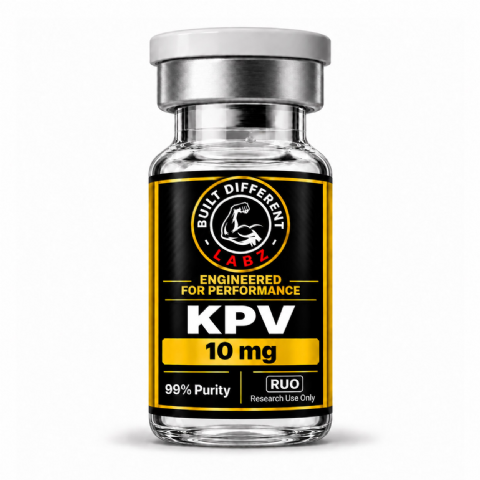
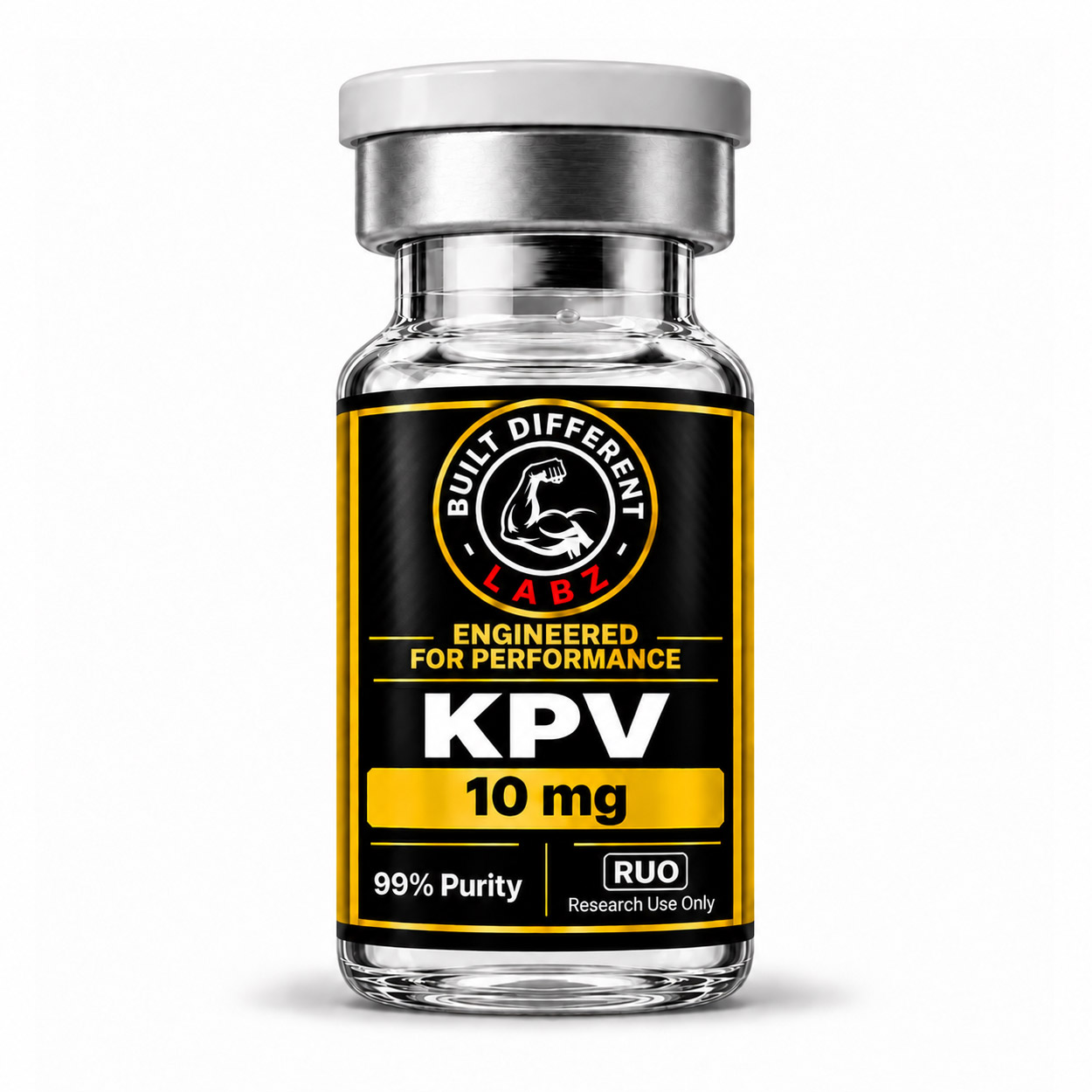
A vial labeled "KPV 10mg" represents a total of 10 milligrams of KPV in the vial. It does not mean that 10mg is an established or appropriate single human dose.
KPV is a three-amino-acid peptide consisting of:
Lysine
Proline
Valine
It comes from the final three amino acids of alpha-MSH.
Alpha-MSH is a naturally occurring peptide involved in several biological processes, including:
Pigmentation
Inflammation
Immune regulation
Melanocortin signaling
KPV appears to retain some of the anti-inflammatory activity associated with alpha-MSH without necessarily reproducing all of alpha-MSH's other biological effects.
The main research interest around KPV involves inflammation.
Potential areas under investigation include:
Intestinal inflammation
Inflammatory bowel disease
Colitis
Skin inflammation
Wound healing
Immune regulation
Cytokine signaling
Oxidative stress
KPV is generally discussed as an anti-inflammatory and immunomodulatory peptide rather than as a hormone-stimulating or muscle-building peptide.
The exact mechanism is still being studied.
KPV appears to influence inflammatory signaling pathways rather than functioning through one simple hormone receptor.
Research has suggested potential effects involving:
NF-kappaB
Pro-inflammatory cytokines
Immune-cell activation
Intestinal epithelial cells
Cellular inflammatory responses
One of the most important areas of interest is suppression of excessive inflammatory signaling.
NF-kappaB is a major cellular signaling pathway involved in inflammation.
When activated, NF-kappaB can increase production of inflammatory mediators such as:
TNF-alpha
IL-1 beta
IL-6
Other cytokines
KPV has been investigated for its ability to reduce activation of inflammatory pathways involving NF-kappaB.
This is one reason it has attracted interest in gastrointestinal and skin research.
Cytokines are signaling proteins used by the immune system.
Some cytokines promote inflammation.
KPV research suggests it may reduce certain pro-inflammatory cytokine responses.
Potentially affected pathways include signaling involving:
TNF-alpha
IL-1 beta
IL-6
However, it should not be described as a broad immune suppressant.
Its proposed effect is more accurately described as modulation of excessive inflammatory signaling.
The gastrointestinal tract is one of the strongest areas of KPV research.
Experimental studies have investigated KPV in conditions involving:
Colitis
Intestinal inflammation
Epithelial damage
Inflammatory bowel disease models
KPV may influence both immune cells and intestinal epithelial cells.
This has led to particular interest in whether it can reduce gut inflammation while supporting barrier integrity.
KPV is frequently discussed in relation to:
Ulcerative colitis
Crohn's disease
General intestinal inflammation
Much of the evidence comes from laboratory and animal research.
KPV is not an established or FDA-approved treatment for Crohn's disease or ulcerative colitis.
Those conditions can be serious and require appropriate medical treatment.
Colitis models are among the better-known areas of KPV research.
Experimental findings have suggested potential reductions in:
Inflammatory cytokines
Intestinal tissue damage
Immune activation
Symptoms associated with experimental colitis
These findings are scientifically interesting, but they do not establish equivalent effectiveness in humans.
The intestinal lining is made of epithelial cells.
These cells form a barrier between the contents of the digestive tract and the rest of the body.
Inflammation can damage this barrier.
KPV has been studied for potential effects on epithelial-cell inflammatory responses.
This may help explain why the peptide is frequently discussed in gut-health research.
The intestinal barrier depends on:
Healthy epithelial cells
Tight junctions
Controlled immune activity
Proper mucus production
Excess inflammation can interfere with these systems.
KPV may theoretically help support the intestinal environment by reducing inflammatory signaling.
However, claims that KPV permanently "heals leaky gut" are not established.
KPV has also generated interest in dermatology-related research.
Potential areas include:
Dermatitis
Eczema-related inflammation
Psoriasis-related pathways
Irritated skin
Wound healing
Inflammatory skin conditions
Because it is a very small peptide, topical formulations have also been explored.
Eczema involves complex immune, barrier, and inflammatory dysfunction.
KPV's potential anti-inflammatory activity makes it biologically interesting.
However, KPV is not an established treatment for eczema.
There is much stronger clinical evidence for approved topical and systemic eczema therapies.
Psoriasis is an immune-mediated inflammatory disease.
KPV has theoretical relevance because it may affect inflammatory pathways.
However, it should not be described as a proven psoriasis therapy.
Inflammation plays a role in acne.
This has led to speculation about KPV for:
Redness
Inflammatory lesions
Skin irritation
There is not strong evidence establishing KPV as a standard acne treatment.
Inflammation is a normal part of wound healing.
Too little inflammation can interfere with defense against infection.
Too much inflammation can delay healing.
KPV may theoretically help regulate excessive inflammation during tissue repair.
Research has therefore explored potential roles involving:
Skin repair
Tissue inflammation
Epithelial recovery
However, it is not an established wound-healing medication.
KPV is derived from alpha-MSH.
Alpha-MSH has several biological effects, including:
Melanocortin receptor activation
Pigmentation
Anti-inflammatory signaling
Immune regulation
KPV appears to retain important anti-inflammatory properties without necessarily producing the same melanocortin-related pigmentation effects.
KPV is not generally considered a tanning peptide.
That distinguishes it from compounds such as Melanotan II.
Because KPV is only a small fragment of alpha-MSH, its biological activity is different from full melanocortin agonists.
It should not be expected to produce strong tanning effects.
Melanotan II:
Melanocortin receptor agonist
Strong pigmentation effects
Can influence appetite and sexual function
KPV:
Small alpha-MSH-derived tripeptide
Primarily anti-inflammatory research
Not primarily used for pigmentation
Not primarily associated with libido
Their origin is related, but their practical research profiles are very different.
Both are frequently discussed in gut-related peptide communities.
KPV:
Primarily anti-inflammatory
Cytokine and immune signaling
Gut and skin research
BPC-157:
Tissue protection
Angiogenesis
Tendon research
Gastrointestinal protection
Wound-healing research
The two have different mechanisms.
KPV is more directly associated with inflammatory regulation.
BPC-157 is more broadly associated with tissue protection and repair.
TB-500-related research involves:
Actin
Cell migration
Tissue repair
Angiogenesis
KPV research primarily involves:
Inflammation
Cytokines
Immune regulation
They should not be considered interchangeable.
GHK-Cu primarily relates to:
Collagen
Skin regeneration
Wound healing
Hair
Tissue remodeling
KPV primarily relates to:
Inflammation
Immune signaling
Gut inflammation
Skin inflammation
There can be overlap in skin and wound research, but their mechanisms are different.
Because KPV influences inflammatory pathways, it is sometimes promoted for autoimmune conditions.
That is a major overextension of the evidence.
Autoimmune diseases involve highly complex immune mechanisms.
There is not enough evidence to establish KPV as a treatment for autoimmune disease in general.
KPV should not simply be described as an immune suppressant.
The available research more strongly supports potential anti-inflammatory or immunomodulatory activity.
These concepts are different.
Suppressing the entire immune system could increase infection risk.
Modulating excessive inflammatory signaling is more selective in concept.
Some research has suggested that alpha-MSH-derived peptides, including KPV-related sequences, may have antimicrobial properties.
Potential activity has been studied against certain microorganisms.
However, KPV should not be treated as an antibiotic.
It is not an established replacement for antimicrobial medication.
KPV is sometimes discussed online for Candida.
Some melanocortin-derived peptides have shown antimicrobial activity in experimental systems.
This does not establish KPV as an effective treatment for systemic or gastrointestinal Candida infection.
Exercise can temporarily increase inflammatory signaling.
KPV's anti-inflammatory mechanism creates theoretical interest in recovery.
However, exercise-induced inflammation is also part of normal adaptation.
There is not enough evidence to conclude that suppressing it with KPV improves athletic recovery or muscle growth.
No.
KPV is not a muscle-building peptide.
It does not directly stimulate:
Testosterone
Growth hormone
IGF-1
Androgen receptors
Any benefit to athletes would theoretically come from inflammation management rather than direct anabolism.
No strong evidence supports KPV as a fat-loss peptide.
It does not primarily:
Suppress appetite
Increase growth hormone
Stimulate lipolysis
Increase metabolic rate
KPV is not known to directly increase testosterone.
It should not be grouped with reproductive peptides such as Kisspeptin.
No.
KPV is not a growth hormone secretagogue.
It should not be grouped with:
Sermorelin
Tesamorelin
Ipamorelin
CJC-1295
There is no established evidence that KPV suppresses natural testosterone production in the manner of anabolic steroids.
Traditional post-cycle therapy is not generally associated with KPV.
It does not act primarily on the androgen system.
KPV is not primarily a cortisol-modulating peptide.
Any interaction with stress-related inflammation would be indirect.
Reducing inflammation may potentially reduce inflammatory discomfort.
However, KPV is not a conventional pain medication.
It should not be considered equivalent to:
NSAIDs
Acetaminophen
Opioids
Pain reduction would theoretically result from lowering inflammatory signaling rather than directly blocking pain perception.
Because inflammation contributes to certain joint conditions, KPV has theoretical interest in inflammatory joint research.
However, there is insufficient evidence to establish it as a treatment for:
Rheumatoid arthritis
Osteoarthritis
Tendon injuries
Ligament injuries
KPV is not primarily a nootropic or neurological peptide.
Its strongest research emphasis is inflammation.
It should not be grouped with:
Selank
Semax
Pinealon
A vial labeled:
"KPV 10mg"
means that the supplier represents the vial as containing a total of 10 milligrams of KPV.
It does not mean that the entire vial represents one established administration.
There is no FDA-approved KPV dosing protocol.
KPV is sometimes discussed for oral use because of its gastrointestinal research profile.
The reasoning is that local exposure in the digestive tract could potentially influence intestinal inflammatory pathways.
However, oral absorption and biological activity depend on formulation and stability.
An oral product should not automatically be assumed to produce the same effects as injectable or experimental formulations.
Research suppliers may sell KPV as lyophilized powder.
There is no FDA-approved injectable KPV product.
Human injectable safety and optimal exposure have not been adequately established.
Topical formulations have theoretical appeal because of KPV's potential skin anti-inflammatory effects.
Potential research applications include:
Redness
Dermatitis
Irritation
Wound-related inflammation
Again, formulation-specific clinical evidence remains limited.
There is no established universal onset.
Anti-inflammatory effects in experimental systems can occur relatively quickly at the cellular level.
Noticeable clinical changes would depend on:
Route
Formulation
Condition being studied
Degree of inflammation
Duration of exposure
Claims of immediate dramatic healing are not well supported.
Detailed human pharmacokinetic information is limited.
Because KPV is only three amino acids long, it may be broken down relatively quickly by peptidases.
However, a short circulating half-life does not necessarily mean biological signaling stops immediately.
Downstream changes in inflammatory pathways can persist after the peptide itself is degraded.
The human side-effect profile is not well characterized.
Potential risks may include:
Injection-site irritation
Redness
Swelling
Headache
Nausea
Gastrointestinal discomfort
Allergic reaction
Topical formulations could potentially cause:
Skin irritation
Redness
Itching
Because formal human trials are limited, true incidence rates are unknown.
Long-term safety in humans has not been adequately established.
Important unanswered questions include:
Chronic immune effects
Infection risk
Long-term inflammatory regulation
Effects from repeated exposure
Route-specific safety
Lack of reported problems does not establish long-term safety.
Chronic inflammation is involved in some forms of cancer development.
However, reducing inflammatory signaling does not mean KPV prevents cancer.
There is also insufficient evidence to determine whether chronic KPV exposure has any meaningful effect on cancer risk.
Claims that KPV either causes or prevents cancer are not established.
Research-grade peptide quality is an important issue.
Potential problems include:
Incorrect peptide identity
Incorrect vial quantity
Chemical impurities
Degradation
Bacterial contamination
Endotoxins
Poor sterility
Improper storage
A vial labeled:
"KPV 10mg - 99 percent purity"
does not independently establish pharmaceutical quality.
When properly performed, HPLC can help assess chemical purity.
Mass spectrometry can help confirm molecular identity.
However, 99 percent analytical purity does not automatically establish:
Sterility
Endotoxin levels
Exact amount in the vial
Correct formulation
Safety for injection
These are separate quality measures.
Research Use Only, or RUO, indicates that a product is marketed for laboratory research rather than as an approved human medication.
An RUO KPV vial should not be treated as an FDA-approved therapeutic product.
No.
KPV is not an FDA-approved medication for:
Crohn's disease
Ulcerative colitis
Irritable bowel syndrome
Eczema
Psoriasis
Acne
Autoimmune disease
Wound healing
Athletic recovery
There is no FDA-approved KPV dosing protocol.
Anti-inflammatory activity:
Strong experimental evidence.
NF-kappaB modulation:
Promising mechanistic evidence.
Cytokine regulation:
Promising experimental evidence.
Colitis models:
Promising preclinical evidence.
Inflammatory bowel disease in humans:
Not established.
Skin inflammation:
Promising experimental evidence.
Wound healing:
Possible but not established clinically.
Autoimmune disease:
Not established.
Muscle growth:
Not established.
Fat loss:
Not established.
Athletic recovery:
Not established.
Long-term human safety:
Insufficiently characterized.
KPV's most interesting feature is its simplicity combined with its anti-inflammatory activity.
It consists of only three amino acids yet appears capable of influencing important inflammatory signaling pathways.
The basic concept is:
KPV
Reduced inflammatory signaling
Reduced NF-kappaB activity
Reduced pro-inflammatory cytokine activity
Potential improvement in inflammatory tissue environments
This makes KPV particularly interesting for gastrointestinal and dermatological research.
The biggest limitation is the gap between promising laboratory research and established human treatment.
It is reasonable to say:
"KPV has promising anti-inflammatory effects in experimental models."
It is much less appropriate to claim:
"KPV cures Crohn's disease, ulcerative colitis, eczema, autoimmune disease, or chronic gut problems."
Those claims are not established.
KPV is a synthetic three-amino-acid peptide, Lys-Pro-Val, derived from the C-terminal region of alpha-MSH.
Its primary research areas include:
Anti-inflammatory activity
NF-kappaB signaling
Cytokine regulation
Intestinal inflammation
Colitis
Skin inflammation
Immune modulation
Wound-related inflammation
It is fundamentally different from growth hormone peptides, reproductive peptides, and muscle-building compounds.
"KPV 10mg" describes the represented total amount of peptide contained in a vial. It should not be interpreted as a recommended 10mg dose.
The most accurate description is:
KPV is an experimental alpha-MSH-derived tripeptide with promising anti-inflammatory and immunomodulatory activity, particularly in gastrointestinal and skin research. Its mechanisms are biologically interesting and supported by preclinical evidence, but controlled human evidence remains insufficient to establish KPV as a proven treatment for inflammatory bowel disease, autoimmune disease, skin disorders, or other inflammatory conditions.
We do not accept returns or issue refunds for any reason, beside manufacturing defects.
Feel free to contact us if you have any questions or concerns about our Return Policy.