We offer FREE SHIPPPING on all orders!
We offer FREE SHIPPPING on all orders!
| THIS PRODUCT IS INTENDED AS A RESEARCH CHEMICAL ONLY. This designation allows the use of research chemicals strictly for invitro testing and laboratory experimentation only. All product information available on this website is for educational purposes only. Bodily introduction of any kind into humans or animals is strictly prohibited by law. This product should only be handled by licensed, qualified professionals. This product is not a drug, food, or cosmetic and may not be misbranded, misused or mislabeled as a drug, food, or cosmetic. |
ARA-290, also known as Cibinetide, is an experimental 11-amino-acid peptide derived from the tissue-protective region of erythropoietin, commonly abbreviated EPO.
Unlike erythropoietin itself, ARA-290 was specifically designed to activate tissue-protective and anti-inflammatory pathways without significantly stimulating red blood cell production.
Its main research areas include:
Small fiber neuropathy
Neuropathic pain
Nerve regeneration
Neuroinflammation
Tissue protection
Inflammation
Metabolic dysfunction
Sarcoidosis-associated neuropathy
Diabetic neuropathy
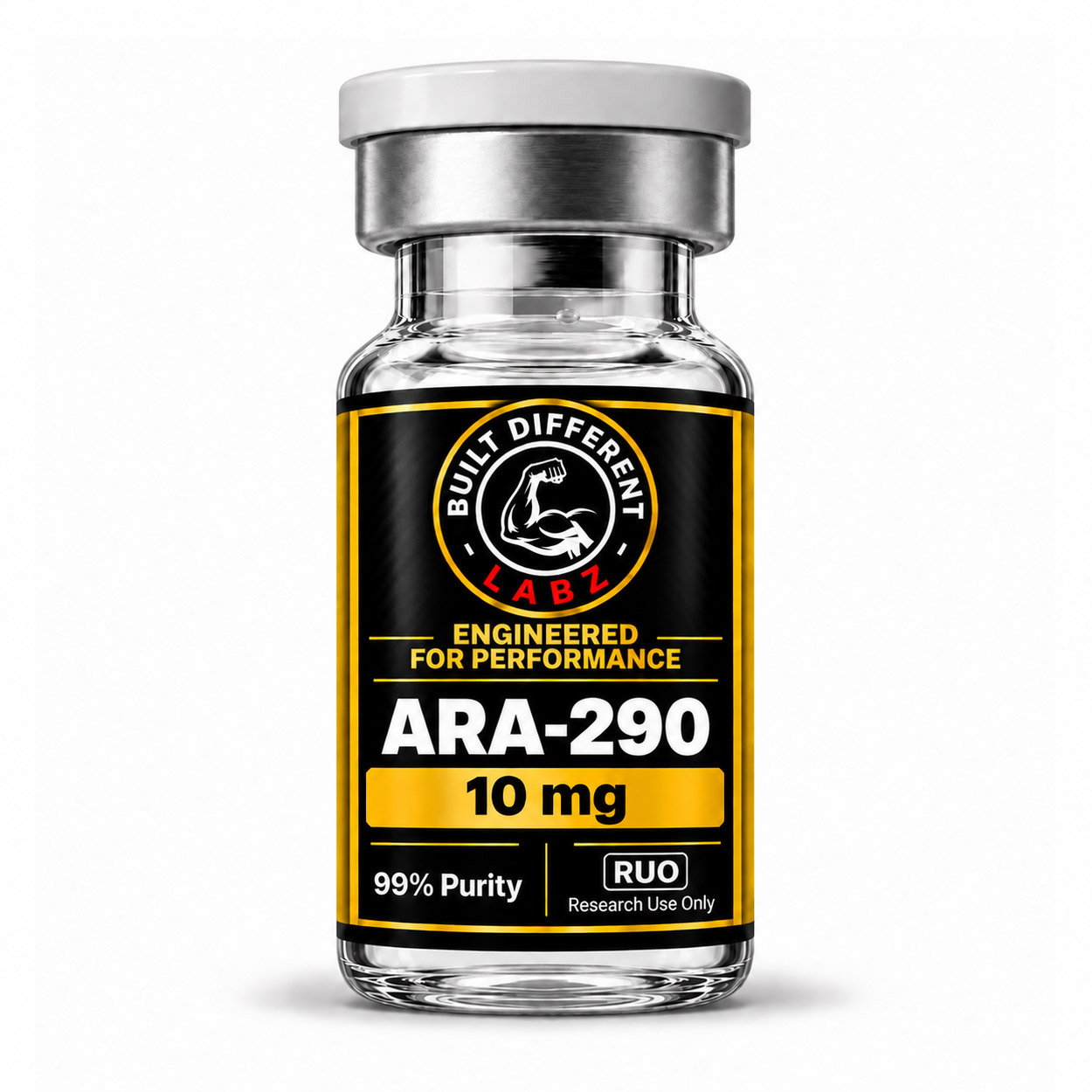
A vial labeled "ARA-290 10mg" represents a total of 10 milligrams of ARA-290 in the vial. It does not mean that 10mg is an established or appropriate single human dose.
ARA-290 is a synthetic peptide derived from a specific region of erythropoietin.
It is also known as:
Cibinetide
ARA290
ARA 290
PHBSP
The peptide contains 11 amino acids.
Its sequence is commonly represented as:
pGlu-Glu-Gln-Leu-Glu-Arg-Ala-Leu-Asn-Ser-Ser
ARA-290 was developed to reproduce the tissue-protective effects associated with erythropoietin while avoiding the strong red-blood-cell-producing activity of full EPO.
Erythropoietin is a naturally occurring hormone produced primarily by the kidneys.
Its most famous role is stimulating bone marrow to produce red blood cells.
EPO can therefore increase:
Red blood cell count
Hemoglobin
Hematocrit
Oxygen-carrying capacity
However, erythropoietin also has biological effects involving:
Tissue protection
Inflammation
Cell survival
Nerve tissue
Blood vessels
ARA-290 was designed to separate these tissue-protective effects from EPO's hematopoietic activity.
That is specifically what ARA-290 was designed to avoid.
Unlike full erythropoietin, ARA-290 has little or no meaningful erythropoietic activity at the exposures studied.
Therefore, it should not be thought of as a blood-doping peptide or an EPO substitute for increasing hematocrit.
Its research emphasis is tissue protection and inflammation rather than red blood cell production.
ARA-290 is believed to act primarily through a receptor system commonly called the innate repair receptor.
This receptor involves:
Erythropoietin receptor components
CD131, also called the beta-common receptor
Activation of this receptor appears to trigger anti-inflammatory and tissue-repair signaling without strongly activating the classical erythropoietic pathway.
A simplified model is:
ARA-290
Innate repair receptor activation
Reduced inflammatory signaling
Improved cellular survival
Reduced neuroinflammation
Potential nerve repair
The innate repair receptor is a receptor complex associated with tissue protection.
It is believed to become more active or more highly expressed following:
Tissue injury
Inflammation
Nerve injury
Cellular stress
Activation can produce signaling associated with:
Anti-inflammatory effects
Tissue preservation
Reduced apoptosis
Nerve protection
Repair responses
ARA-290 was specifically designed to selectively target this pathway.
Full erythropoietin can activate pathways responsible for:
Red blood cell production
Increased hematocrit
ARA-290 primarily targets tissue-protective signaling.
This distinction is important because excessive erythropoietin exposure can increase blood viscosity and potentially raise cardiovascular risk.
ARA-290 was designed to retain:
Anti-inflammatory activity
Nerve protection
Tissue repair
while avoiding:
Significant erythrocytosis
Large hematocrit increases
Small fiber neuropathy is one of the most important areas of human ARA-290 research.
Small nerve fibers are involved in:
Pain
Temperature sensation
Sweating
Heart-rate regulation
Blood-pressure regulation
Other autonomic functions
Damage to these fibers can cause:
Burning
Tingling
Pins and needles
Electric sensations
Abnormal temperature sensations
Reduced sensation
Autonomic symptoms
ARA-290 has undergone human clinical research in patients with small fiber neuropathy.
Small fiber neuropathy affects small sensory and autonomic nerve fibers.
Symptoms can include:
Burning feet
Burning hands
Tingling
Sharp pain
Electric pain
Increased sensitivity
Reduced temperature sensation
Sweating abnormalities
Dizziness when standing
Gastrointestinal autonomic symptoms
Possible causes include:
Diabetes
Autoimmune disease
Sarcoidosis
Vitamin deficiencies
Certain medications
Genetic disorders
Sometimes no cause is identified.
ARA-290 has been particularly studied in patients with sarcoidosis-associated small fiber neuropathy.
Sarcoidosis is an inflammatory condition that can affect multiple organs.
Some patients develop small fiber nerve damage producing:
Pain
Burning
Fatigue
Autonomic dysfunction
Human studies of ARA-290 in this population reported improvements in neuropathic and autonomic symptoms and quality-of-life measures.
Some research also reported evidence consistent with regeneration of small nerve fibers in the cornea.
These findings are among the more important human data supporting ARA-290 research.
One of the most interesting findings from ARA-290 research is the possibility that it may do more than temporarily reduce pain.
Researchers have investigated whether ARA-290 can support actual nerve repair.
In some clinical studies, researchers measured small nerve fibers in the cornea.
Changes consistent with increased corneal nerve fiber density were observed after treatment.
This created interest in ARA-290 as a potentially disease-modifying approach rather than simply a pain suppressant.
However, this has not been definitively proven across large populations.
Neuropathic pain occurs when nerves themselves are damaged or dysfunctional.
Examples include:
Diabetic neuropathy
Small fiber neuropathy
Chemotherapy-related neuropathy
Post-injury nerve pain
Common neuropathic pain medications include:
Gabapentin
Pregabalin
Duloxetine
Certain antidepressants
These drugs primarily reduce symptoms.
ARA-290 is different because its research focuses on reducing neuroinflammation and potentially improving nerve health.
Gabapentin primarily changes neuronal signaling to reduce neuropathic pain.
ARA-290 potentially acts through:
Anti-inflammatory signaling
Tissue protection
Nerve repair pathways
A simplified comparison is:
Gabapentin = pain signal reduction.
ARA-290 = experimental nerve-protection and repair approach.
ARA-290 has far less established clinical use.
ARA-290 has also been studied in people with type 2 diabetes and neuropathy.
Diabetes can damage peripheral nerves through mechanisms involving:
High blood glucose
Oxidative stress
Inflammation
Microvascular injury
Mitochondrial dysfunction
Clinical research has reported improvements in neuropathy-related measures in some patients treated with ARA-290.
There has also been research suggesting possible metabolic effects.
However, ARA-290 is not an established treatment for diabetic neuropathy.
ARA-290 is not a conventional analgesic.
It does not primarily act like:
Opioids
NSAIDs
Acetaminophen
The proposed concept is:
Reduce inflammatory nerve injury
Improve nerve function
Potentially reduce pain as the nerve environment improves
That is fundamentally different from directly blocking pain perception.
Inflammation is central to ARA-290 research.
Excessive inflammation following tissue or nerve injury can create a cycle:
Tissue injury
Inflammatory signaling
Additional cellular damage
More inflammation
More nerve dysfunction
ARA-290 may help interrupt this cycle through the innate repair receptor.
ARA-290 has been investigated for effects on inflammatory cytokine signaling.
Potential downstream effects include reductions in excessive inflammatory responses.
This may help explain its potential effects in:
Neuropathy
Sarcoidosis
Tissue injury
Metabolic inflammation
It should not simply be described as a general immune suppressant.
Neuroinflammation is inflammation involving nervous-system tissue.
It can contribute to:
Neuropathic pain
Nerve degeneration
Abnormal pain sensitivity
Impaired nerve repair
ARA-290 appears particularly interesting because the innate repair receptor can become more relevant following nerve injury.
This may help target signaling toward damaged tissue.
Allodynia occurs when something that normally should not hurt becomes painful.
Examples include:
Clothing touching the skin
Light pressure
Mild temperature changes
Animal studies of ARA-290 have demonstrated reductions in mechanical and cold allodynia following nerve injury.
This helped drive subsequent human neuropathy research.
Hyperalgesia means an exaggerated response to a painful stimulus.
Because inflammatory nerve damage can cause hyperalgesia, ARA-290's anti-inflammatory and neuroprotective effects create theoretical relevance.
Human evidence is much more limited than the animal research.
Small fibers also help control the autonomic nervous system.
Autonomic functions include:
Heart rate
Blood pressure
Sweating
Digestion
Temperature regulation
Small fiber neuropathy can therefore produce much more than pain.
ARA-290 studies in sarcoidosis have evaluated autonomic symptoms as well as pain symptoms.
Fatigue is common in inflammatory disorders such as sarcoidosis.
ARA-290 has occasionally been discussed in this context because:
Neuropathy contributes to fatigue
Chronic inflammation contributes to fatigue
Improved nerve function might improve overall function
However, ARA-290 should not be classified as a general energy or fatigue peptide.
ARA-290 is not primarily a mitochondrial peptide like SS-31.
However, tissue-protective signaling can indirectly influence:
Cellular survival
Oxidative stress
Mitochondrial integrity
Its main defined target remains the innate repair receptor rather than cardiolipin or mitochondrial membranes.
ARA-290:
Innate repair receptor
Neuropathy
Neuroinflammation
Tissue repair
Small fiber nerve research
SS-31:
Mitochondrial membranes
Cardiolipin
ATP production
Oxidative phosphorylation
Both are investigated for cellular protection, but their mechanisms are very different.
BPC-157 is primarily associated with experimental research involving:
Tendons
Ligaments
Gastrointestinal tissue
Wound healing
Tissue protection
ARA-290 has much stronger emphasis on:
Peripheral nerves
Neuropathic pain
Neuroinflammation
Small fiber neuropathy
There can be overlap in tissue-protection concepts, but the biological pathways are different.
TB-500-related research focuses heavily on:
Actin
Cell migration
Tissue repair
Angiogenesis
ARA-290 focuses more heavily on:
Nerve injury
Neuroinflammation
Innate repair receptor signaling
ARA-290 has more direct clinical research involving neuropathy.
KPV:
NF-kappaB
Gut inflammation
Skin inflammation
Cytokine modulation
ARA-290:
Innate repair receptor
Nerve inflammation
Small fiber neuropathy
Tissue protection
Both can influence inflammation, but ARA-290 has a particularly strong neurological research focus.
Thymosin Alpha-1 primarily affects immune coordination through:
T cells
Dendritic cells
Innate immunity
Adaptive immunity
ARA-290 primarily affects:
Tissue protection
Nerve inflammation
Repair signaling
ARA-290 is not primarily an immune-enhancing peptide.
The innate repair receptor is specifically associated with tissue-protective signaling.
Potential effects include:
Reduced cell death
Improved cell survival
Reduced inflammation
Repair signaling
This is why ARA-290 has been evaluated beyond simple pain suppression.
Theoretically, innate repair receptor activation may influence tissue repair.
However, ARA-290's best-known human research is neuropathy rather than conventional skin wound healing.
It should not be marketed as a general wound-healing peptide without qualification.
There is not strong evidence that ARA-290 directly improves muscle hypertrophy or routine workout recovery.
Any potential benefit would most likely involve:
Reduced inflammation
Nerve function
Tissue protection
rather than direct anabolic activity.
No.
ARA-290 is not an anabolic peptide.
It does not directly activate:
Androgen receptors
Growth hormone receptors
IGF-1 receptors
There is no established evidence that it increases muscle mass in healthy athletes.
No.
ARA-290 is not a growth hormone secretagogue.
It should not be grouped with:
Sermorelin
Tesamorelin
Ipamorelin
CJC-1295
ARA-290 is not a reproductive hormone peptide.
It does not primarily stimulate:
GnRH
LH
FSH
Testosterone
There is no established evidence that ARA-290 suppresses natural testosterone production in the manner of anabolic steroids.
Traditional steroid-style post-cycle therapy is not generally associated with ARA-290.
It does not primarily interact with androgen signaling.
ARA-290 is not an established fat-loss peptide.
Some studies involving metabolic disease have investigated changes in metabolic measures, but that should not be interpreted as proof of direct fat-burning activity.
ARA-290 research in patients with type 2 diabetes has generated interest in possible metabolic benefits.
Inflammation and nerve dysfunction are closely related to metabolic disease.
However, ARA-290 is not an approved diabetes medication and should not be treated as a replacement for established glucose-lowering therapy.
Sarcoidosis frequently produces severe fatigue in addition to neuropathy.
Because ARA-290 may improve neuropathic and autonomic symptoms, researchers have also been interested in broader patient-reported outcomes.
A 2026 review of sarcoidosis-associated fatigue continues to classify cibinetide among emerging approaches rather than established standard treatment.
A vial labeled:
"ARA-290 10mg"
means that the supplier represents the vial as containing a total of 10 milligrams of ARA-290.
The entire 10mg vial should not be interpreted as a single established administration amount.
Clinical research has used controlled protocols under medical supervision.
An RUO vial should not be converted directly into a self-administration regimen.
Clinical ARA-290 research has included subcutaneous administration.
However, the material used in controlled clinical studies is not automatically equivalent to an online research vial.
Important differences can include:
Manufacturing controls
Sterility
Endotoxin testing
Concentration accuracy
Stability
Impurity profile
ARA-290 is a relatively short peptide.
Its circulating presence is relatively brief compared with long-acting pharmaceuticals.
However, receptor activation can trigger downstream biological processes that continue after the peptide concentration falls.
Therefore:
Short plasma exposure does not necessarily mean equally short biological activity.
Different effects can occur on different timelines.
Receptor signaling:
Potentially rapid.
Inflammatory changes:
Potentially hours to days.
Changes in neuropathic symptoms:
Potentially longer.
Actual nerve regeneration:
Would generally require considerably more time.
Claims that ARA-290 regenerates damaged nerves immediately are unrealistic.
There is genuine scientific interest here.
Some human research has reported increased corneal small nerve fiber density following ARA-290 treatment.
That is considerably more meaningful than a purely theoretical nerve-regeneration claim.
However, this does not mean that ARA-290 can regrow:
Severed nerves
Spinal cords
Every form of peripheral nerve damage
Nerve injury varies enormously in severity and mechanism.
ARA-290 may be more biologically plausible for dysfunctional or inflamed small nerve fibers than for completely severed large nerves.
A completely transected nerve presents a very different repair problem from inflammatory small fiber neuropathy.
Not all chronic pain is neuropathic.
ARA-290 has the strongest rationale when pain involves:
Nerve injury
Small fiber dysfunction
Neuroinflammation
It should not be considered a universal chronic pain treatment.
Clinical studies have generally described ARA-290 as reasonably well tolerated.
Potential adverse effects can include:
Injection-site reactions
Headache
Fatigue
Nausea
Dizziness
Temporary discomfort
The total clinical exposure remains far smaller than that available for widely approved medications.
Therefore, uncommon or long-term adverse effects may not be completely characterized.
Significant erythropoietic activity is not expected from ARA-290.
Avoiding meaningful red blood cell stimulation was a major objective in its design.
This is one of the key differences between ARA-290 and erythropoietin.
Full erythropoietin can potentially increase clotting risk indirectly when excessive red blood cell production significantly increases blood viscosity.
Because ARA-290 is designed not to produce significant erythropoiesis, this particular mechanism should be much less relevant.
That does not establish that ARA-290 has zero cardiovascular risk.
Long-term safety remains insufficiently characterized.
Clinical studies have provided useful short-term safety information, but there is much less experience than with established neuropathy medications.
Important questions remain concerning prolonged exposure in:
Healthy people
Athletes
Anti-aging users
People without diagnosed neuropathy
ARA-290 activates tissue-protective pathways, which can lead to questions about abnormal cell survival.
There is insufficient evidence to conclude that ARA-290 causes cancer.
There is also insufficient evidence to claim that it prevents cancer.
Theoretical biological concerns should not be confused with demonstrated clinical risk.
Research-grade peptide quality is important.
Possible problems include:
Incorrect peptide identity
Incorrect vial quantity
Chemical impurities
Peptide degradation
Bacterial contamination
Endotoxins
Poor sterility
Improper storage
A vial labeled:
"ARA-290 10mg - 99 percent purity"
does not independently establish pharmaceutical quality.
HPLC can help determine chemical purity.
Mass spectrometry can help confirm molecular identity.
However, even 99 percent analytical purity does not automatically establish:
Sterility
Endotoxin safety
Exact vial quantity
Correct formulation
Pharmaceutical manufacturing standards
Safety for injection
Those require separate testing.
Research Use Only, or RUO, indicates that the product is sold for laboratory or analytical research rather than as an approved medication for human treatment.
An RUO ARA-290 vial should not be treated as equivalent to the pharmaceutical-grade cibinetide used in clinical trials.
ARA-290, or cibinetide, is not an FDA-approved medication in the United States for small fiber neuropathy, diabetic neuropathy, sarcoidosis, pain, nerve regeneration, or general tissue repair.
FDA substance databases recognize cibinetide as a defined chemical substance, but that does not indicate regulatory approval. The FDA specifically notes that assignment of a substance identifier does not imply approval.
As of September 2026, it remains an investigational compound rather than an established FDA-approved neuropathy treatment.
Innate repair receptor activation:
Strong mechanistic evidence.
Anti-inflammatory effects:
Strong preclinical evidence.
Neuroprotective activity:
Strong preclinical evidence.
Neuropathic pain:
Promising.
Small fiber neuropathy:
Meaningful human clinical evidence.
Sarcoidosis-associated small fiber neuropathy:
Promising human evidence.
Corneal small nerve fiber regeneration:
Interesting human evidence.
Diabetic neuropathy:
Promising but not established.
General nerve regeneration:
Not established.
Severed nerve repair:
Not established.
Chronic pain generally:
Not established.
Muscle growth:
Not established.
Fat loss:
Not established.
Athletic performance:
Not established.
Long-term healthy-person use:
Insufficient evidence.
Recent reviews still describe cibinetide as an emerging treatment rather than a standard neuropathy therapy. (PubMed)
ARA-290 is particularly interesting because it is not simply another pain suppressant.
The proposed pathway is:
ARA-290
Innate repair receptor
Reduced neuroinflammation
Improved nerve-cell survival
Improved repair signaling
Potential restoration of small nerve function
If these effects are confirmed in larger trials, ARA-290 could potentially represent a disease-modifying approach to certain neuropathies rather than simply masking symptoms.
That distinction is scientifically important.
The biggest limitation is the amount of clinical evidence.
ARA-290 has genuine human studies, including objective nerve measurements, which gives it more credibility than many purely experimental peptides.
However, clinical studies have generally been relatively small.
That means it is premature to claim that ARA-290:
Regenerates all damaged nerves
Cures neuropathy
Eliminates chronic pain
Repairs spinal cord damage
Reverses diabetic nerve disease
Restores sensation permanently
Those claims exceed the evidence.
ARA-290, also known as Cibinetide, is an experimental 11-amino-acid peptide derived from the tissue-protective region of erythropoietin.
Its primary research areas include:
Small fiber neuropathy
Neuropathic pain
Neuroinflammation
Nerve protection
Nerve regeneration
Sarcoidosis-associated neuropathy
Diabetic neuropathy
Tissue repair
Its main proposed mechanism involves selective activation of the innate repair receptor, which can trigger anti-inflammatory and tissue-protective signaling without producing the strong red blood cell response associated with full erythropoietin.
"ARA-290 10mg" describes the represented total amount of peptide contained in the vial. It should not be interpreted as a recommended 10mg dose.
The most accurate description is:
ARA-290 is an experimental EPO-derived tissue-protective peptide that selectively activates innate repair signaling and has meaningful human research in small fiber neuropathy. Its ability to reduce neuroinflammation and potentially promote small nerve fiber recovery is scientifically promising, but it remains investigational and has not been established as an FDA-approved treatment for neuropathy, chronic pain, nerve regeneration, or general tissue repair.
We do not accept returns or issue refunds for any reason, beside manufacturing defects.
Feel free to contact us if you have any questions or concerns about our Return Policy.