We offer FREE SHIPPPING on all orders!
We offer FREE SHIPPPING on all orders!
| THIS PRODUCT IS INTENDED AS A RESEARCH CHEMICAL ONLY. This designation allows the use of research chemicals strictly for invitro testing and laboratory experimentation only. All product information available on this website is for educational purposes only. Bodily introduction of any kind into humans or animals is strictly prohibited by law. This product should only be handled by licensed, qualified professionals. This product is not a drug, food, or cosmetic and may not be misbranded, misused or mislabeled as a drug, food, or cosmetic. |
CJC-1295 with DAC is a synthetic, long-acting growth hormone-releasing hormone analogue designed to stimulate the pituitary gland to increase endogenous growth hormone secretion and downstream IGF-1 activity.
The defining feature is the DAC, or Drug Affinity Complex. This modification allows CJC-1295 to bind to circulating albumin, dramatically extending its biological exposure compared with short-acting GHRH analogues such as Modified GRF 1-29, commonly marketed as "CJC-1295 No DAC."
Its primary research areas include:
Growth hormone secretion
IGF-1
Body composition
Fat metabolism
Muscle and tissue recovery
Collagen and connective tissue
Sleep-related endocrine function
Age-related decline in GH secretion
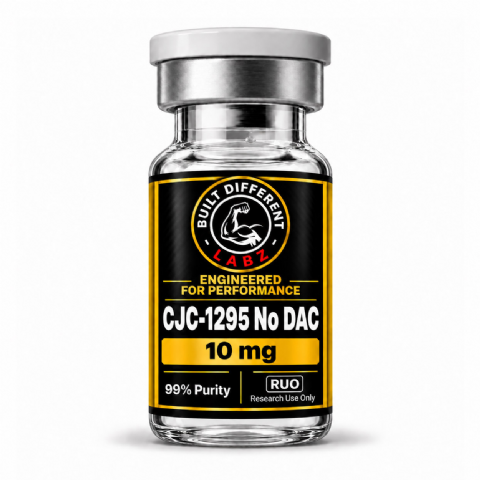
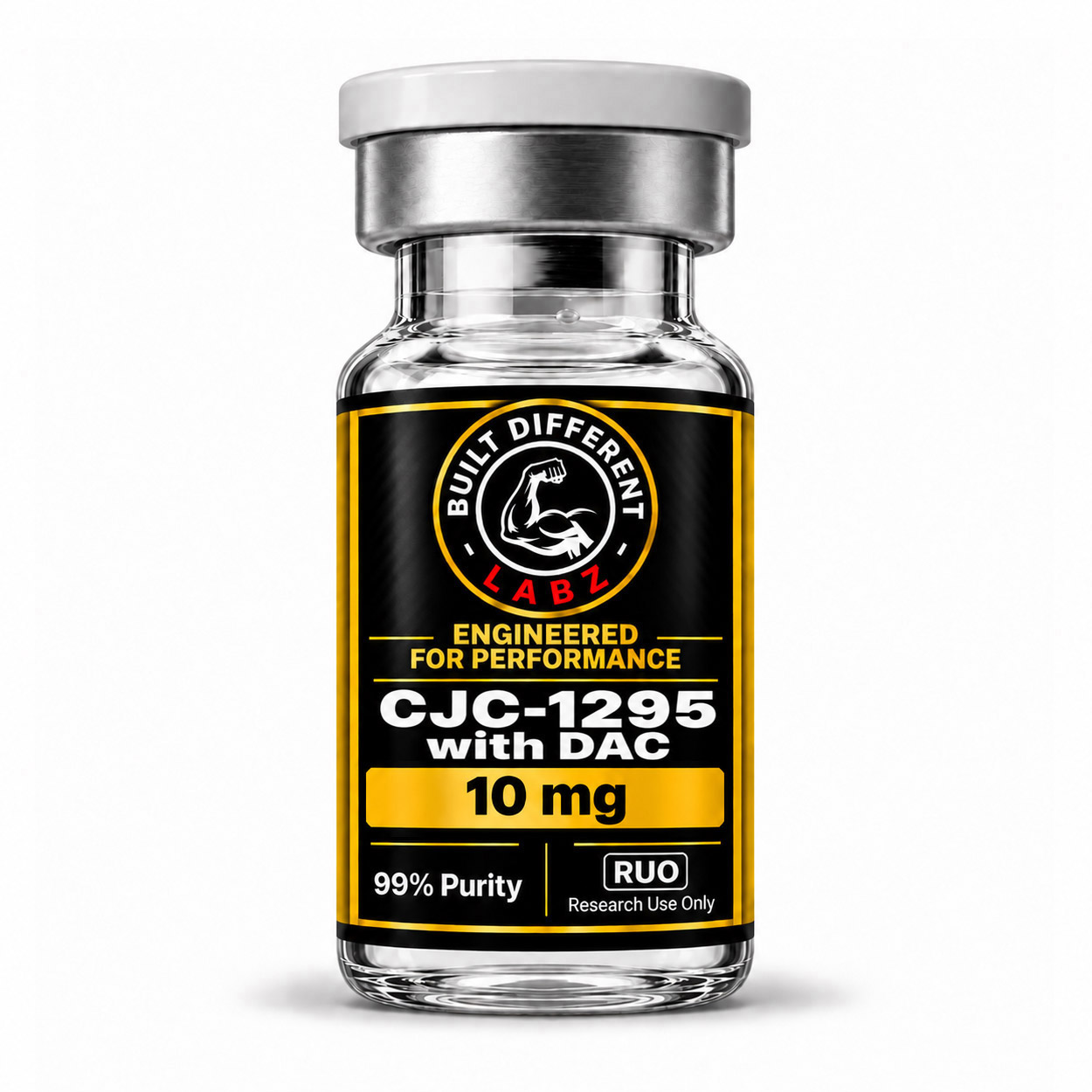
A vial labeled "CJC-1295 with DAC 10mg" represents a total of 10 milligrams of peptide in the vial. It does not mean that 10mg is an established or appropriate single human dose.
CJC-1295 is a modified analogue of growth hormone-releasing hormone, or GHRH.
Natural GHRH is produced in the hypothalamus and signals the anterior pituitary gland to release growth hormone.
The basic pathway is:
CJC-1295 with DAC
GHRH receptor
Pituitary gland
Growth hormone release
IGF-1 production
Downstream metabolic and tissue effects
CJC-1295 therefore acts upstream of growth hormone rather than supplying HGH directly.
DAC stands for:
Drug Affinity Complex
The DAC modification is designed to allow the peptide to form a covalent bond with circulating albumin.
Albumin is one of the most abundant proteins in human blood and has a relatively long circulating lifespan.
By associating with albumin, CJC-1295 avoids the extremely rapid clearance typical of ordinary GHRH peptides.
This is the central feature that makes CJC-1295 with DAC different from the No DAC version.
Natural GHRH is rapidly degraded.
A peptide that disappears quickly can produce only brief receptor stimulation.
The DAC concept was designed to solve this problem:
GHRH analogue
plus
Drug Affinity Complex
Albumin binding
Reduced clearance
Prolonged biological exposure
Sustained GH and IGF-1 effects
This creates a much longer-acting GHRH analogue.
This distinction is extremely important.
CJC-1295 with DAC:
Long acting
Albumin binding
Prolonged GHRH receptor stimulation
Sustained elevation of GH and IGF-1
Much longer biological exposure
CJC-1295 No DAC:
Commonly refers to Modified GRF 1-29
Short acting
No albumin-binding DAC
Produces a more discrete GH secretory period
More closely associated with pulsatile GH stimulation
They should not be treated as interchangeable compounds.
Not exactly.
The term "CJC-1295 No DAC" became common in the research-peptide marketplace.
However, the compound usually sold under that name is Modified GRF 1-29.
True CJC-1295 was specifically developed with the Drug Affinity Complex.
Therefore:
CJC-1295 with DAC = true long-acting CJC-1295 concept.
"CJC-1295 No DAC" = commercial terminology generally referring to Mod GRF 1-29.
CJC-1295 binds to GHRH receptors on pituitary somatotroph cells.
This stimulates the synthesis and release of growth hormone.
The resulting GH can then act directly on tissues and stimulate production of IGF-1.
The simplified pathway is:
CJC-1295
GHRH receptor activation
Pituitary GH secretion
Increased circulating GH
Increased IGF-1
Metabolic and tissue effects
Growth hormone is a peptide hormone produced by the anterior pituitary.
GH participates in:
Growth
Protein metabolism
Fat metabolism
Bone remodeling
Connective-tissue biology
Collagen production
Muscle maintenance
Glucose regulation
IGF-1 production
Growth hormone is naturally released in pulses.
IGF-1 stands for:
Insulin-Like Growth Factor 1
Growth hormone stimulates IGF-1 production, particularly in the liver.
IGF-1 participates in:
Cellular growth
Protein synthesis
Muscle biology
Bone metabolism
Tissue repair
Connective-tissue function
IGF-1 is therefore an important downstream marker when studying long-acting GHRH analogues.
No.
CJC-1295 does not contain human growth hormone.
It stimulates the pituitary gland to produce and release endogenous GH.
This makes it fundamentally different from pharmaceutical HGH.
HGH:
Is growth hormone itself
Directly introduces exogenous GH
Does not require pituitary stimulation
CJC-1295 with DAC:
Is a GHRH analogue
Stimulates endogenous GH secretion
Requires a responsive pituitary
Works upstream of GH
Preserves some physiological endocrine feedback
CJC-1295 should therefore not simply be called "injectable HGH."
Natural GH secretion is pulsatile.
GH levels rise dramatically during secretory pulses and then fall.
Important triggers include:
Deep sleep
Exercise
Fasting
GHRH
Ghrelin-related signaling
CJC-1295 with DAC creates prolonged GHRH stimulation, but it does not necessarily produce completely flat, constant GH secretion.
The body's existing:
GHRH
Somatostatin
Ghrelin
Feedback mechanisms
continue to influence GH release.
One of the defining findings from human CJC-1295 research was prolonged elevation of IGF-1 following administration.
This demonstrates that its long duration is biologically meaningful.
A brief peptide exposure can therefore produce endocrine changes lasting substantially longer than short-acting GHRH analogues.
CJC-1295 with DAC was specifically designed for prolonged activity.
Its effective half-life is measured in days rather than minutes.
This contrasts sharply with short-acting Modified GRF 1-29.
The albumin-binding mechanism is responsible for much of this difference.
Small peptides are normally vulnerable to:
Enzymatic degradation
Renal clearance
Rapid removal from circulation
Albumin is large and circulates for a long time.
Attaching the peptide to albumin effectively gives the peptide access to a much longer-lived circulating carrier.
This can dramatically alter pharmacokinetics.
CJC-1295 is not a direct anabolic steroid.
Potential muscle effects would occur indirectly through:
GH
IGF-1
Protein metabolism
Recovery
Tissue remodeling
GH and IGF-1 clearly participate in muscle biology.
However, this does not mean CJC-1295 produces steroid-like muscle growth.
Controlled evidence for substantial muscle hypertrophy in healthy bodybuilders is lacking.
The bodybuilding interest typically involves:
Increased GH
Increased IGF-1
Recovery
Fat metabolism
Sleep
Connective tissue
Body composition
However, increased GH or IGF-1 laboratory values do not automatically translate into dramatic improvements in muscle mass or strength.
There is insufficient evidence that CJC-1295 significantly increases maximal strength in healthy trained individuals.
Strength depends heavily on:
Muscle mass
Neural adaptation
Training
Technique
Androgen signaling
GH is not equivalent to testosterone.
Growth hormone can stimulate lipolysis.
Lipolysis is the breakdown of stored triglycerides into:
Free fatty acids
Glycerol
These fatty acids can then become available for energy.
This provides a legitimate biological basis for interest in GH-related compounds and body composition.
However, CJC-1295 is not an approved weight-loss medication.
Not in the simplistic sense sometimes presented in marketing.
Its potential effects are mediated through the GH axis.
The theoretical pathway is:
CJC-1295
Increased GH signaling
Increased lipolytic signaling
Greater fatty-acid mobilization
Potential body-composition effects
Actual fat loss still depends on overall energy balance and numerous physiological factors.
No significant appetite-suppressing mechanism has been established.
It does not work like:
Cagrilintide
Semaglutide
Tirzepatide
Those compounds primarily influence appetite and metabolic signaling.
CJC-1295 primarily influences the GH axis.
Growth hormone can influence visceral adipose tissue.
However, CJC-1295 does not have the same clinical evidence for visceral-fat reduction as Tesamorelin has for its specific approved population.
Both activate the GHRH receptor.
CJC-1295 with DAC:
Long-acting GHRH analogue
Albumin-binding DAC
Experimental
Prolonged GH and IGF-1 effects
Tesamorelin:
Modified GHRH analogue
Pharmaceutical product exists
Substantial controlled human research
Approved for reducing excess abdominal visceral fat in adults with HIV-associated lipodystrophy
Tesamorelin has a clearly established therapeutic indication.
CJC-1295 does not.
Sermorelin:
GHRH 1-29
Short acting
Stimulates endogenous GH
CJC-1295 with DAC:
Modified GHRH analogue
Contains DAC
Binds albumin
Dramatically longer acting
Produces prolonged GH and IGF-1 stimulation
Their pharmacokinetics are therefore very different.
CJC-1295:
Activates the GHRH receptor.
Ipamorelin:
Activates the ghrelin receptor, GHS-R1a.
Both can stimulate pituitary GH release through different signaling pathways.
The theoretical rationale is complementary receptor activation.
CJC-1295:
GHRH receptor signaling.
Ipamorelin:
Ghrelin receptor signaling.
Both pathways converge on:
Pituitary GH release.
This creates the potential for enhanced GH secretion.
However, popular "CJC plus Ipamorelin" protocols are not FDA-established treatment regimens.
This is an important conceptual difference.
With No DAC:
Short GHRH activity can overlap with the short GH-secretagogue signal from Ipamorelin.
With DAC:
The GHRH analogue remains active for a prolonged period, while Ipamorelin remains comparatively short acting.
Therefore, the endocrine profiles are not equivalent.
Growth hormone and IGF-1 participate in:
Protein turnover
Collagen synthesis
Connective-tissue metabolism
Bone remodeling
Cellular repair
This creates biological interest in recovery.
However, CJC-1295 is not an approved treatment for athletic injuries.
Tendons contain large amounts of collagen.
GH and IGF-1 can influence collagen synthesis.
This makes GH-axis compounds interesting for connective-tissue research.
However, there is no evidence that CJC-1295 reliably reconnects or regenerates a torn human tendon.
The same applies to ligaments.
Potential collagen effects should not be interpreted as proof of ligament regeneration.
Severe structural injuries still require appropriate diagnosis and treatment.
GH and IGF-1 participate in cartilage biology.
However, CJC-1295 is not an established cartilage-regeneration treatment.
Claims that it "regrows joints" are not supported.
The GH/IGF-1 axis influences:
Osteoblasts
Bone remodeling
Bone formation
Skeletal maintenance
However, CJC-1295 is not an approved osteoporosis treatment.
Collagen is one of the more biologically plausible areas of interest for GH-axis compounds.
Collagen is found throughout:
Skin
Tendons
Ligaments
Cartilage
Bone
Connective tissue
GH and IGF-1 signaling can influence collagen turnover and synthesis.
Natural GH secretion is strongly associated with slow-wave sleep.
One of the largest daily GH pulses commonly occurs during deep sleep.
This is why GH-related compounds are frequently discussed alongside:
Sleep quality
Recovery
Restfulness
However, CJC-1295 is not a sedative or established insomnia treatment.
GH secretion generally declines with age.
This age-related decline helped drive interest in GHRH analogues.
Potential areas of interest include:
Body composition
Recovery
Skin
Energy
Sleep
Bone
Muscle maintenance
However, increasing GH or IGF-1 does not mean biological aging has been reversed.
There is no evidence that CJC-1295 extends human lifespan.
This is particularly important with a long-acting compound.
Growth hormone is beneficial within normal physiological ranges.
Chronic excessive GH signaling can produce significant problems.
Acromegaly demonstrates the consequences of sustained pathological GH excess.
These can include:
Insulin resistance
Soft-tissue growth
Joint problems
Cardiovascular disease
Sleep apnea
Organ enlargement
CJC-1295 exposure is not equivalent to acromegaly, but the disease illustrates why continuously maximizing GH is not a desirable goal.
Growth hormone can oppose some of insulin's actions.
Excessive GH signaling can therefore:
Reduce insulin sensitivity
Increase blood glucose
Increase insulin requirements
Glucose metabolism is an important consideration with prolonged GH stimulation.
Chronically elevated GH can promote insulin resistance.
This means a compound producing sustained GH and IGF-1 elevation may have a different metabolic risk profile from a very short GH pulse.
The long duration of the DAC version makes this especially relevant.
GH-related signaling can contribute to fluid retention.
Potential effects include:
Puffy appearance
Swelling
Increased extracellular water
Hand or foot swelling
Scale weight gained from fluid should not be confused with new muscle tissue.
GH-related fluid and soft-tissue effects can contribute to:
Hand tingling
Numbness
Swelling
Carpal-tunnel-like symptoms
These effects are well recognized with significant GH exposure.
Fluid retention and metabolic changes can potentially influence cardiovascular physiology.
Long-term cardiovascular safety of CJC-1295 use in healthy performance or anti-aging populations has not been established.
GH and IGF-1 have complex cardiovascular effects.
Normal signaling is physiologically important.
Chronic excess is not necessarily beneficial.
CJC-1295 should therefore not be described as a heart-health supplement.
GH and IGF-1 participate in:
Collagen production
Connective-tissue turnover
Skin thickness
Cellular growth
This creates theoretical interest in skin quality.
However, CJC-1295 is not an established anti-wrinkle or dermatological treatment.
There is insufficient evidence that CJC-1295 reliably increases scalp hair growth.
Common pattern hair loss is strongly influenced by genetics and androgen signaling.
Increasing GH does not automatically reverse it.
Some people associate GH-related therapies with improved:
Energy
Recovery
Well-being
Others can experience:
Fatigue
Water retention
Headaches
Metabolic changes
CJC-1295 is not a stimulant.
Theoretical areas of interest include:
Recovery
Body composition
Connective tissue
Sleep
GH signaling
There is insufficient controlled evidence showing that CJC-1295 reliably increases:
Strength
Speed
Endurance
Power
Competitive athletic performance
in healthy athletes.
CJC-1295 does not primarily stimulate the reproductive hormone axis.
It is not designed to directly increase:
GnRH
LH
FSH
Testosterone
It is not known to suppress endogenous testosterone in the manner of anabolic steroids.
Traditional steroid-style post-cycle therapy is not generally associated with CJC-1295.
It does not primarily suppress the hypothalamic-pituitary-gonadal axis.
The GH axis is regulated through feedback.
As GH and IGF-1 increase, the body can alter:
GHRH secretion
Somatostatin
Pituitary responsiveness
Therefore, prolonged pharmacological stimulation should not be described as completely independent of natural endocrine regulation.
Somatostatin is one of the body's primary inhibitors of GH release.
GH secretion depends partly on the balance between:
GHRH = stimulates GH.
Ghrelin-related signaling = stimulates GH.
Somatostatin = inhibits GH.
CJC-1295 increases one side of this regulatory system rather than eliminating the system entirely.
CJC-1295:
GHRH receptor
Growth hormone
IGF-1
BPC-157:
Experimental tissue-protection pathways
Fibroblast migration
Angiogenesis
Gastrointestinal and connective-tissue research
They have completely different primary mechanisms.
TB-500-related research focuses on:
Actin
Cell migration
Angiogenesis
Tissue repair
CJC-1295 works through endocrine GH signaling.
They should not be considered interchangeable.
AOD-9604:
HGH-derived fragment
Primarily metabolic and fat research
Does not primarily increase GH
CJC-1295 with DAC:
GHRH analogue
Stimulates endogenous GH
Can increase IGF-1
Their mechanisms are fundamentally different.
A vial labeled:
"CJC-1295 with DAC 10mg"
means the supplier represents the vial as containing a total of 10 milligrams of CJC-1295.
The 10mg represents total vial content.
It should not be interpreted as an established single administration amount.
There is no FDA-approved CJC-1295 with DAC regimen for bodybuilding, anti-aging, fat loss, recovery, or general GH optimization.
Research suppliers commonly provide CJC-1295 as lyophilized powder.
An injectable-style vial does not establish that the product is an approved injectable medication.
Quality considerations include:
Correct peptide identity
Correct DAC modification
Concentration
Chemical purity
Sterility
Endotoxins
Stability
Manufacturing consistency
The defining pharmacokinetic feature of CJC-1295 with DAC is its long duration.
Unlike Mod GRF 1-29, which is short acting, CJC-1295 with DAC can remain biologically active for days because of albumin binding.
This can produce prolonged changes in GH and IGF-1 rather than a brief isolated effect.
The difference can be summarized as:
No DAC:
Short exposure.
DAC:
Multi-day exposure.
This is why accidentally confusing the two products is potentially significant.
They should not be treated as though the only difference is the wording on the label.
Potential adverse effects associated with CJC-1295 and increased GH/IGF-1 signaling can include:
Injection-site reactions
Flushing
Headache
Dizziness
Fatigue
Nausea
Water retention
Swelling
Tingling or numbness
Carpal-tunnel-like symptoms
Joint discomfort
Changes in blood glucose
Reduced insulin sensitivity
Long duration can matter because adverse endocrine effects may not disappear as rapidly as those from a short-acting peptide.
Long-term use in healthy individuals for bodybuilding, anti-aging, or general performance enhancement has not been adequately established.
Important concerns include:
Persistent IGF-1 elevation
Insulin resistance
Glucose intolerance
Fluid retention
Soft-tissue growth
Cardiovascular effects
Sleep apnea
Effects on abnormal cell growth
Growth hormone and IGF-1 participate in cellular growth and survival.
Therefore, manipulating this pathway can be clinically relevant in people with existing tumors or abnormal cellular growth.
This does not mean CJC-1295 has been proven to cause cancer.
It does mean claims that prolonged GH and IGF-1 stimulation are universally harmless would be inappropriate.
Research peptide quality can vary considerably.
Potential issues include:
Incorrect peptide
Incorrect sequence
Missing or incorrect DAC modification
Incorrect vial quantity
Degradation
Aggregation
Chemical impurities
Endotoxins
Bacterial contamination
Poor sterility
Correctly distinguishing DAC from No DAC is especially important.
HPLC can help evaluate chemical purity.
Mass spectrometry can help verify molecular identity.
However, 99 percent purity does not automatically establish:
Sterility
Endotoxin levels
Exact vial quantity
Correct DAC modification
Pharmaceutical manufacturing quality
Human safety
These require separate testing.
Research Use Only, or RUO, means a product is marketed for laboratory or analytical research rather than as an approved medication for human treatment.
An RUO CJC-1295 with DAC vial should not be treated as approved HGH therapy.
CJC-1295 with DAC is not FDA approved for:
Growth hormone optimization
Bodybuilding
Muscle growth
Fat loss
Anti-aging
Athletic performance
Recovery
Sleep enhancement
Injury healing
General wellness
There is no FDA-approved human dosing protocol for CJC-1295 with DAC.
GHRH receptor biology:
Strong.
GHRH stimulation of growth hormone:
Strong.
CJC-1295 increasing GH:
Supported by human research.
CJC-1295 increasing IGF-1:
Supported by human research.
Long-acting albumin-binding pharmacology:
Supported.
GH effects on lipolysis:
Strong.
GH and IGF-1 involvement in connective tissue:
Strong.
CJC-1295 for bodybuilding:
Not established.
Major muscle growth:
Not established.
Obesity treatment:
Not established.
Athletic performance:
Not established.
Injury healing:
Not established.
Anti-aging:
Not established.
Lifespan extension:
Not established.
Long-term use in healthy individuals:
Insufficiently characterized.
The defining advantage of CJC-1295 with DAC is its pharmacokinetic design.
The basic concept is:
CJC-1295
DAC modification
Albumin binding
Extended circulation
Prolonged GHRH receptor activity
Sustained endogenous GH secretion
Prolonged IGF-1 elevation
This allows a short peptide signal to produce endocrine effects lasting for days rather than minutes.
The same feature that makes CJC-1295 with DAC interesting is also one of its biggest limitations.
Prolonged stimulation means prolonged exposure.
With No DAC, the research concept emphasizes relatively short GH stimulation.
With DAC, GH and particularly IGF-1 can remain elevated for considerably longer periods.
That makes concerns involving:
Glucose metabolism
Insulin sensitivity
Water retention
Soft-tissue effects
Excessive IGF-1
Abnormal cell growth
more relevant.
Furthermore, demonstrating increased GH and IGF-1 does not prove meaningful bodybuilding, fat-loss, recovery, or anti-aging benefits.
CJC-1295 with DAC is an experimental long-acting GHRH analogue designed to stimulate endogenous growth hormone secretion and increase downstream IGF-1.
Its defining characteristic is the Drug Affinity Complex, which allows albumin binding and dramatically extends biological exposure.
Its primary research areas include:
Growth hormone
IGF-1
Body composition
Fat metabolism
Recovery
Connective tissue
Collagen
Sleep-related endocrine function
Age-related GH decline
"CJC-1295 with DAC 10mg" describes the represented total amount of peptide contained in a vial. It should not be interpreted as a recommended 10mg dose.
The most accurate description is:
CJC-1295 with DAC is a long-acting experimental GHRH analogue with human evidence demonstrating prolonged increases in growth hormone and IGF-1. Its albumin-binding DAC modification makes it fundamentally different from the short-acting compound commonly sold as CJC-1295 No DAC. Although its endocrine mechanism is well supported, claims involving substantial muscle growth, dramatic fat loss, accelerated injury healing, athletic enhancement, or anti-aging go beyond the available clinical evidence, and the long-term safety of sustained GH and IGF-1 stimulation in healthy individuals remains insufficiently established.
We do not accept returns or issue refunds for any reason, beside manufacturing defects.
Feel free to contact us if you have any questions or concerns about our Return Policy.