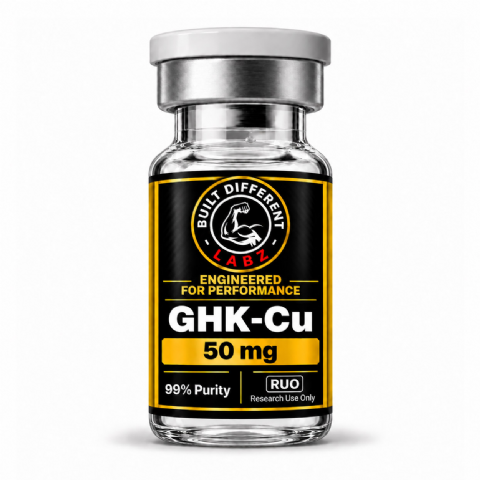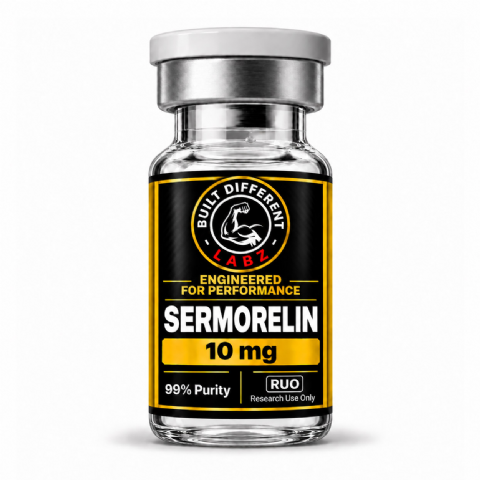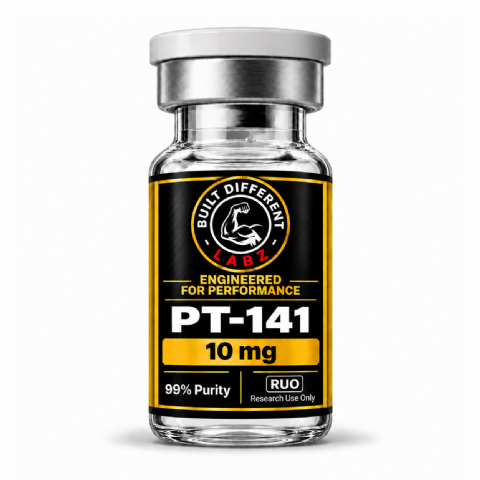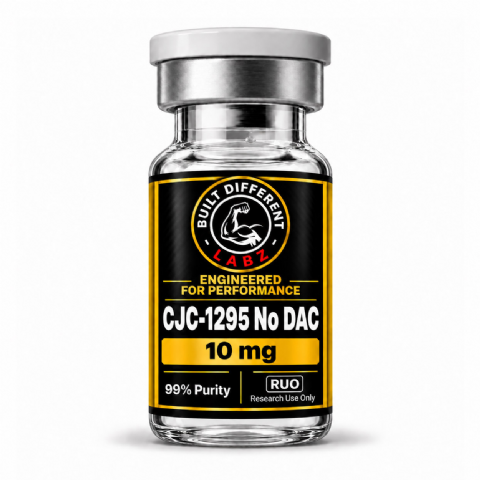
We offer FREE SHIPPPING on all orders!
We offer FREE SHIPPPING on all orders!
| THIS PRODUCT IS INTENDED AS A RESEARCH CHEMICAL ONLY. This designation allows the use of research chemicals strictly for invitro testing and laboratory experimentation only. All product information available on this website is for educational purposes only. Bodily introduction of any kind into humans or animals is strictly prohibited by law. This product should only be handled by licensed, qualified professionals. This product is not a drug, food, or cosmetic and may not be misbranded, misused or mislabeled as a drug, food, or cosmetic. |
GHRP-2, short for Growth Hormone-Releasing Peptide-2, is a synthetic growth hormone secretagogue primarily researched for its ability to stimulate the pituitary gland to release endogenous growth hormone.
GHRP-2 is a hexapeptide consisting of six amino-acid-derived residues and belongs to the growth hormone-releasing peptide family.
Unlike CJC-1295 or Sermorelin, which stimulate the GHRH receptor, GHRP-2 primarily activates the growth hormone secretagogue receptor, GHS-R1a, commonly known as the ghrelin receptor.
Its major research interests include:
Growth hormone secretion
IGF-1 signaling
Growth hormone deficiency research
Appetite regulation
Body composition
Fat metabolism
Muscle and tissue recovery
Sleep and recovery
Connective-tissue biology
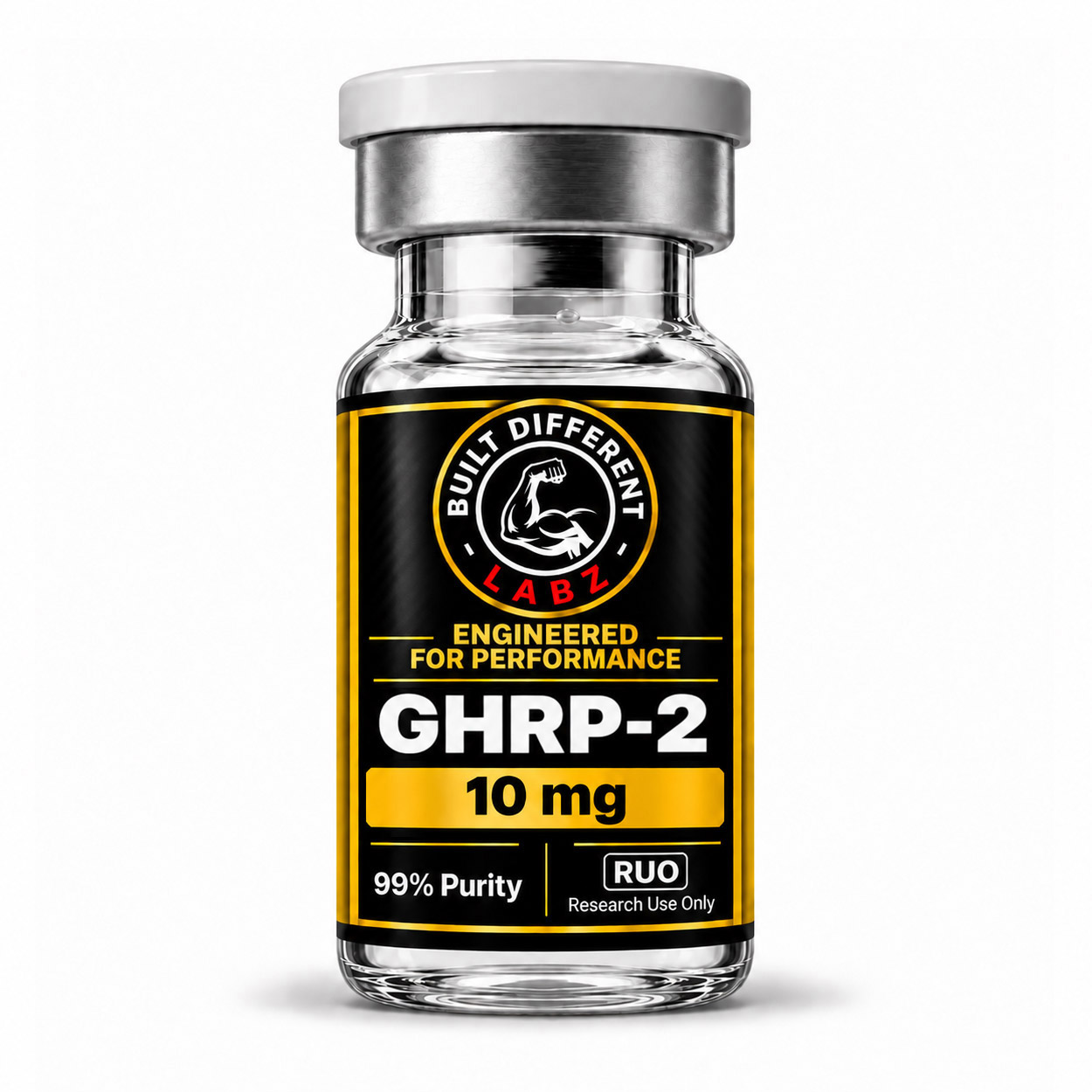
A vial labeled "GHRP-2 10mg" represents a total of 10 milligrams of GHRP-2 in the vial. It does not mean that 10mg is an established or appropriate single human dose.
GHRP-2 is a synthetic peptide developed to stimulate growth hormone secretion.
Its activity is closely associated with the same receptor activated by the naturally occurring hormone ghrelin.
The simplified pathway is:
GHRP-2
GHS-R1a receptor
Hypothalamic and pituitary signaling
Growth hormone release
IGF-1 and downstream GH effects
GHRP-2 therefore stimulates the body's own GH system rather than supplying growth hormone directly.
GHRP stands for:
Growth Hormone-Releasing Peptide
Several compounds belong to this general family, including:
GHRP-2
GHRP-6
Hexarelin
Ipamorelin
These compounds share the ability to stimulate GH secretion through the growth hormone secretagogue receptor.
However, their selectivity, potency, appetite effects, and potential effects on other hormones differ.
GHRP-2 primarily acts as an agonist of:
GHS-R1a
This is the growth hormone secretagogue receptor and is commonly referred to as the ghrelin receptor.
Activation of this receptor can stimulate GH release through actions involving both:
Hypothalamic signaling
Pituitary somatotroph cells
The resulting increase in GH can then influence IGF-1 and other downstream pathways.
Ghrelin is a naturally occurring hormone produced primarily by the stomach.
It has important roles involving:
Hunger
Food intake
Growth hormone secretion
Energy balance
Gastrointestinal function
Metabolism
Ghrelin is sometimes called the "hunger hormone," although its biological functions are considerably broader than appetite alone.
No.
GHRP-2 is not naturally occurring ghrelin.
It is a synthetic growth hormone-releasing peptide capable of activating the same major receptor involved in ghrelin signaling.
No.
GHRP-2 does not contain human growth hormone.
It stimulates endogenous GH release.
This distinction is important.
HGH:
Is growth hormone itself
Directly introduces exogenous GH
Does not require pituitary secretion
GHRP-2:
Stimulates GHS-R1a
Signals the pituitary to release endogenous GH
Requires a functioning GH secretory system
Works upstream of growth hormone
GHRP-2 therefore should not simply be described as HGH.
The ability to stimulate GH is the best-established biological characteristic of GHRP-2.
Growth hormone participates in:
Protein metabolism
Fat metabolism
IGF-1 production
Bone remodeling
Collagen synthesis
Connective-tissue biology
Muscle maintenance
Recovery
This explains much of the research interest surrounding GHRP-2.
Growth hormone stimulates production of:
Insulin-Like Growth Factor 1
or:
IGF-1.
The liver is a major source of circulating IGF-1.
The general pathway is:
GHRP-2
GHS-R1a
Growth hormone
IGF-1
Downstream growth and metabolic signaling
IGF-1 participates in cellular growth, muscle biology, bone metabolism and tissue repair.
Growth hormone is naturally released in pulses.
GH secretion changes according to:
Sleep
Exercise
Nutrition
Age
GHRH
Ghrelin signaling
Somatostatin
IGF-1 feedback
GHRP-2 can stimulate a relatively acute GH secretory response rather than supplying continuously circulating exogenous HGH.
Somatostatin is one of the body's major inhibitors of GH secretion.
The GH system can be simplified as:
GHRH = stimulates GH.
Ghrelin/GHS signaling = stimulates GH.
Somatostatin = inhibits GH.
GHRP-2 acts primarily on the ghrelin/GHS side of this system.
This is one of the most important comparisons.
GHRP-2:
Activates GHS-R1a, the ghrelin receptor.
CJC-1295:
Activates the GHRH receptor.
Therefore, they stimulate growth hormone through different receptor systems.
The rationale involves complementary signaling.
A GHRH analogue stimulates:
GHRH receptor.
GHRP-2 stimulates:
GHS-R1a.
Both pathways converge on:
Growth hormone release.
The theoretical pathway is:
GHRH analogue
plus
GHRP-2
Two complementary receptor signals
Enhanced pituitary GH response
This physiological interaction is real, but that does not establish popular research combinations as approved treatment protocols.
CJC-1295 No DAC, commonly referring to Modified GRF 1-29, is relatively short acting.
GHRP-2 is also associated with an acute GH secretory response.
The compounds activate different receptors:
Mod GRF 1-29:
GHRH receptor.
GHRP-2:
GHS-R1a.
This complementary receptor activity explains why the two are frequently discussed together in research.
CJC-1295 with DAC produces prolonged GHRH activity through albumin binding.
GHRP-2 produces a much shorter secretagogue signal.
Therefore, combining a long-acting GHRH analogue with a shorter-acting GHRP creates a very different endocrine profile from combining two relatively short-acting signals.
Both primarily activate GHS-R1a.
However, Ipamorelin was developed with greater selectivity for GH secretion.
GHRP-2 may produce stronger or broader endocrine effects involving:
GH
Appetite
Cortisol
ACTH
Prolactin
Ipamorelin is generally discussed as having less activity involving cortisol and prolactin.
Therefore:
GHRP-2 = potent GH secretagogue with broader endocrine activity.
Ipamorelin = more selective GH secretagogue.
GHRP-2 and GHRP-6 are closely related growth hormone secretagogues.
Both activate the ghrelin receptor.
GHRP-6 is particularly well known for:
Strong hunger and appetite stimulation.
GHRP-2 can also affect appetite, but its hunger response is generally considered less dramatic than GHRP-6.
Individual responses can vary.
Hexarelin is another potent GHS-R1a agonist.
It has historically demonstrated strong GH-releasing activity.
Compared with GHRP-2, Hexarelin is frequently discussed as:
Very potent
Potentially more prone to desensitization
Having broader endocrine effects
Neither is an FDA-approved bodybuilding or anti-aging treatment.
Because GHRP-2 activates the ghrelin receptor, appetite is an important secondary effect.
Potential effects include:
Increased hunger
Increased food motivation
Changes in meal size
The appetite response is generally less famous than the very strong hunger frequently associated with GHRP-6.
No.
Its receptor mechanism makes increased rather than decreased appetite biologically plausible.
It therefore works very differently from appetite-reducing compounds.
Cagrilintide:
Amylin analogue
Increases satiety
Reduces hunger
Reduces food intake
GHRP-2:
Ghrelin receptor agonist
Stimulates GH
Can increase hunger
Their effects on appetite can therefore move in opposite directions.
GLP-1 receptor agonists primarily influence:
Appetite
Satiety
Gastric emptying
Glucose regulation
GHRP-2 primarily influences:
Ghrelin receptor signaling
GH secretion
GHRP-2 is not an obesity medication.
GHRP-2 is not a direct anabolic steroid.
Any muscle-related effects would primarily occur through:
Growth hormone
IGF-1
Recovery
Protein metabolism
Connective-tissue support
GH does not produce the same anabolic effects as testosterone.
Claims of steroid-like muscle growth from GHRP-2 are not supported.
Bodybuilding interest typically centers around:
GH release
IGF-1
Recovery
Sleep
Fat metabolism
Connective tissue
Appetite
The appetite effect may be considered desirable or undesirable depending on the research objective.
However, controlled evidence demonstrating major bodybuilding benefits in healthy athletes is lacking.
GH and IGF-1 participate in protein metabolism.
However, GHRP-2 does not directly activate androgen receptors.
Therefore, its effects should not be equated with anabolic steroids.
Growth hormone can increase lipolytic signaling.
Lipolysis refers to mobilization of stored triglycerides into:
Free fatty acids
Glycerol
The theoretical pathway is:
GHRP-2
Increased GH
Increased lipolytic signaling
Increased fatty-acid mobilization
However, GHRP-2 is not an approved fat-loss medication.
Its potential to increase appetite can also work against calorie restriction.
There is no strong evidence that GHRP-2 selectively targets abdominal fat.
Localized fat-loss claims should be treated cautiously.
GH influences visceral adipose tissue.
However, GHRP-2 does not have the clinical evidence for visceral-fat reduction that exists for Tesamorelin in its specific FDA-approved population.
GH and IGF-1 participate in:
Collagen synthesis
Protein turnover
Bone remodeling
Connective-tissue metabolism
This provides a biological basis for recovery research.
However, GHRP-2 is not an established treatment for athletic injuries.
Tendons consist largely of collagen.
GH-related signaling can influence collagen metabolism.
However, there is insufficient evidence that GHRP-2 repairs torn human tendons.
The same principle applies to ligaments.
Potential effects on connective-tissue metabolism should not be interpreted as proof that structural ligament injuries can be regenerated.
GH and IGF-1 participate in cartilage biology.
However, GHRP-2 is not an established cartilage-regeneration treatment.
The GH/IGF-1 axis is important for:
Bone development
Bone remodeling
Osteoblast function
Skeletal maintenance
GHRP-2 has therefore been investigated in endocrine contexts where GH activity is relevant.
It is not an established osteoporosis treatment.
Natural GH secretion is closely connected to sleep.
One of the largest endogenous GH pulses commonly occurs during deep slow-wave sleep.
GH secretagogues are therefore frequently associated with research involving:
Sleep-related GH release
Recovery
Restfulness
GHRP-2 itself is not an established sleep medication.
Natural GH secretion generally declines with age.
This has led to interest in growth hormone secretagogues as potential anti-aging compounds.
However:
Increasing GH
does not equal
reversing aging.
There is no evidence that GHRP-2 extends human lifespan.
GH and IGF-1 influence:
Collagen
Connective tissue
Skin thickness
Cellular growth
This creates theoretical interest in skin biology.
GHRP-2 is not an established dermatological anti-aging treatment.
There is insufficient evidence that GHRP-2 reliably increases scalp hair growth.
Hair loss is influenced by:
Genetics
Androgens
Follicular signaling
Inflammation
Age
Increasing GH does not automatically reverse pattern hair loss.
GHRP-2 does not primarily target:
GnRH
LH
FSH
Testosterone
Its primary endocrine target is growth hormone secretion.
GHRP-2 is not known to suppress natural testosterone production in the manner of anabolic steroids.
Traditional steroid-style post-cycle therapy is not generally associated with GHRP-2.
It does not primarily suppress the hypothalamic-pituitary-gonadal axis.
This is an important difference between GHRP-2 and more selective secretagogues such as Ipamorelin.
GHRP-2 can influence the hypothalamic-pituitary-adrenal system and may increase:
ACTH
Cortisol
The degree of response can depend on exposure and individual physiology.
Therefore, GHRP-2 should not be described as completely GH-specific.
Cortisol is an essential glucocorticoid hormone.
It participates in:
Stress responses
Glucose regulation
Blood pressure
Immune function
Metabolism
Normal cortisol is necessary.
Chronically excessive cortisol can contribute to:
Insulin resistance
Increased blood glucose
Muscle breakdown
Sleep disruption
Changes in fat distribution
This is one reason peptide selectivity matters.
GHRP-2 can also influence prolactin secretion.
Prolactin has important roles in reproductive and endocrine physiology.
Excessive prolactin can potentially contribute to:
Sexual dysfunction
Reduced libido
Reproductive hormone changes
GHRP-2 does not necessarily cause clinically significant hyperprolactinemia, but prolactin activity is one of the endocrine effects that distinguishes it from highly selective GH secretagogues.
Growth hormone can oppose insulin action.
Increasing GH can potentially:
Reduce insulin sensitivity
Increase glucose
Alter carbohydrate metabolism
This becomes particularly relevant with repeated or excessive GH stimulation.
GH is not metabolically beneficial in unlimited amounts.
Chronically excessive GH signaling can contribute to insulin resistance.
This is one reason "more GH" should not automatically be considered better.
GH-related signaling can potentially cause:
Water retention
Puffy appearance
Swelling
Changes in extracellular fluid
Fluid gain should not be confused with new muscle tissue.
Significant GH-related signaling can contribute to:
Hand tingling
Numbness
Swelling
Carpal-tunnel-like symptoms
These effects are better established with substantial GH exposure but remain biologically relevant to GH secretagogues.
GHRP-2 is not an estrogenic compound.
However, because it may influence prolactin in some circumstances, hormonal symptoms should not automatically be assumed impossible.
Gynecomastia itself has numerous potential causes and should not simply be attributed to GHRP-2.
Potential areas of athletic interest include:
Recovery
Body composition
GH secretion
Connective tissue
Sleep
There is insufficient evidence showing that GHRP-2 reliably improves:
Strength
Speed
Power
Endurance
Competitive performance
in healthy athletes.
GHRP-2 and related secretagogues have been investigated as tools for evaluating pituitary GH reserve.
A compound capable of provoking GH release can provide information about whether the pituitary retains the ability to secrete GH.
This endocrine research background is much more scientifically established than many bodybuilding claims associated with the peptide.
Yes, for its primary GH-releasing mechanism.
GHRP-2 stimulates endogenous GH secretion.
If the pituitary cannot adequately produce GH, a secretagogue cannot simply function like exogenous HGH.
Repeated receptor stimulation can potentially change responsiveness.
GHS-R1a signaling is subject to physiological regulation.
The extent and clinical importance of desensitization with different exposure patterns are not fully established for research use.
Claims that a particular schedule completely eliminates desensitization should therefore be treated cautiously.
A vial labeled:
"GHRP-2 10mg"
means the supplier represents the vial as containing a total of 10 milligrams of GHRP-2.
The 10mg represents total vial content.
It should not be interpreted as an established single administration amount.
There is no FDA-approved GHRP-2 dosing regimen for bodybuilding, anti-aging, fat loss, recovery, or general GH optimization.
Research suppliers commonly provide GHRP-2 as lyophilized material.
The fact that a peptide comes in an injectable-style vial does not establish that it is an approved injectable medication.
Important product-quality considerations include:
Correct peptide identity
Correct sequence
Chemical purity
Vial quantity
Sterility
Endotoxin levels
Stability
Manufacturing conditions
GHRP-2 is generally considered a relatively short-acting growth hormone secretagogue.
Its biological GH response can outlast the peptide's highest circulating concentration.
Reliable pharmacokinetic characteristics also depend on formulation and experimental conditions.
It should not be confused with long-acting CJC-1295 with DAC.
Potential adverse effects associated with GHRP-2 and GH-secretagogue activity can include:
Increased hunger
Headache
Flushing
Dizziness
Fatigue
Nausea
Water retention
Swelling
Tingling or numbness
Injection-site irritation
Changes in blood glucose
Reduced insulin sensitivity
Additional endocrine considerations include potential increases in:
Cortisol
ACTH
Prolactin
The frequency and clinical significance of these effects in research-product use are not well established.
Long-term safety in healthy people using GHRP-2 for bodybuilding, performance, fat loss, or anti-aging has not been adequately established.
Important areas of uncertainty include:
Chronic GH elevation
IGF-1 exposure
Glucose metabolism
Insulin sensitivity
Prolactin
Cortisol
Cardiovascular effects
Soft-tissue growth
Long-term receptor regulation
GH and IGF-1 participate in cellular growth and survival.
Therefore, increasing this signaling can be clinically relevant in people with existing malignancies or abnormal cellular growth.
This does not establish that GHRP-2 causes cancer.
It does mean that claims that chronic GH and IGF-1 stimulation are universally harmless would be inappropriate.
Research peptide quality can vary considerably.
Potential issues include:
Incorrect peptide
Incorrect sequence
Incorrect vial quantity
Chemical impurities
Degradation
Endotoxins
Bacterial contamination
Poor sterility
The label alone cannot establish pharmaceutical quality.
HPLC can help evaluate chemical purity.
Mass spectrometry can help verify molecular identity.
However, a claim of 99 percent purity does not automatically establish:
Sterility
Endotoxin levels
Exact vial quantity
Pharmaceutical manufacturing quality
Human safety
Clinical effectiveness
These are separate characteristics.
Research Use Only, or RUO, means that a particular product is marketed for laboratory or analytical research rather than as an approved medication for human treatment.
An RUO GHRP-2 vial should not be treated as approved growth hormone therapy.
GHRP-2 is not FDA approved for:
Bodybuilding
Muscle growth
Fat loss
Growth hormone optimization
Anti-aging
Athletic performance
Injury recovery
Sleep enhancement
General wellness
There is no FDA-approved GHRP-2 regimen for these purposes.
GHS-R1a receptor biology:
Strong.
Ghrelin receptor involvement in GH release:
Strong.
GHRP-2 stimulation of GH:
Supported by human research.
GH involvement in IGF-1 production:
Strong.
GH involvement in lipolysis:
Strong.
GH involvement in connective-tissue metabolism:
Strong.
GHRP-2 effects on ACTH and cortisol:
Supported by endocrine research.
GHRP-2 effects on prolactin:
Supported by endocrine research.
GHRP-2 for major muscle growth:
Not established.
GHRP-2 for substantial fat loss:
Not established.
GHRP-2 for injury healing:
Not established.
GHRP-2 for athletic enhancement:
Not established.
GHRP-2 for anti-aging:
Not established.
Human lifespan extension:
Not established.
Long-term healthy-human safety:
Insufficiently characterized.
GHRP-2's primary research advantage is its ability to produce a strong endogenous GH secretory signal through the ghrelin receptor.
The basic pathway is:
GHRP-2
GHS-R1a activation
Hypothalamic and pituitary signaling
Endogenous GH release
IGF-1 and downstream GH effects
Because GHRP-2 uses a different receptor from GHRH analogues, it also provides an interesting model for studying complementary control of GH secretion.
GHRP-2 is less selective than some newer GH secretagogues.
Its biological activity is not limited entirely to growth hormone.
Potential effects involving:
Hunger
ACTH
Cortisol
Prolactin
make its endocrine profile more complicated.
There is also a substantial difference between demonstrating that GHRP-2 increases GH and demonstrating that it produces meaningful improvements in muscle growth, fat loss, athletic performance, injury recovery, or longevity.
The first is well supported.
The second group of claims remains inadequately established.
GHRP-2 is a synthetic growth hormone-releasing peptide that primarily activates the GHS-R1a ghrelin receptor to stimulate endogenous growth hormone secretion.
Its major research areas include:
Growth hormone
IGF-1
Pituitary function
Appetite
Body composition
Fat metabolism
Recovery
Connective tissue
Endocrine physiology
"GHRP-2 10mg" describes the represented total amount of peptide contained in a vial. It should not be interpreted as a recommended 10mg dose.
The most accurate description is:
GHRP-2 is an experimental ghrelin-receptor agonist and growth hormone secretagogue with established ability to stimulate endogenous GH release. Unlike GHRH analogues such as CJC-1295 and Sermorelin, GHRP-2 acts primarily through GHS-R1a. It is less selective than Ipamorelin and can also influence appetite, ACTH, cortisol and prolactin. Although its GH-releasing mechanism is well supported, claims involving substantial muscle growth, dramatic fat loss, accelerated injury recovery, athletic enhancement, or anti-aging extend beyond the available clinical evidence, and its long-term safety for these purposes remains insufficiently characterized.
We do not accept returns or issue refunds for any reason, beside manufacturing defects.
Feel free to contact us if you have any questions or concerns about our Return Policy.