We offer FREE SHIPPPING on all orders!
We offer FREE SHIPPPING on all orders!
| THIS PRODUCT IS INTENDED AS A RESEARCH CHEMICAL ONLY. This designation allows the use of research chemicals strictly for invitro testing and laboratory experimentation only. All product information available on this website is for educational purposes only. Bodily introduction of any kind into humans or animals is strictly prohibited by law. This product should only be handled by licensed, qualified professionals. This product is not a drug, food, or cosmetic and may not be misbranded, misused or mislabeled as a drug, food, or cosmetic. |
Kisspeptin-10 is a short synthetic peptide derived from the naturally occurring kisspeptin system, one of the most important upstream regulators of human reproductive hormone signaling.
Its primary biological role is activation of the KISS1 receptor, also known as KISS1R or GPR54. This stimulates gonadotropin-releasing hormone, or GnRH, which then causes the pituitary gland to release luteinizing hormone and follicle-stimulating hormone.
In men, that pathway can increase endogenous testosterone production. In women, it plays a major role in ovulation and reproductive hormone signaling.
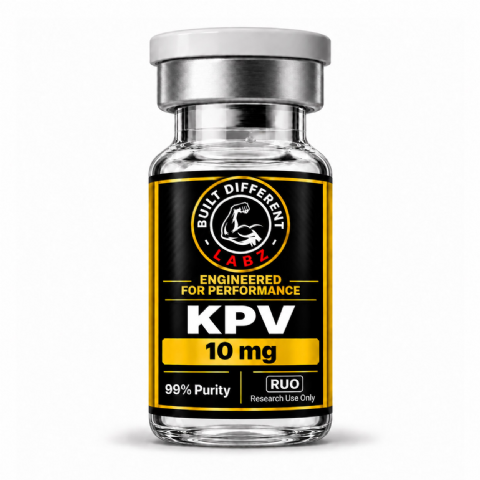
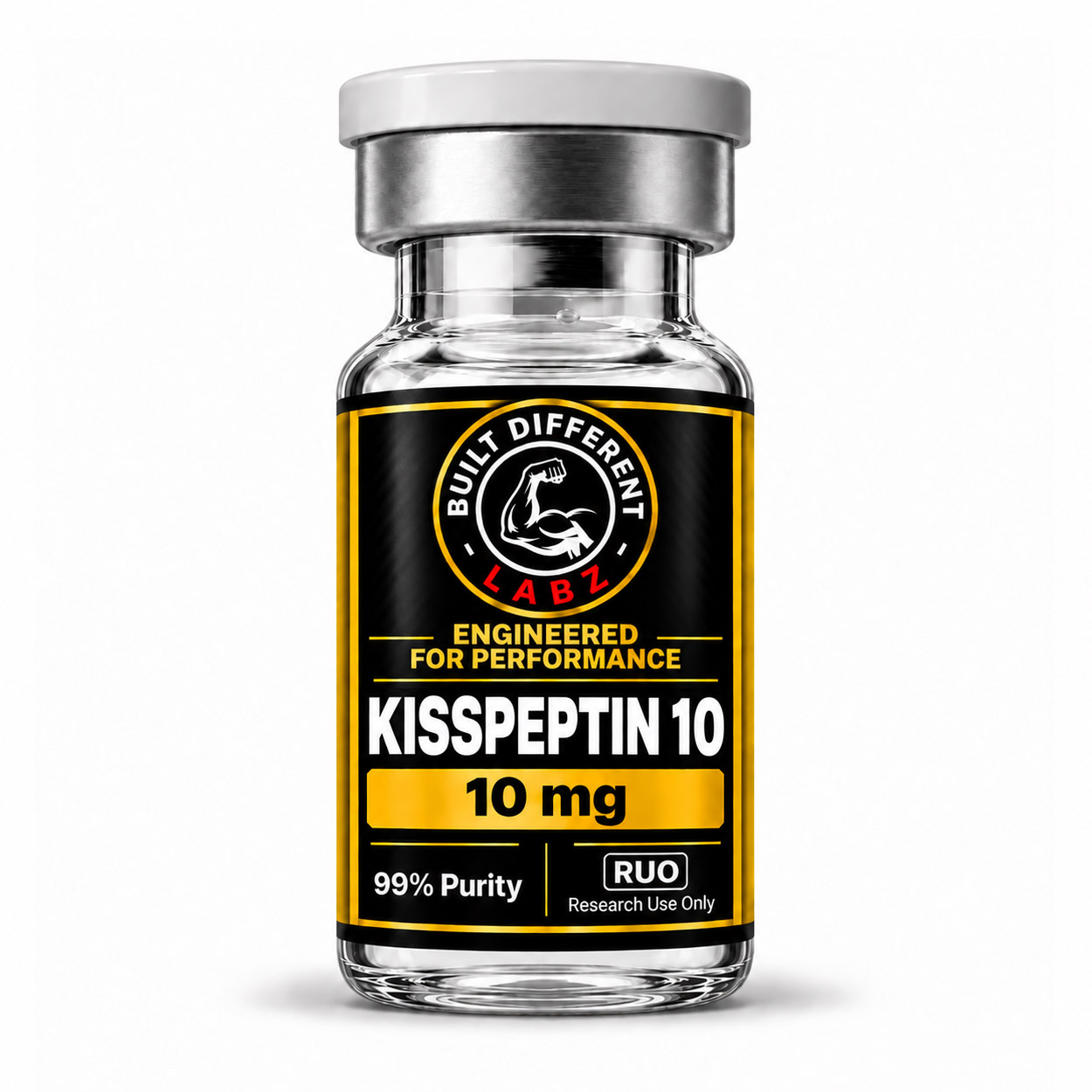
A vial labeled "Kisspeptin-10 10mg" represents a total of 10 milligrams of Kisspeptin-10 in the vial. It does not mean that 10mg is an established or appropriate single dose.
Kisspeptin is a naturally occurring neuropeptide produced from the KISS1 gene.
The kisspeptin system plays a central role in controlling the hypothalamic-pituitary-gonadal axis, commonly abbreviated HPG axis.
This is the hormone system that controls:
Testosterone
Estrogen
Ovulation
Sperm production
Fertility
Puberty
LH secretion
FSH secretion
Kisspeptin is sometimes described as one of the body's master reproductive signaling peptides.
Natural kisspeptin can exist in several biologically active forms.
These include:
Kisspeptin-54
Kisspeptin-14
Kisspeptin-13
Kisspeptin-10
Kisspeptin-10 is the shortest commonly studied active fragment.
It contains the 10-amino-acid C-terminal sequence required to activate the KISS1 receptor.
Despite being much shorter than Kisspeptin-54, Kisspeptin-10 retains strong biological activity.
The simplified pathway is:
Kisspeptin-10
KISS1 receptor activation
GnRH release from the hypothalamus
Pituitary stimulation
LH and FSH release
Gonadal stimulation
Testosterone or estrogen production and reproductive effects
This places Kisspeptin very high in the reproductive hormone signaling chain.
The KISS1 receptor is also called:
KISS1R
GPR54
It is a G-protein-coupled receptor that plays an essential role in reproduction.
People with severe genetic defects in the kisspeptin receptor can fail to undergo normal puberty because the reproductive hormone axis is not adequately activated.
This illustrates how fundamental the kisspeptin system is to normal reproductive biology.
GnRH stands for gonadotropin-releasing hormone.
It is released by specialized neurons in the hypothalamus.
GnRH then travels to the pituitary gland and stimulates the release of:
LH
FSH
Kisspeptin is one of the major physiological signals controlling GnRH neurons.
The pathway can therefore be summarized as:
Kisspeptin -> GnRH -> LH and FSH -> Sex hormones and fertility
Luteinizing hormone, or LH, is one of the major hormones stimulated downstream of Kisspeptin.
In men, LH acts on Leydig cells in the testes.
Leydig cells then produce testosterone.
Therefore:
Kisspeptin -> GnRH -> LH -> Leydig cells -> Testosterone
Human studies have repeatedly demonstrated that Kisspeptin-10 can increase LH.
Follicle-stimulating hormone, or FSH, is another major pituitary hormone influenced by the kisspeptin-GnRH pathway.
In men, FSH plays an important role in:
Sertoli-cell function
Sperm production
Spermatogenesis
In women, FSH is important for:
Follicular development
Estrogen production
Ovarian function
Kisspeptin can therefore influence both steroid hormone production and fertility-related processes.
This is one of the most common reasons Kisspeptin-10 receives attention.
Human studies have shown that Kisspeptin-10 can stimulate:
LH
FSH
Testosterone
In healthy men, acute Kisspeptin-10 exposure has produced measurable increases in testosterone following stimulation of the reproductive axis.
Recent controlled human research has also demonstrated that intermittent Kisspeptin-10 exposure can sustain increases in gonadotropins over multiple days. (PubMed)
No.
Kisspeptin does not contain testosterone.
Instead, it acts upstream by stimulating the body's own reproductive signaling system.
The difference is:
Exogenous testosterone:
Testosterone is supplied directly from outside the body.
Kisspeptin:
The hypothalamus and pituitary are stimulated, potentially increasing the body's own testosterone production.
These are fundamentally different approaches.
| Characteristic | Kisspeptin-10 | Testosterone |
|---|---|---|
| Hormone supplied directly | No | Yes |
| Stimulates GnRH | Yes | Generally suppresses it with external use |
| Stimulates LH | Yes | Often suppresses LH |
| Stimulates FSH | Can | Often suppresses FSH |
| Endogenous testosterone | Can increase | Often decreases production |
| Fertility pathway | Potentially supported | Can be suppressed |
| FDA-approved for testosterone replacement | No | Yes |
Kisspeptin is one of the most important peptide systems being investigated in reproductive medicine.
Potential applications being studied include:
Male infertility
Female infertility
Ovulation induction
Hypogonadism
Assisted reproductive technology
IVF
Disorders of puberty
The reproductive system cannot function normally without appropriate kisspeptin signaling.
Because Kisspeptin can increase GnRH, LH, and FSH, it has theoretical potential to support spermatogenesis.
FSH stimulates Sertoli cells.
LH stimulates testosterone production inside the testes.
Both processes are important for normal sperm production.
However, an increase in LH or testosterone during a study does not automatically prove that Kisspeptin-10 restores fertility or sperm counts.
Large clinical trials demonstrating fertility restoration are still lacking. (Frontiers)
This is an area of significant current research interest.
External testosterone can suppress:
GnRH
LH
FSH
Natural testosterone production
Spermatogenesis
Because Kisspeptin acts upstream of GnRH, researchers are interested in whether kisspeptin-based treatments might help activate the reproductive hormone axis.
Human studies show that Kisspeptin can stimulate reproductive hormones.
However, there is not yet strong evidence establishing Kisspeptin-10 as a proven treatment for restoring fertility after testosterone-induced suppression. (Frontiers)
Not directly.
HCG and Kisspeptin work at very different levels.
HCG:
Acts directly on LH receptors in the testes.
Kisspeptin:
Stimulates the hypothalamus, which stimulates GnRH, which stimulates pituitary LH and FSH.
Simplified:
Kisspeptin -> Brain
HCG -> Testes
| Characteristic | Kisspeptin-10 | HCG |
|---|---|---|
| Primary target | Hypothalamus/KISS1R | LH receptor |
| Stimulates GnRH | Yes | No |
| Stimulates pituitary LH | Yes | No |
| Mimics LH directly | No | Yes |
| Can influence FSH | Indirectly | Not substantially |
| Testosterone stimulation | Indirect | Direct testicular stimulation |
| Established fertility therapy | Investigational | Yes |
HCG has substantially more established clinical use for male reproductive treatment.
Gonadorelin is synthetic GnRH.
Kisspeptin works one step above GnRH.
Kisspeptin:
KISS1 receptor -> endogenous GnRH release
Gonadorelin:
Directly activates GnRH receptors at the pituitary
Simplified:
Kisspeptin -> GnRH -> LH/FSH
Gonadorelin -> LH/FSH
Kisspeptin plays an especially important role in female reproductive physiology.
It participates in regulation of:
Menstrual cycles
Follicular development
Estrogen signaling
LH surge
Ovulation
Fertility
Changes in kisspeptin signaling contribute to the hormonal events that trigger ovulation.
A large surge in LH is required for ovulation.
Kisspeptin neurons help coordinate this event.
For this reason, kisspeptin has been investigated as an ovulation trigger in assisted reproductive medicine.
One potential advantage being studied is the possibility of stimulating physiological reproductive signaling while reducing some complications associated with other fertility treatments.
Kisspeptin has undergone human research in women undergoing IVF.
Researchers have investigated Kisspeptin-54 as a way to stimulate egg maturation.
This has been especially interesting for women at increased risk of ovarian hyperstimulation syndrome.
However, these studies primarily involve controlled pharmaceutical research and should not be extrapolated to research-grade Kisspeptin-10 vials.
Kisspeptin signaling is essential for the onset of normal puberty.
Before puberty, reproductive hormone activity is relatively suppressed.
During puberty, increased activation of the kisspeptin-GnRH system contributes to:
Increased GnRH pulses
Increased LH
Increased FSH
Increased testosterone or estrogen
Development of secondary sexual characteristics
Genetic defects affecting KISS1R can cause hypogonadotropic hypogonadism and failure of normal sexual development.
Kisspeptin may do more than regulate hormones.
Research suggests that kisspeptin also influences brain regions involved in:
Sexual attraction
Sexual motivation
Sexual arousal
Reward processing
This makes it particularly interesting because it may connect reproductive hormone signaling with sexual behavior.
Human research has examined kisspeptin in people with reduced sexual desire.
Studies suggest that it may influence brain responses associated with sexual stimuli.
This does not mean Kisspeptin-10 is an established treatment for low libido.
But the research suggests kisspeptin has both hormonal and neurological effects related to reproduction.
Kisspeptin is not a PDE5 inhibitor like sildenafil.
It does not primarily increase penile blood flow.
However, through brain pathways associated with sexual arousal, kisspeptin may indirectly influence sexual response.
It should not be considered a replacement for established erectile-dysfunction treatments.
These two peptides can both be discussed in relation to sexual function, but they are very different.
Kisspeptin:
Controls reproductive hormone signaling
Stimulates GnRH
Increases LH and FSH
Can increase testosterone
Has fertility applications
PT-141:
Activates melanocortin receptors
Acts primarily in the central nervous system
Influences sexual desire and arousal
Does not primarily stimulate testosterone
Kisspeptin receptors and related pathways exist in brain regions involved in emotion.
Researchers have investigated possible effects on:
Mood
Anxiety
Sexual processing
Emotional behavior
Recent controlled human research found that biologically active kisspeptin increased reproductive hormones without significantly increasing anxiety, cortisol, heart rate, or blood pressure during the study. (PubMed Central (PMC))
Animal studies have produced conflicting findings regarding anxiety.
Recent human research is reassuring.
In a randomized controlled study involving men and women, Kisspeptin-54 significantly stimulated reproductive hormones but did not significantly change measured anxiety.
That does not establish that every kisspeptin formulation has zero neuropsychiatric effects, but it provides useful human safety information. (PubMed Central (PMC))
Kisspeptin primarily targets reproductive signaling rather than the cortisol system.
Recent human research found no significant acute change in circulating cortisol compared with placebo during kisspeptin administration. (PubMed Central (PMC))
Kisspeptin has attracted bodybuilding interest because it can stimulate endogenous testosterone.
However, it should not be described as an anabolic peptide.
It does not directly activate androgen receptors.
Any potential bodybuilding effect would occur indirectly through the reproductive hormone axis.
Not directly.
Kisspeptin does not directly stimulate muscle hypertrophy.
If it increases endogenous testosterone in someone with a responsive reproductive axis, testosterone could influence muscle biology.
That is very different from demonstrating that Kisspeptin itself is a muscle-building drug.
Research has investigated kisspeptin in men with impaired reproductive hormone function.
Studies have demonstrated that Kisspeptin-10 can increase LH and testosterone in some men with low testosterone associated with metabolic disease. (Frontiers)
This is scientifically interesting.
However, Kisspeptin-10 is not currently an established standard treatment for male hypogonadism.
One of Kisspeptin's most interesting characteristics is that it operates upstream of natural testosterone production.
The concept is:
Activate reproductive signaling
rather than:
Replace testosterone directly
Therefore, the pathway remains:
Hypothalamus -> Pituitary -> Testes
when the system is capable of responding.
Kisspeptin requires several parts of the reproductive axis to function.
For a testosterone increase to occur, there generally needs to be functional:
Kisspeptin signaling
GnRH neurons
Pituitary gland
LH receptors
Testicular Leydig cells
If the problem occurs farther downstream, stimulating Kisspeptin may produce little benefit.
For example, if the testes cannot respond to LH, increasing upstream signaling would not necessarily restore testosterone production.
The reproductive hormone system is highly dependent on pulsatile signaling.
GnRH is normally released in pulses.
Those pulses influence LH and FSH production.
Kisspeptin appears to participate in controlling this pulsatile reproductive signaling.
This is important because continuous stimulation and intermittent stimulation may not produce identical biological responses.
This is an important research consideration.
Continuous stimulation of reproductive hormone receptors can sometimes lead to reduced responsiveness.
Research with Kisspeptin-10 has examined whether repeated or continuous exposure causes tachyphylaxis.
A 2026 controlled human study found that daily intermittent administration maintained increased gonadotropin secretion over 12 days, while continuous exposure produced a different response pattern. (PubMed)
This supports the importance of administration pattern in kisspeptin biology.
Both activate KISS1R.
Kisspeptin-10:
10 amino acids
Short active fragment
Shorter duration
Frequently used experimentally
Kisspeptin-54:
54 amino acids
Naturally occurring longer form
Longer pharmacological activity
Substantial human clinical research
The two should not automatically be treated as pharmacokinetically identical.
A product labeled:
"Kisspeptin-10 10mg"
means that the supplier represents the vial as containing 10 milligrams of Kisspeptin-10 in total.
This is the amount represented in the entire vial.
It is not an established single dose.
Clinical kisspeptin research typically evaluates carefully controlled quantities under medical supervision.
Research-vial strength should not be converted directly into a self-administration protocol.
Kisspeptin-10 has been studied in humans through routes including:
Intravenous administration
Subcutaneous administration
Human studies demonstrate clear endocrine activity through these routes.
However, clinical-trial Kisspeptin is not automatically equivalent to an online research vial.
Reproductive hormone effects can occur relatively quickly.
The general sequence is:
Kisspeptin
GnRH
LH and FSH
Testosterone or ovarian hormone response
Changes in LH can occur before the downstream testosterone response.
Longer-term reproductive effects such as changes in fertility would require a much longer biological process.
Kisspeptin-10 is relatively short acting.
Its shorter duration is one of the reasons researchers study different administration patterns.
The biological hormone response can last longer than the peptide remains in circulation because Kisspeptin initiates a downstream hormonal cascade.
Human Kisspeptin studies have generally reported acceptable short-term tolerability, but extensive long-term safety data remain limited.
Potential effects may include:
Headache
Flushing
Nausea
Dizziness
Injection-site irritation
Hormonal changes
Changes in reproductive hormone levels
Potential effects related to excessive reproductive-axis stimulation would depend heavily on biological sex, baseline hormone status, duration, and exposure.
In women, increased gonadotropin signaling can affect ovarian estrogen production.
In men, increasing testosterone could theoretically influence estradiol because testosterone can be converted to estrogen through aromatase.
Kisspeptin itself is not an estrogen.
There is no strong evidence that Kisspeptin directly causes gynecomastia.
However, any intervention that changes testosterone and estradiol balance could theoretically affect estrogen-sensitive tissue.
That would be an indirect hormonal effect rather than a direct action of Kisspeptin.
Acute Kisspeptin exposure generally stimulates the reproductive hormone axis rather than suppressing it.
Human studies commonly demonstrate increases in LH and testosterone.
However, reproductive endocrine systems are sensitive to stimulation patterns, and continuous exposure can potentially produce different responses than intermittent physiological signaling.
Kisspeptin is not an anabolic steroid.
Traditional steroid-style post-cycle therapy is therefore not inherently associated with Kisspeptin.
In fact, research interest often concerns stimulating reproductive hormone signaling rather than suppressing it.
Kisspeptin is not primarily a growth hormone secretagogue.
It should not be grouped with:
Sermorelin
Tesamorelin
Ipamorelin
CJC-1295
Those peptides mainly affect the GH axis.
Kisspeptin primarily affects the reproductive axis.
Sermorelin:
GHRH receptor -> Growth hormone -> IGF-1
Kisspeptin:
KISS1R -> GnRH -> LH/FSH -> Testosterone/Estrogen
These are two completely different endocrine systems.
Tesamorelin primarily affects:
GH
IGF-1
Visceral fat
Kisspeptin primarily affects:
GnRH
LH
FSH
Testosterone
Estrogen
Fertility
Ipamorelin activates the ghrelin receptor to stimulate growth hormone.
Kisspeptin activates KISS1R to stimulate reproductive hormones.
They should not be considered interchangeable.
BPC-157 is primarily associated with experimental tissue-repair research.
Kisspeptin is primarily a reproductive neuroendocrine peptide.
Their mechanisms have little overlap.
SS-31 primarily targets mitochondrial membranes and cardiolipin.
Kisspeptin primarily targets reproductive hormone signaling.
Again, their biological purposes are fundamentally different.
Research peptide quality is an important concern.
Potential problems include:
Incorrect peptide identity
Incorrect concentration
Chemical impurities
Peptide degradation
Bacterial contamination
Endotoxins
Poor sterility
Improper storage
A vial labeled:
"Kisspeptin-10 10mg - 99 percent purity"
does not independently demonstrate pharmaceutical quality.
When properly performed, HPLC can help assess peptide purity.
Mass spectrometry can help confirm molecular identity.
However, 99 percent analytical purity does not automatically establish:
Sterility
Endotoxin levels
Exact quantity
Correct formulation
Proper storage
Safety for injection
These are separate quality-control questions.
Research Use Only, or RUO, indicates that the product is marketed for laboratory or analytical research rather than as an approved human medication.
An RUO Kisspeptin-10 vial should not be treated as equivalent to material manufactured for regulated human clinical trials.
Kisspeptin-10 is not an FDA-approved medication for:
Testosterone replacement
Male hypogonadism
Infertility
Bodybuilding
Libido enhancement
Fertility restoration after testosterone use
General hormone optimization
Kisspeptin remains an active area of clinical research.
KISS1 receptor activation:
Very strong.
GnRH stimulation:
Very strong.
LH stimulation:
Strong human evidence.
FSH stimulation:
Strong human evidence.
Testosterone increase in men:
Strong short-term human evidence.
Role in normal puberty:
Very strong biological evidence.
Role in reproductive physiology:
Very strong.
Female ovulation signaling:
Very strong.
Fertility-treatment applications:
Promising human clinical research.
Restoring fertility after TRT:
Promising concept but not established.
Muscle growth:
Not established.
Fat loss:
Not established.
General bodybuilding use:
Not established.
Long-term use in healthy people:
Insufficiently characterized.
Kisspeptin is particularly interesting because it stimulates reproductive hormones very high in the natural signaling pathway.
Instead of replacing testosterone or directly mimicking LH, it works through the body's normal hierarchy:
Kisspeptin
GnRH
LH and FSH
Testosterone or estrogen
Reproductive function
This makes it one of the most physiologically interesting experimental approaches to stimulating endogenous reproductive function.
The strongest evidence demonstrates that Kisspeptin can stimulate reproductive hormones.
That is not the same as proving that it:
Permanently restores testosterone production
Restores fertility after TRT
Dramatically increases sperm count
Builds muscle
Improves athletic performance
Replaces HCG
Replaces established fertility therapy
Those broader uses remain investigational.
Kisspeptin-10 is a short, biologically active peptide that activates the KISS1 receptor and sits near the top of the human reproductive hormone pathway.
Its primary biological pathway is:
Kisspeptin-10 -> KISS1R -> GnRH -> LH and FSH -> Testosterone, estrogen and reproductive function
Human research clearly demonstrates that Kisspeptin-10 can stimulate LH, FSH, and testosterone, and very recent research continues to investigate whether sustained stimulation can be achieved without rapidly losing receptor responsiveness. (PubMed)
It is especially promising for reproductive endocrinology, including fertility, hypogonadism, and sexual-function research, but it remains investigational and is not an FDA-approved testosterone, fertility, or bodybuilding treatment.
"Kisspeptin-10 10mg" describes the represented total amount of peptide contained in a vial. It should not be interpreted as a recommended 10mg dose.
The most accurate description is:
Kisspeptin-10 is an experimental reproductive neuroendocrine peptide that activates KISS1 receptors to stimulate GnRH, LH, FSH, and downstream sex-hormone production. Its ability to activate the reproductive hormone axis is well demonstrated in humans, while long-term treatment applications for hypogonadism, fertility restoration, bodybuilding, or hormone optimization remain under investigation.
We do not accept returns or issue refunds for any reason, beside manufacturing defects.
Feel free to contact us if you have any questions or concerns about our Return Policy.